

.avif)

According to a report by the American Productivity & Quality Center (APQC), organizations that use automated purchase order systems spend up to 80% less per transaction than those relying on manual processes.
Yet, many still struggle with outdated workflows that slow down purchasing and inflate costs. It's a reminder that improving how you manage purchase orders isn't just a finance task, it's a strategic move toward efficiency and control.
What Is The Purchase Order Process?
The purchase order process is the series of steps a company follows to request, approve, and issue a purchase order (PO) to a supplier. It defines what's being bought, at what cost, and under which terms creating a formal, legally binding agreement between buyer and seller.
Importance Of The Purchase Order Process
The purchase order process is essential for maintaining control over procurement activities and ensuring the smooth functioning of an organization.
Here's why you need a purchase order process:
1.Strategic Sourcing
A well-managed purchase order process allows you to consolidate your procurement needs and leverage your procurement power.
When you have a bird's eye view on the past purchase orders and frequently procured items, you can negotiate better terms, discounts, and contracts with suppliers, leading to significant cost savings over time.
2.Avoid Risks and ensure compliance
A well-structured purchase order helps mitigate various risks associated with the procurement process. By carefully selecting and vetting suppliers, you can minimize the risk of supply chain disruptions and ensure the quality of goods and services received.
3.Improved Cash Flow Management
An efficient purchase order process allows you to better manage your cash flow. If you can track purchase orders and their expected implementation dates, you can plan your payments accordingly, avoiding cash flow shortages or excessive deployment costs.
Moreover, by negotiating favorable payment terms with suppliers, you can optimize your working capital and improve your overall financial health.
Steps In The Purchase Order Process
The purchase order process typically involves several key steps: identifying the need for a particular service or solution, creating a requisition, obtaining approvals, generating a purchase order, sending the PO to the supplier, receiving and inspecting the ordered items, and processing payment.

A well-structured purchase order process ensures that all purchases are properly authorized, documented, and tracked, minimizing the risk of errors, fraud, or delays.
1. Purchase Requisition
The purchase order process begins with a purchase requisition, which is an internal document that outlines the need for a specific product or service. An employee or department initiates this request, providing details such as the item description, quantity, estimated cost, and required delivery date.
The requisition serves as the foundation for the entire PO process, ensuring that all necessary information is captured from the start.
2. Requisition Approval
Once the purchase requisition is submitted, it goes through an approval process. The requisition is reviewed by the appropriate manager or budget holder, who assesses the necessity, verifies the budget availability, and ensures alignment with organizational goals.
This step is crucial for maintaining financial control and preventing unauthorized or unnecessary purchases. Approvals can be routed based on predefined hierarchies, thresholds, or departmental requirements.
3. Vendor Selection
After the requisition is approved, the next step is to identify potential suppliers who can fulfill the requested goods or services. This process may involve sending out requests for quotations (RFQs) to multiple vendors, evaluating their responses based on factors such as price, quality, delivery time, and reputation.
The goal is to select the most suitable vendor that offers the best value for the organization.
4. Purchase Order Creation
With the vendor selected, a formal purchase order is created. The PO is a legal document that outlines the specific details of the purchase, including the item descriptions, quantities, agreed prices, delivery dates, and any special terms and conditions.
The PO serves as a contract between the buyer and the seller, clearly defining the expectations and obligations of both parties.
5. Purchase Order Approval
Before the PO is sent to the vendor, it undergoes a final approval process. The PO is reviewed by the appropriate authority, such as the purchasing manager or finance department, to ensure accuracy, compliance with policies, and alignment with the approved requisition.
This step acts as a final checkpoint to prevent errors or discrepancies and maintain the integrity of the purchasing process.
6. Order Placement
Once the PO is approved, it is sent to the vendor, officially placing the order. The PO can be transmitted electronically or through traditional means, depending on the vendor's preferences and the organization's systems.
The vendor acknowledges receipt of the PO and begins processing the order according to the specified requirements.
7. Invoice Processing
Upon fulfilling the order, the vendor sends an invoice to the buying organization. The invoice is a request for payment and includes details such as the PO number, item descriptions, quantities, prices, and payment terms.
The invoice is then matched against the corresponding PO and goods receipt, a process known as 3-way matching, to verify accuracy and prevent discrepancies. Any deviations are investigated and resolved before payment is authorized.
8. Payment
After the invoice is approved and matched, payment is processed according to the agreed terms. This may involve issuing a check, initiating a bank transfer, or utilizing other payment methods as specified in the PO or contract.
Timely and accurate payment is essential for maintaining good vendor relationships and ensuring a smooth flow of goods and services.
9. Record Keeping
Throughout the purchase order process, all relevant documents, including requisitions, POs, invoices, and receipts, are stored and maintained for record-keeping purposes.
These documents serve as an audit trail, allowing for easy tracking, reporting, and compliance with internal policies and external regulations. Proper record-keeping is crucial for financial transparency, dispute resolution, and future reference.
A smooth PO process starts with accurate requisitions. Compare the top Purchase Requisition Software that helps standardize and automate purchase requests.
Manual vs. Automated PO Process Challenges and Solutions
Even with structured workflows, many organizations still struggle to manage their purchase order (PO) processes efficiently. Manual methods like emails, spreadsheets, or paper-based approvals often lead to delays, missed savings opportunities, and compliance risks.
Automation changes that by creating consistency, transparency, and speed across every stage of procurement.
Here's a look at the most common challenges in the PO process and how automation can solve them.
1. Lack of a Standardized Workflow
Challenge: When each department follows its own purchasing method, approvals become inconsistent. Some requests are fast-tracked while others get lost in inboxes. This lack of standardization results in duplicate or unauthorized purchases, unapproved spending, and difficulty tracking orders.
Solution: Automation enforces a uniform workflow that every purchase request must follow from submission to approval. Each request passes through predefined checkpoints, ensuring that only approved purchases move forward. This creates accountability, reduces confusion, and helps finance teams maintain full control over budgets and vendor activity.
2. Manual and Paper-Based Processes
Challenge: Managing purchase orders through spreadsheets, emails, or printed forms slows down the entire procurement cycle. It increases the risk of missing information, misplaced files, and manual errors in pricing or quantities. Each approval can take days, making it harder to meet project deadlines or respond to urgent requests.
Solution: An automated PO system replaces these manual steps with digital workflows. Employees can create and submit POs through a centralized platform, while managers receive instant alerts for approvals. All documents are stored digitally and can be tracked in real time, cutting processing time dramatically and ensuring nothing gets lost along the way.
3. Poor Visibility into Spend
Challenge: Without real-time visibility, organizations often don't know how much they've spent, what's pending approval, or which vendors are performing best. This lack of transparency makes it difficult for finance teams to forecast budgets or identify areas for savings.
Solution: Automation centralizes all PO data in one dashboard. Finance and procurement teams can view spend by department, vendor, or category at any time. With data-driven insights, they can identify patterns, negotiate better contracts, and make more informed purchasing decisions.
4. Delays in Approval Cycles
Challenge: Manual approval processes depend heavily on email follow-ups and reminders. Managers juggling multiple responsibilities may overlook pending requests, leading to delayed purchases and project bottlenecks.
Solution: Automated approval routing sends instant notifications to approvers and escalates pending requests automatically after a set time. This ensures that purchase requests move forward quickly, reducing bottlenecks and keeping business operations on schedule.
5. Disconnected Systems
Challenge: Procurement, finance, and inventory teams often use separate tools that don't communicate with one another. This disconnect causes duplication of data, delayed reporting, and difficulties matching POs with invoices and deliveries.
Solution: Integrated PO automation connects procurement, accounting, and inventory management in one ecosystem. When a PO is created, related information like invoices or receipts updates automatically across systems. This unified view eliminates data silos and simplifies reconciliation, improving accuracy and compliance.
6. Human Errors and Incomplete Data
Challenge: Manual data entry increases the likelihood of mistakes, wrong quantities, outdated prices, or missing supplier information. These errors can cause disputes, overpayments, and strained supplier relationships.
Solution: Automation minimizes human error through validation checks and standardized templates. Each field is verified before approval, and supplier details are pre-populated from a centralized database. This not only ensures accuracy but also creates a reliable audit trail for every purchase.
7. Limited Scalability
Challenge: Manual systems may work for smaller teams, but as the organization grows, they quickly become inefficient. Procurement teams spend more time chasing approvals or reconciling mismatched data instead of focusing on strategy and cost optimization.
Solution: An automated PO process scales effortlessly with growing order volumes. Workflows can be customized for different departments or approval hierarchies, ensuring consistency without increasing workload. It allows procurement and finance leaders to shift their focus from administration to strategic planning and supplier management.
8. Compliance and Audit Risks
Challenge: In manual systems, it's hard to prove that every purchase followed company policy. Missing documentation or inconsistent records can cause compliance issues during audits.
Solution: Automation builds compliance into the workflow. Every action request, approval, and payment is logged and time-stamped. This ensures audit readiness, reduces risk, and strengthens internal controls.
What is the Three-Way Match in the PO Process?
The three-way match is a control process in procurement that helps verify the accuracy of every purchase before payment is made. It involves comparing three key documents: the purchase order (PO), the goods receipt, and the supplier invoice.
This process ensures that what was ordered, what was received, and what's being billed all align, helping organizations avoid overpayments, duplicate invoices, and fraudulent charges.
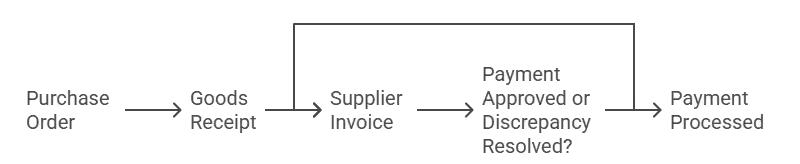
How the Three-Way Match Process Works
1. Purchase Order (PO): The buyer issues a PO that includes details like item quantity, description, and agreed price. This acts as the initial contract between buyer and supplier.
2. Goods Receipt: When the items or services are delivered, the receiving team verifies the quantity and quality, then records a goods receipt to confirm delivery.
3. Supplier Invoice: The supplier sends an invoice for payment, referencing the PO number and delivery details.
Best Practices for the Purchase Order Process
Implementing best practices in your purchase order process is crucial to avoid the costly consequences of an inefficient or poorly managed system. Here's how you can stop playing catch-up with manual spreadsheets and finally take control over your purchase order process:
1. Standardize PO Templates
Implementing standardized PO templates ensures consistency and completeness of information across all purchases. Pre-defined templates should include all necessary fields, such as item descriptions, quantities, prices, delivery dates, and terms and conditions, to provide a clear and comprehensive overview of the purchase.
2. Set Clear Approval Workflows
Organizations should set clear approval hierarchies and thresholds based on factors such as purchase value, department, or risk level. Automated approval workflows can improve the process, route POs to the appropriate approvers based on predefined rules, and provide better visibility into the status of each PO.
Clear approval workflows help prevent bottlenecks, ensure timely processing, and maintain compliance with organizational policies.
3. Enforce Contract Compliance
Contract compliance helps prevent maverick spending, ensures consistent pricing, and maximizes the value derived from negotiated agreements.
It's better to establish mechanisms to track and enforce contract compliance, such as integrating contract information into the PO process, setting up alerts for contract expirations or renewals, and regularly auditing purchases against contracted terms.
4. Conduct Regular Audits
Regular audits can uncover process weaknesses, procurement compliance issues, and areas where automation or process redesign can yield better business outcomes.
Reasons for Automating the Purchase Order Process
Now that you know how to manage your purchase order process effectively, it's time to consider taking it to the next level by implementing procure-to-pay automation across the entire workflow.
Here's why:
1. Saving Time with Automated Purchase Orders
Manual PO processes often involve time-consuming tasks such as data entry, paper-based approvals, and back-and-forth communication. Automation eliminates these manual efforts by digitizing the process, enabling electronic data capture, and automating workflows.
This results in faster PO processing times, reduced cycle times, and improved overall efficiency.
2. Real-time visibility into each Purchase order
With an automated system, organizations can easily track the progress of POs, monitor approval stages, and identify any bottlenecks or delays. This enhanced visibility enables better decision-making, as managers can access up-to-date information on procurement activities, budget utilization, and vendor performance.
3. Ensuring Compliance and Reducing Risk
Automating the purchase order process strengthens financial control and ensures compliance with internal policies and external regulations. It can enforce predefined approval hierarchies, route POs based on configurable rules, and maintain a complete audit trail of all procurement activities.
This helps prevent unauthorized or fraudulent purchases, ensures adherence to budget limits, and facilitates compliance with legal and regulatory requirements. It can also flag any deviations or discrepancies, enabling proactive risk management and reducing the likelihood of financial leakage.
How Spendflo can help you automate your purchase order process
Managing purchase orders manually might seem manageable when volumes are low, but as your business grows, those same processes quickly become a bottleneck. Missed approvals, delayed payments, and inaccurate data can drain time and resources, slowing down critical operations.
Spendflo's AI-powered PO automation centralizes your entire procurement workflow, from creation to approval to reconciliation. Instead of juggling spreadsheets and emails, teams can build, track, and approve purchase orders in one secure platform.
- Smart PO creation: Enter item details, quantities, and prices in seconds. Spendflo automatically validates data, reducing errors before they reach finance.
- Built-in approval workflows: Set up automated routing based on your organization's hierarchy. Approvers receive instant notifications and reminders, no follow-ups needed.
- Real-time integration: Connect Spendflo with your ERP and accounting systems to sync purchase data instantly. You'll gain complete visibility across procurement, finance, and vendor management.
A mid-market SaaS company managing over 100 vendor contracts reduced its average PO cycle from five days to two after switching to Spendflo. The finance team reported zero invoice mismatches and achieved 30% savings within the first quarter, simply by automating their PO approvals and data syncs.
Without automation, these inefficiencies add up, lost hours, delayed orders, and compliance risks. With Spendflo, you can reclaim control, speed up approvals, and ensure every purchase is accurate and policy-compliant.
Ready to automate your purchase order process?
Spendflo helps finance and procurement teams save time, reduce risk, and drive measurable savings. Book a demo today to see how you can simplify your PO workflow and take procurement off your plate.
Frequently Asked Questions on Purchase Order Process
1. What is the purpose of a purchase order in procurement?
A purchase order (PO) acts as a formal contract between a buyer and a supplier. It ensures that every purchase is documented, approved, and traceable. POs help control spending, avoid duplicate orders, and clarify expectations like pricing, quantity, and delivery timelines - making procurement more organized and compliant.
2. How does the purchase order approval process work?
The approval process typically begins after a purchase requisition is submitted. The request goes through designated approvers - often department heads or finance - who review the need, check budget availability, and authorize the purchase. Once approved, a formal PO is generated and sent to the vendor.
3. Why is automation important in the PO process?
Automation reduces errors, speeds up approvals, and ensures consistency across departments. It eliminates manual data entry, sends reminders to approvers, and matches POs with invoices and receipts automatically. This helps teams save time, gain better visibility, and avoid overspending.
4. What happens if there is no purchase order process in place?
Without a structured PO process, companies face risks like unauthorized spending, lost documentation, budget overruns, and delayed payments. It also becomes difficult to track purchases, manage vendor relationships, or maintain audit readiness. Over time, these gaps can result in financial losses and compliance issues.
5. How does the purchase order process support budget control and financial records?
The purchase order process helps enforce budget control by tracking spend against approved limits before purchases are made. Each PO includes a purchase order number, unit price, and cost center data, which feeds directly into financial records - ensuring every expense is documented and aligned with company budgets.
6. Can the purchase order process be integrated with ERP and procurement systems?
Yes, modern ERP and procurement systems can integrate the entire purchase order process - from requisition to invoice reconciliation. This ensures smoother workflows, real-time updates, and accurate data sharing across supplier portals, sourcing tools, and finance modules - making it easier to automate processes and reduce manual work.
A well-defined purchase order process ensures every purchase is tracked, approved, and compliant, reducing errors, delays, and financial risk. By automating PO creation, approvals, and reconciliation, organizations gain real-time visibility, streamline workflows, and strengthen vendor relationships. Discover how Spendflo can centralize and automate your purchase order process, accelerate approvals, and deliver measurable savings. Take control of your procurement with Spendflo today!


-compressed.avif)














.avif)
.avif)