
.avif)

“Nearly 70% of organizations face vendor-related compliance risks each year, often because teams outside procurement don’t follow established policies.” - Deloitte 2024
Procurement compliance isn’t just a back-office concern. When teams across finance, IT, and operations overlook compliance processes, the entire organization becomes vulnerable, from data breaches to contract violations. That’s why it’s critical for every department to understand why compliance matters and how it protects the company.
What is Procurement Compliance?
Procurement compliance refers to setting up procurement activities with proper legal structure and guidelines to reduce risk and protect a company from facing legal issues.
Procurement compliance means following company rules, laws, and policies when purchasing goods or services. It ensures every transaction is fair, transparent, and properly approved, helping organizations reduce risks, avoid penalties, and maintain accountability.
What does SaaS Compliance Mean in 2026?
SaaS procurement compliance involves ensuring that the acquisition and management of cloud-based software align with an organization's policies, industry regulations, and legal requirements.
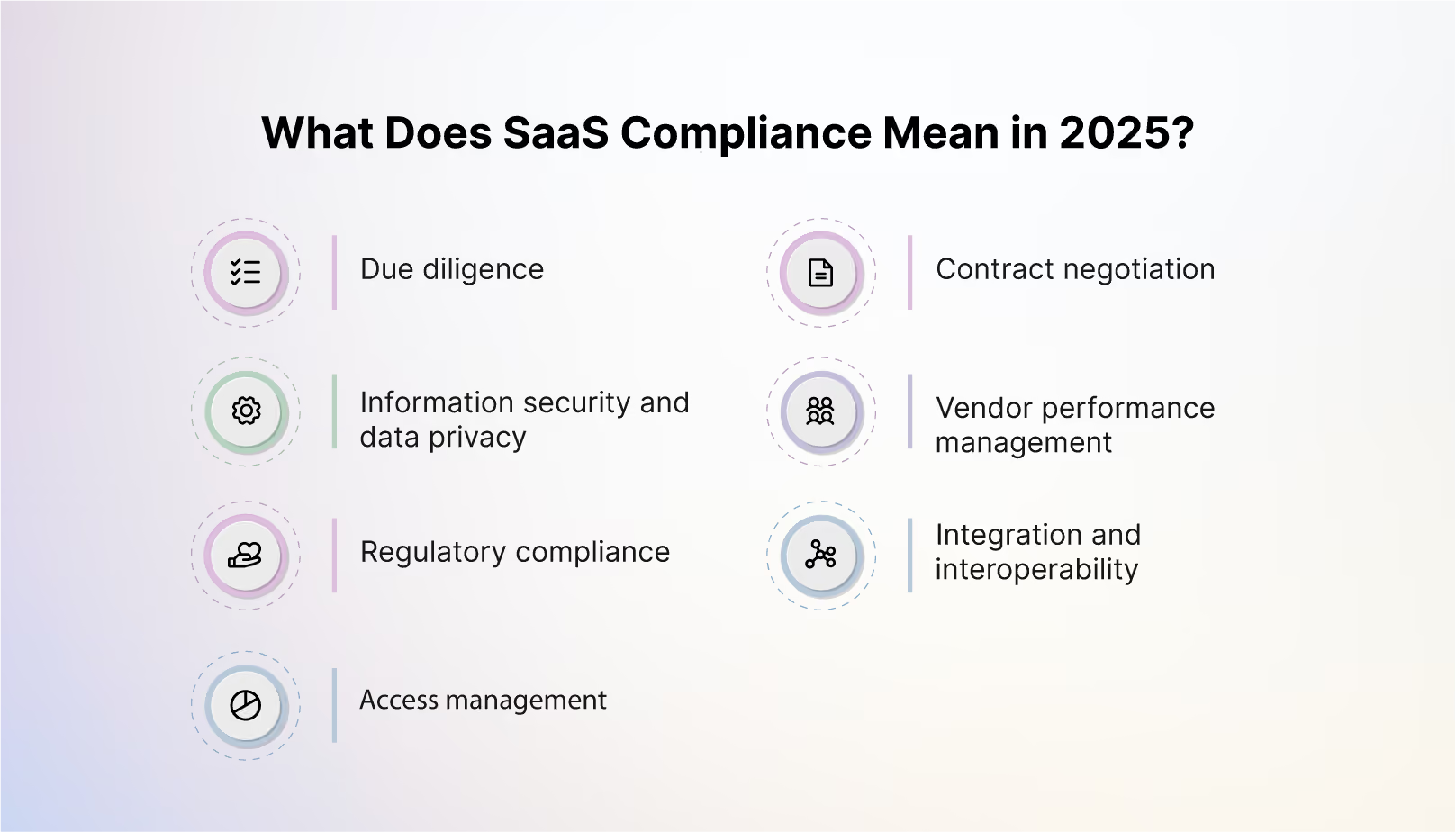
Key aspects include:
Due diligence
Evaluating vendors' financial stability, security practices, data privacy measures, and regulatory compliance.
1. Contract negotiation
Defining SLAs, data protection, compliance responsibilities, and termination rights.
2. Information security and data privacy
Ensuring vendors adhere to security standards and data privacy regulations.
3. Vendor performance management
Monitoring SLAs and compliance, taking corrective action when necessary.
4. Regulatory compliance
Complying with industry-specific regulations and data transfer requirements.
5. Integration and interoperability
Assessing compatibility with existing IT infrastructure and other cloud services.
6. Access management
Implementing access controls and user provisioning processes aligned with SaaS security policies.
Key Aspects of Procurement Compliance
Procurement compliance isn’t just about following rules, it’s about building a system of trust, accountability, and control across every purchase. When policies are clear, suppliers are vetted carefully, and records are easy to trace, organizations reduce risk and make smarter spending decisions. Below are the essential areas every procurement team should focus on.
1. Policies and Procedures
Strong procurement compliance starts with well-defined policies and processes. Clear rules set expectations for how purchases are requested, approved, and paid for, reducing confusion and unnecessary delays.
- Establish clear guidelines: Document every stage of the procurement cycle, from identifying a need and evaluating vendors to issuing purchase orders and processing invoices. Ensure these guidelines are easily accessible to all departments.
- Standardize workflows: Use consistent templates, approval paths, and evaluation criteria across teams. This keeps the process transparent, avoids duplication, and ensures that all purchases meet the same quality standards.
- Automate processes: Adopt procurement software that automates approvals, tracks budgets, and creates digital audit trails. Automation not only speeds up approvals but also provides visibility into spending patterns and compliance levels.
2. Supplier Management
Vendors play a direct role in compliance. Selecting and managing them carefully helps reduce financial, operational, and reputational risks.
- Conduct due diligence: Before onboarding, assess each supplier’s financial stability, data security, and compliance history. This helps prevent potential disruptions or legal issues later.
- Manage contracts effectively: Maintain clear visibility into contract terms, including delivery timelines, service levels, and pricing commitments. Proper contract oversight ensures both parties uphold their obligations.
- Monitor performance: Track supplier performance through KPIs such as delivery accuracy, product quality, and responsiveness. Regular evaluations make it easier to identify gaps and take corrective action when needed.
3. Compliance and Risk Management
Compliance extends beyond internal rules, it includes meeting legal and regulatory requirements that safeguard the organization’s reputation.
- Follow internal policies: Make sure all procurement activities comply with company-specific rules, budget limits, and approval hierarchies.
- Meet external regulations: Adhere to applicable laws such as anti-corruption, labor, and data privacy regulations. These laws help ensure ethical and lawful business conduct.
- Conduct regular audits: Schedule internal and external audits to confirm adherence, detect irregularities, and maintain accurate records.
- Manage risks proactively: Identify potential risks early, from supplier insolvency to contract breaches, and develop strategies to mitigate them through better forecasting, training, or technology.
4. Documentation and Reporting
Accurate documentation is the foundation of accountability. It provides a complete trail of procurement activity, which is vital for audits and continuous improvement.
- Maintain organized records: Store invoices, purchase orders, contracts, and communication logs in a centralized repository. This ensures transparency and easy access during reviews.
- Track compliance metrics: Monitor data such as contract compliance rates, unapproved spending, and audit findings. These metrics help procurement leaders measure performance, identify weak spots, and improve future processes.
- Report findings effectively: Share compliance reports with finance, legal, and executive teams to promote cross-functional accountability and support informed decision-making.
Why is Procurement Compliance Important Not Just For Procurement Teams?
Procurement compliance is not just a concern for the procurement department; it's a critical issue that should be on the radar of every employee in the organization.
Why?
Non-compliance can have severe consequences that ripple throughout the entire company, affecting everything from financial stability to reputation and competitiveness.
But it's not just about avoiding negative consequences – there are also positive reasons why every employee should care about procurement compliance. For one, compliance helps ensure that the company is getting the best value for its money.
By following established policies and procedures, employees can help prevent overspending, and identify cost-saving opportunities. This, in turn, contributes to the overall financial health and competitiveness of the organization. Second, procurement compliance is essential for meeting legal and regulatory obligations.
Today, companies are subject to a wide range of laws and regulations governing everything from cybersecurity and data privacy. Non-compliance can result in severe penalties, legal action, and reputational damage.
How to Build a Procurement Compliance Framework in 6 Steps
Creating a strong procurement compliance framework ensures that every purchase aligns with company policies, legal requirements, and ethical standards. A well-designed system protects your organization from risk while promoting transparency, consistency, and efficiency. Here’s a simple roadmap to build a procurement compliance program that works in practice.
Step 1: Assess Your Current Compliance Posture
Start with a gap analysis to understand where your procurement process stands today. Review existing policies, approval workflows, and vendor management practices. Identify missing controls, unclear responsibilities, or manual processes that could lead to compliance risks. This assessment forms the foundation of your procurement compliance roadmap.
Step 2: Define Compliance Policies and Standards
Next, establish clear and accessible compliance policies. Outline who can make purchases, how approvals should work, and what documentation is required. Standardize contract templates and approval levels to prevent confusion. These guidelines create consistency and help employees understand their roles within the procurement compliance model.
Step 3: Identify High-Risk Procurement Areas
Not every procurement activity carries the same level of risk. Focus on high-risk categories like SaaS subscriptions, third-party vendors, and service contracts that may involve sensitive data or complex terms. Map out these areas and prioritize them in your compliance framework steps to ensure stronger oversight and vendor accountability.
Step 4: Implement Controls and Approval Workflows
Controls are the backbone of any procurement compliance framework. Set up structured approval hierarchies for purchase requests, renewals, and vendor onboarding. Use automation tools to track each approval, flag exceptions, and maintain digital audit trails. A clear workflow reduces human error and ensures that every purchase follows policy.
Step 5: Train Stakeholders and Enforce Accountability
Compliance works best when everyone participates. Conduct regular training for finance, procurement, and department heads on your procurement compliance program. Explain how the process protects the organization and outline the consequences of policy violations. Reinforcing accountability builds a culture of compliance across teams.
Step 6: Monitor, Audit, and Continuously Improve
Finally, establish ongoing monitoring and auditing processes to measure performance. Use data and analytics to identify non-compliance trends, track vendor performance, and refine workflows. Continuous improvement ensures your procurement compliance framework stays effective as business needs evolve and regulations change.
How to Ensure Your Vendors Are Fully Compliant with Your Policies
You can't predict every potential compliance issue that may arise with your vendors. Because as a procurement function, you're managing multiple vendor relationships at once.

Simplify your vendor compliance with a seamless monitoring process
(This involves mapping out potential risk areas, interactions, and information sources that you use to assess vendor compliance.)
Examples of key compliance monitoring touchpoints:
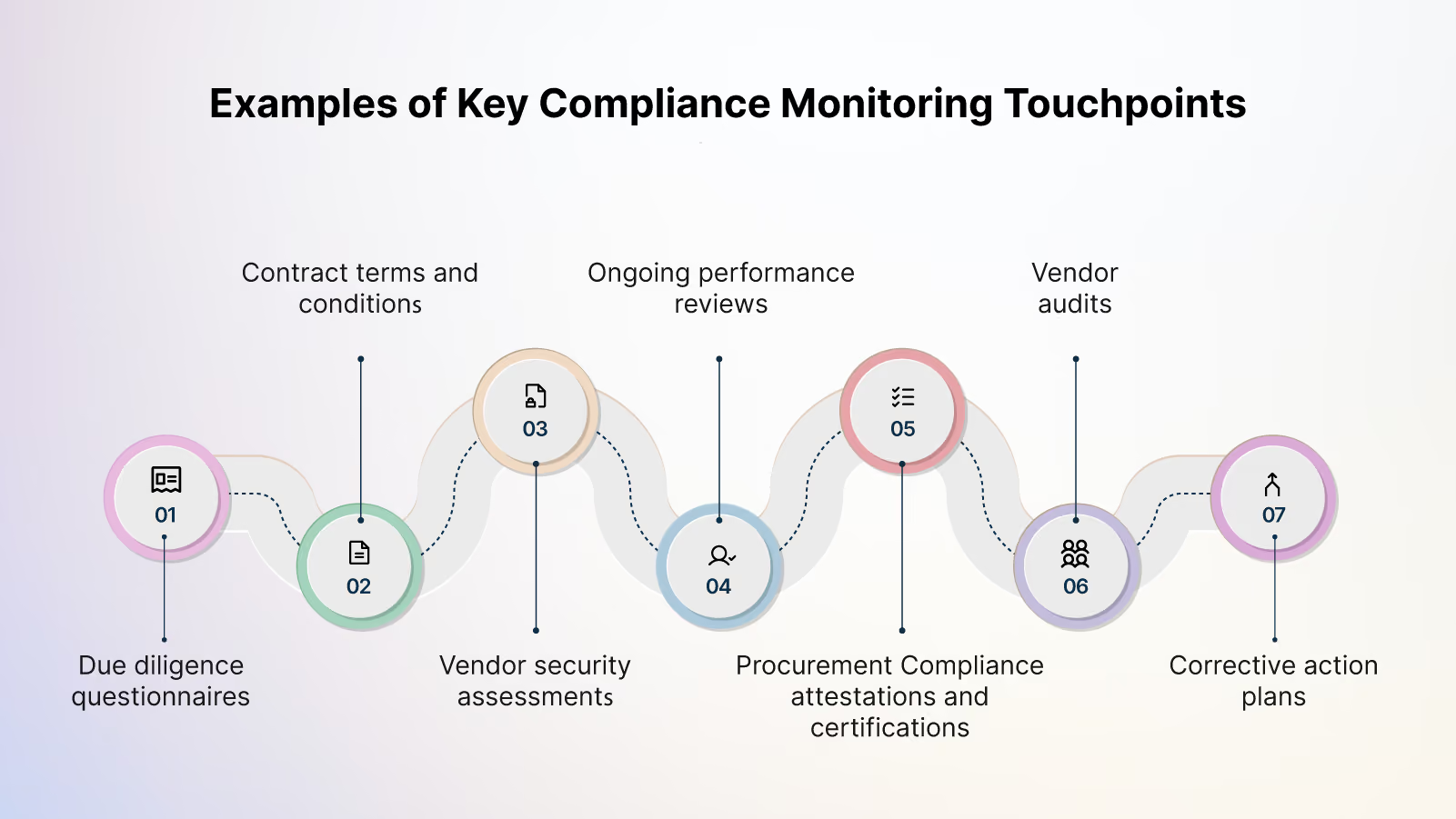
- Due diligence questionnaires
- Contract terms and conditions
- Vendor security assessments
- Ongoing performance reviews
- Procurement Compliance attestations and certifications
- Vendor audits
- Corrective action plans
That's right, even routine interactions like performance reviews are a great opportunity to discuss and reinforce procurement compliance expectations. Your vendors' actions are not completely in your control. However, their commitment to meeting your compliance standards is something you should actively monitor and influence. Once a vendor is onboarded, you need to ensure you have an effective process in place to continuously monitor their compliance.
1. Establish clear compliance expectations from the start
Don't wait until an issue arises to clarify your procurement compliance policies. Your compliance expectations should be clearly defined and communicated to vendors from the very beginning of the relationship. Without setting clear expectations upfront, it could take weeks or months to identify and address potential non-compliance issues, by which time the risk exposure could be significant.
2. Automate vendor risk assessments and ongoing monitoring
Close to 60% of a procurement professional's time is spent on administrative tasks that don't directly contribute to risk mitigation, and doing vendor risk assessments manually is a major contributor. Only for a procurement compliance issue to emerge because of inconsistent ongoing monitoring.

Vendor Risk Assessment Template
At Spendflo, we leverage highly customized vendor risk assessment templates (like the one above) and automated workflows to continuously monitor vendor compliance across key procurement risk domains like information security, business continuity, regulatory requirements, and more. The same can be replicated for vendor performance management, where you track SLAs and KPIs to identify potential compliance issues. But when questions arise, having a collaborative platform to engage with vendors can help quickly investigate and remediate problems.
Automate Your Vendor Evaluation With Spendflo Now!
3. Address non-compliance promptly with corrective action plans
Vendors can sometimes be less than fully committed to your procurement compliance policies, especially if they perceive them as burdensome. Sometimes, it comes down to the right messaging and incentives to get them to embrace your compliance culture.
A good way to handle minor procurement compliance deviations without damaging the vendor relationship?
- Corrective action plans allow you to identify the issue in the procurement process, specify remediation steps, and constructively track the vendor's progress.
- For instance, are your SaaS data security requirements realistic for a small vendor with limited IT resources? Are you providing them with clear guidance on what they need to do? Make it a point to convey not just the "what" of procurement compliance but also the "why" and "how".
- Spell out what's at stake in terms of risks to your business. If you have examples of how non-compliance has impacted you in the past, share those stories.
The problem we're solving is important, but what about the effort required from the vendor to comply? Is it simple enough for them to adapt their processes? Answer this proactively in your vendor communications. Even better, if you have other similar vendors vouching for the reasonableness of your approach.
Lastly, be transparent about Procurement compliance monitoring and enforcement. How much of the vendor's time and resources will be required to demonstrate compliance? Depending on the risk level, the effort required may vary.
But make it explicit upfront so you don't pull any surprises on your vendors later on. After all, procurement's role is to enable successful vendor partnerships while protecting the company from undue risk.
SaaS Procurement Compliance Best Practices
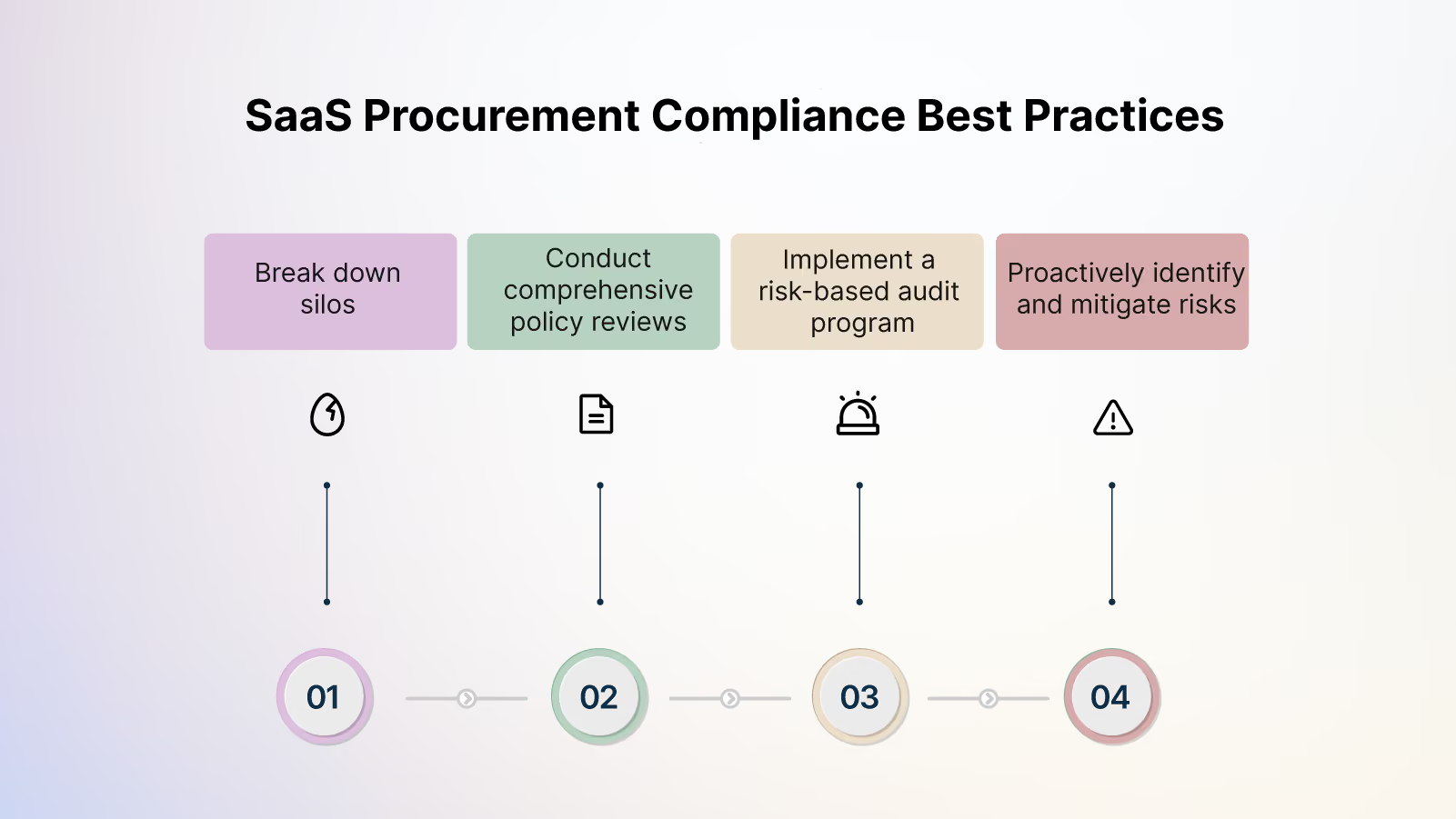
1. Break down silos
Effective compliance management demands seamless collaboration between compliance, vendor management, and information security teams. Schedule bi-weekly sync-ups to align priorities, share insights, and tackle challenges head-on. Bring infosec experts to the table when assessing vendors' security measures and reviewing contracts.
2. Conduct comprehensive policy reviews
Outdated policies are a ticking time bomb in the procurement compliance world. Block off time each quarter to meticulously review your data privacy, information security, and vendor management policies. Ensure they align with the latest industry-specific regulations, such as HIPAA, GDPR, PCI DSS, and CCPA.
3. Implement a risk-based audit program
In the high-stakes game of procurement compliance, audits are your ace in the hole. Develop a comprehensive, risk-based audit plan that targets your most vulnerable areas. Combine the power of internal audits and impartial third-party assessments to leave no blind spots.
4. Proactively identify and mitigate risks
Today, risk mitigation is non-negotiable. Conduct exhaustive risk assessments to pinpoint vulnerabilities lurking in your systems, processes, and vendor ecosystem. Leave no stone unturned.
Top 7 Procurement Compliance KPIs to Track
Tracking the right procurement compliance KPIs helps you measure how well your organization follows its policies and controls. These metrics reveal gaps, improve accountability, and show whether your procurement compliance framework is working as intended. A procurement compliance dashboard makes it easier to visualize these indicators and take quick, data-backed action.
Below are the seven key compliance metrics in procurement every organization should monitor regularly.
1. Spend Under Management (%)
This metric shows the percentage of total company spend that goes through approved procurement channels.
A higher percentage means better control and visibility over purchasing decisions, fewer off-policy transactions, and stronger overall compliance. It’s one of the most critical procurement audit KPIs for assessing policy adoption.
2. Invoice-to-PO Match Rate (%)
The invoice-to-PO match rate tracks how many invoices correctly match their corresponding purchase orders.
A high match rate reflects strong process discipline and fewer manual errors, while a low rate can signal compliance gaps or weak approval controls. Monitoring this KPI helps reduce invoice fraud and ensures accurate financial reporting.
3. Contract Compliance Rate (%)
This KPI measures how closely supplier performance and pricing align with agreed contract terms.
High contract compliance rates indicate effective vendor management and consistent execution of negotiated agreements. Tracking this on your procurement compliance dashboard helps reduce financial leakage and ensure accountability.
4. Maverick Spend as % of Total Spend
Maverick spend refers to purchases made outside approved procurement processes.
A high percentage often points to weak controls or lack of awareness among employees.
Reducing maverick spend strengthens policy compliance, improves spend visibility, and ensures negotiated savings are fully realized, a must-have metric in any procurement compliance model.
5. Supplier Onboarding Time (Days)
This measures how long it takes to approve and onboard a new supplier. Long onboarding times can delay operations and indicate overly complex processes.
Using automation tools helps speed up approvals, improve accuracy, and maintain compliance across your supplier network, especially important when tracking SaaS compliance metrics for software vendors.
6. Audit Findings Closed on Time (%)
Audits often uncover discrepancies or areas needing corrective action.
This KPI measures how many of those findings are resolved within the defined timeframe.
A high percentage demonstrates responsiveness, ownership, and a commitment to continuous improvement within your procurement compliance program.
7. Policy Acknowledgment Rate (%)
This metric tracks how many employees have read and formally acknowledged procurement policies.
It’s a simple yet powerful measure of awareness and accountability. A strong acknowledgment rate ensures everyone understands their role in maintaining compliance, from purchase requests to vendor management.
Use Cases of Procurement Compliance
Procurement compliance isn’t one-size-fits-all. The best programs adapt to the organization’s risks, vendor landscape, and workforce maturity. Below are three common use cases that show how businesses apply compliance principles in real-world scenarios.
1. Risk-Based Procurement Compliance
Not all purchases carry the same level of risk. A risk-based procurement compliance approach helps organizations allocate resources efficiently and focus controls where they matter most.
- High-risk vendors: Include SaaS providers, data processors, and financial service partners. These suppliers often handle sensitive data or critical operations and require the strictest oversight.
- Medium-risk vendors: Cover categories like office supplies, logistics, or maintenance services. They pose moderate risk but still require policy adherence and regular review.
- Low-risk vendors: Involve low-value, non-critical purchases such as office décor or consumables, where simplified controls may be sufficient.
2. Supplier Compliance Management: Ensuring Vendor Adherence
Effective supplier compliance management ensures that vendors consistently meet contractual, legal, and ethical obligations. A structured supplier audit process and ongoing monitoring program are key to maintaining trust and transparency.
- Certifications: Require vendors to maintain relevant vendor compliance certifications such as SOC 2, ISO 27001, GDPR, or HIPAA based on the nature of services provided.
- Compliance questionnaires: Use detailed forms covering security, data protection, and ESG practices to evaluate suppliers before onboarding.
- Continuous monitoring: Track vendors through ongoing checks, including financial health reviews, cybersecurity monitoring, and even dark web scans to detect potential breaches or reputational risks.
- Corrective Action Plans (CAPs): When non-compliance occurs, establish CAPs to help vendors remediate issues within a specific timeline.
3. Procurement Compliance Employee Training
Even the strongest compliance policies depend on people following them. That’s where procurement compliance training comes in, creating awareness, consistency, and accountability across all departments.
- Role-based training: Customize learning modules for finance, IT, legal, and procurement teams so each group understands its responsibilities.
- Onboarding modules: Introduce new hires to procurement policy training during their first week to establish expectations early.
- Quarterly refreshers: Keep employees updated on policy changes, audit findings, or new regulations through brief sessions or newsletters.
- Gamification and quizzes: Use interactive formats to boost engagement and retention, turning compliance into a continuous learning experience.
Automating Procurement Compliance
Automation plays a key role in making procurement compliance faster, more accurate, and easier to scale. Instead of relying on manual checks, organizations can use automated procurement compliance tools to enforce policies, flag exceptions, and maintain full transparency throughout the purchase cycle.
Modern procurement workflow automation ensures every request, approval, and payment follows company rules, without adding extra workload to your team. Here’s how automation strengthens compliance across the board:
1. Automated 3-Way Matching for Accuracy
3-way matching compliance automatically cross-checks purchase orders (POs), goods receipt notes (GRNs), and invoices before payment. This prevents duplicate or inflated payments, reduces human error, and ensures all transactions are verified against approved documentation.
With automated matching, finance and procurement teams can process payments faster while maintaining complete control over spend accuracy.
2. Policy Enforcement in Workflows
Automation allows policies to be built directly into procurement workflows. For example, systems can block purchases from unapproved vendors, enforce approval hierarchies, and restrict spending beyond assigned budgets. These built-in rules reduce non-compliant transactions and help maintain alignment with internal controls and audit requirements.
By embedding policy enforcement into daily operations, procurement workflow automation makes compliance a natural part of how teams work, not an afterthought.
3. Auto-Flagging of Maverick Spend
Maverick spend, or off-policy purchasing, can quickly erode savings and control. Compliance automation software can automatically detect and flag unauthorized purchases in real time.
This allows procurement teams to take corrective action immediately, ensuring that all spend routes through approved processes and vendors. Over time, this data also helps identify departments or categories where compliance education or additional controls may be needed.
4. Digital Audit Trails for Transparency
Every compliant process leaves a record. A digital audit trail in procurement captures every approval, change, and transaction, creating a single source of truth for auditors and stakeholders.
These records simplify compliance reporting for standards like SOX, GDPR, and HIPAA, providing traceable evidence of who approved what, and when. Digital audit logs also strengthen data security and accountability across the organization.
How Spendflo Helps Accelerate TPRA Eliminate Risks And Stay Compliant With Your Procurements
Procurement teams often struggle to stay ahead of vendor risks while juggling multiple tools, spreadsheets, and approval chains. Every missed security review or policy deviation opens the door to financial and reputational damage, and manual third-party risk assessments only make things worse. That’s where Spendflo changes the game.
One of our clients, a mid-market fintech company managing over 150 SaaS vendors, used Spendflo to automate their TPRA and cut risk assessment time by 60%. By consolidating financial, security, and compliance data into one dashboard, their team gained real-time visibility into every vendor’s risk posture. Automated alerts now flag vulnerabilities instantly, helping them take preventive action before an issue becomes a breach.
Without a unified system, these challenges keep resurfacing, delayed onboarding, fragmented approvals, and compliance gaps that slip through the cracks. Spendflo eliminates that complexity. With built-in policy enforcement, automated risk scoring, and digital audit trails, it empowers finance, procurement, and security teams to work together seamlessly while staying fully compliant.
If your organization is ready to simplify vendor risk management and automate compliance from intake to purchase order, book a demo with Spendflo today.
Frequently Asked Questions
1. What is the difference between procurement compliance and procurement governance?
Procurement compliance focuses on ensuring that all purchasing activities follow established policies, regulations, and approval processes. It’s about enforcing the rules that guide how buying decisions are made. Procurement governance, on the other hand, defines those rules, it sets the structure, responsibilities, and oversight mechanisms that shape decision-making. In simple terms, governance creates the framework, while compliance ensures that framework is followed consistently across the organization.
2. How does procurement compliance reduce maverick spend?
Procurement compliance reduces maverick spend by standardizing approval workflows and enforcing policy-based controls. When employees must purchase through approved vendors and follow defined processes, unauthorized or off-contract buying naturally decreases. Automation tools strengthen this further by flagging non-compliant transactions in real time, helping finance and procurement teams take corrective action before costs spiral. Over time, consistent compliance builds awareness and accountability, significantly lowering the volume of rogue purchases.
3. What role does technology play in procurement compliance?
Technology plays a major role in improving accuracy, transparency, and control across the procurement lifecycle. With tools for automated approvals, digital audit trails, and 3-way matching, organizations can ensure every purchase aligns with policy and budget. Compliance software also helps track vendor certifications, monitor risks, and flag exceptions automatically. This level of automation not only reduces human error but also gives teams real-time visibility into spending patterns and compliance performance, turning compliance from a manual task into a continuous, data-driven process.


-compressed.avif)












.avif)
.avif)