We evaluated 30+ procurement software platforms on intake, approvals, ERP fit and time-to-value. These fifteen came out on top.
Procurement software helps organizations automate, track, and manage the purchase of goods and services. It covers the entire procure-to-pay (P2P) or source-to-pay (S2P) lifecycle, including vendor requests, approvals, purchase orders, receipt tracking, and invoice matching.
Also called procurement management software or a procurement platform, it replaces email approvals, spreadsheet trackers and off-system buying with one workflow that requesters, finance, IT and legal all use. We evaluated 30+ procurement software platforms on intake, approval speed, contract and renewal control, ERP fit and time-to-value. These fifteen came out on top in 2027:
Procurement software at a glance
Procurement software gives a company one system for every purchase: an employee raises a request, the right people approve it, a purchase order goes to the supplier, and the invoice is matched and paid - with spend visible at each step. Here is the shortlist:
1. Spendflo - Intake-led procurement platform covering intake to payment.
2. Precoro - Cloud procure-to-pay tool with published pricing.
3. Coupa - Enterprise spend management platform.
4. SAP Ariba - Source-to-pay suite built around the Ariba Network.
5. Zip - Intake and approval orchestration across existing systems. 6. Procurify - Budget-first purchasing with spend cards.
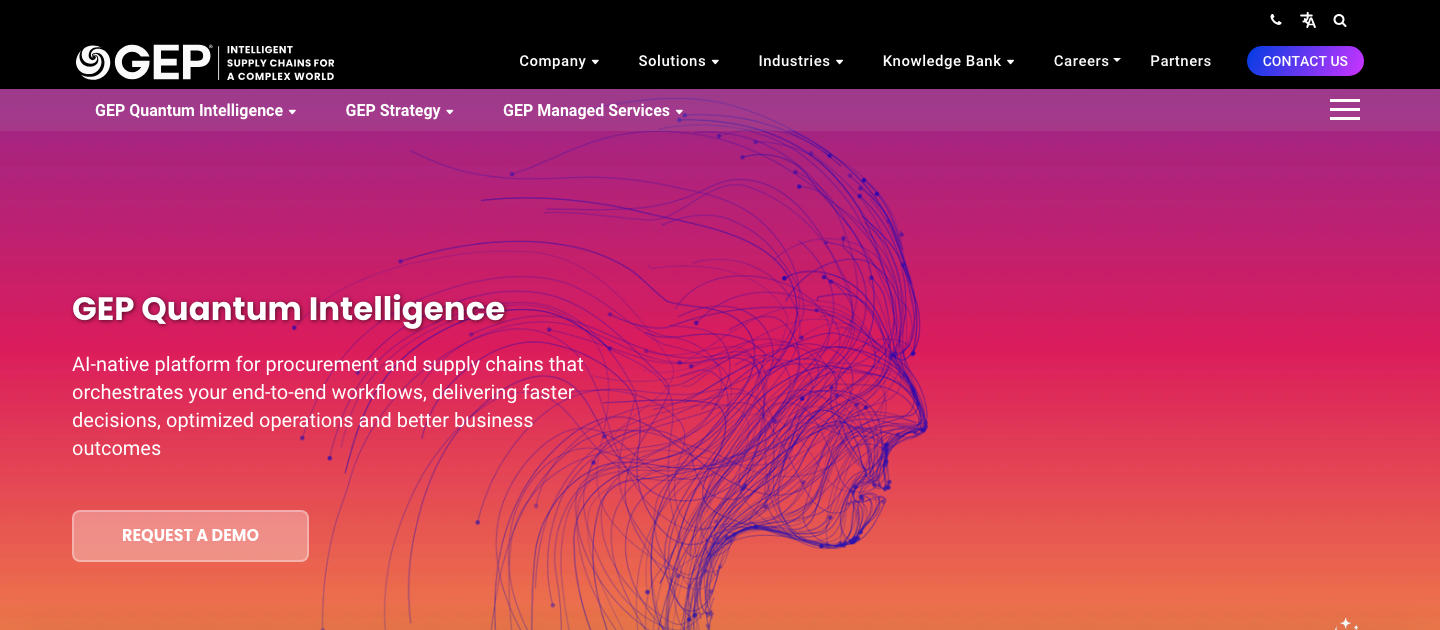
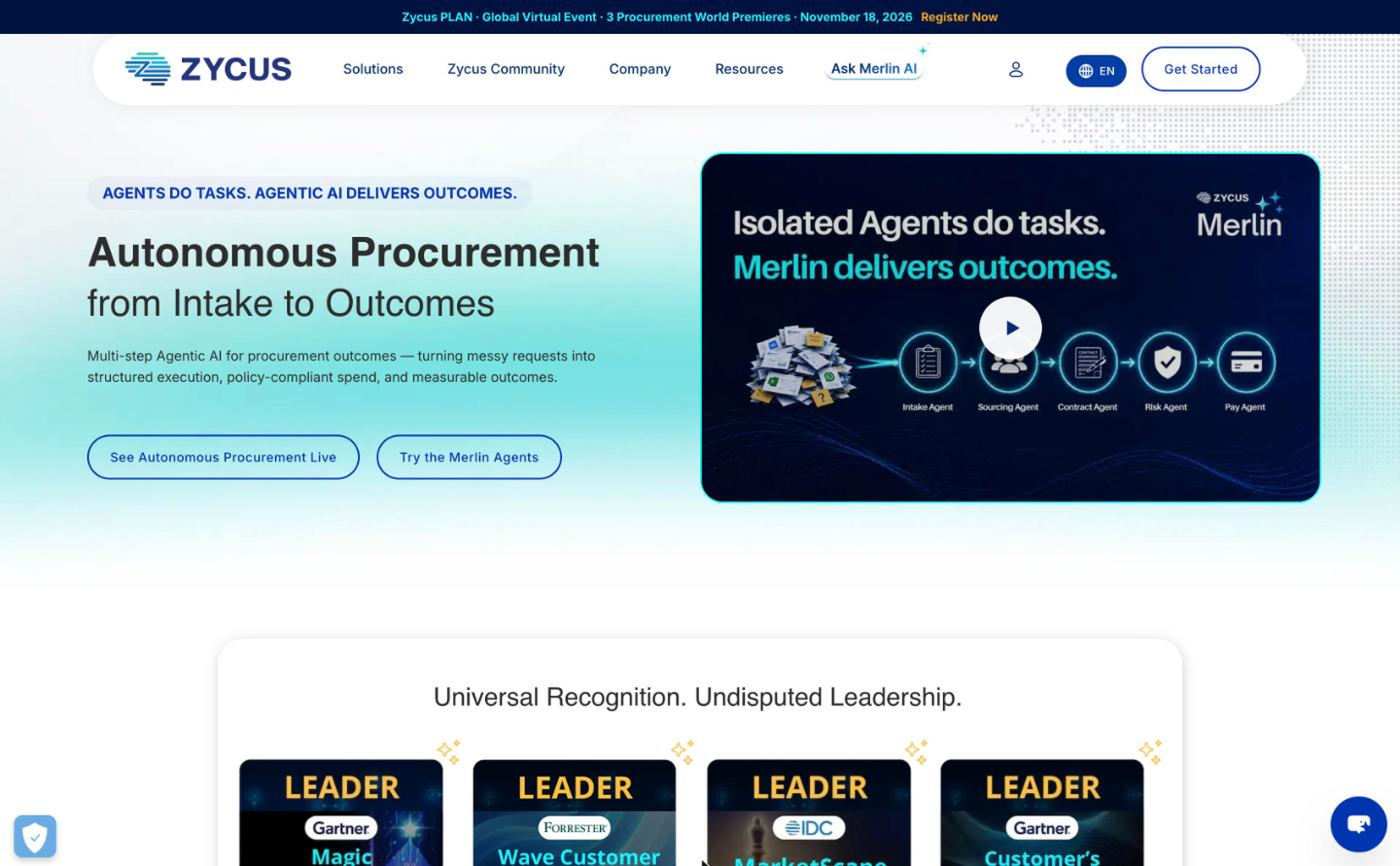
10. GEP SMART - Source-to-pay software plus managed procurement services. 11. Zycus - Source-to-pay suite with AI agents.
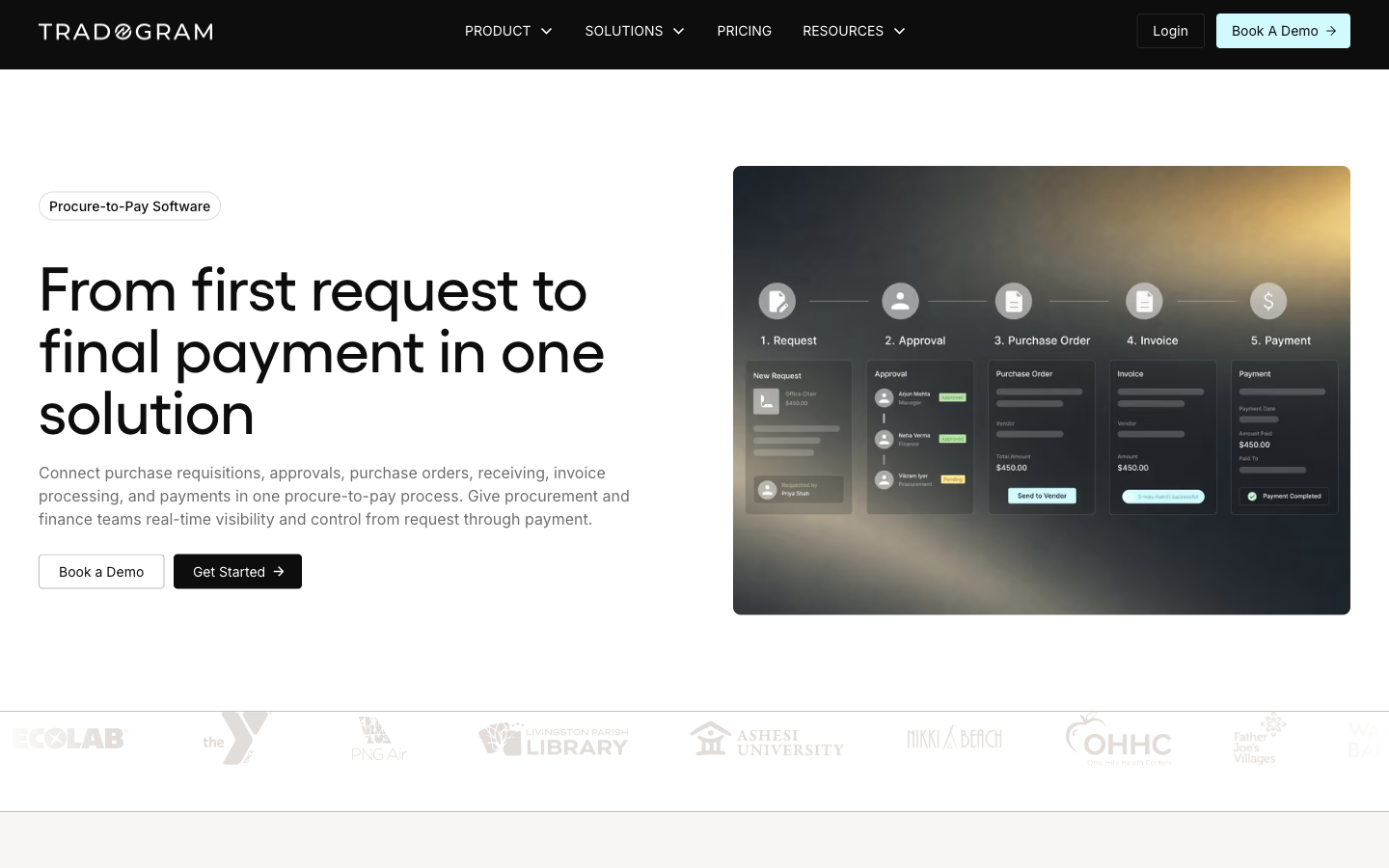
12. Tradogram - Low-cost purchase order and invoice matching tool. 13. Tipalti - Accounts payable and global supplier payments, with a procurement add-on. 14. Brex - Corporate cards, expenses and bill pay in one spend platform.
15. Rippling - HR, IT and spend management on one employee database.
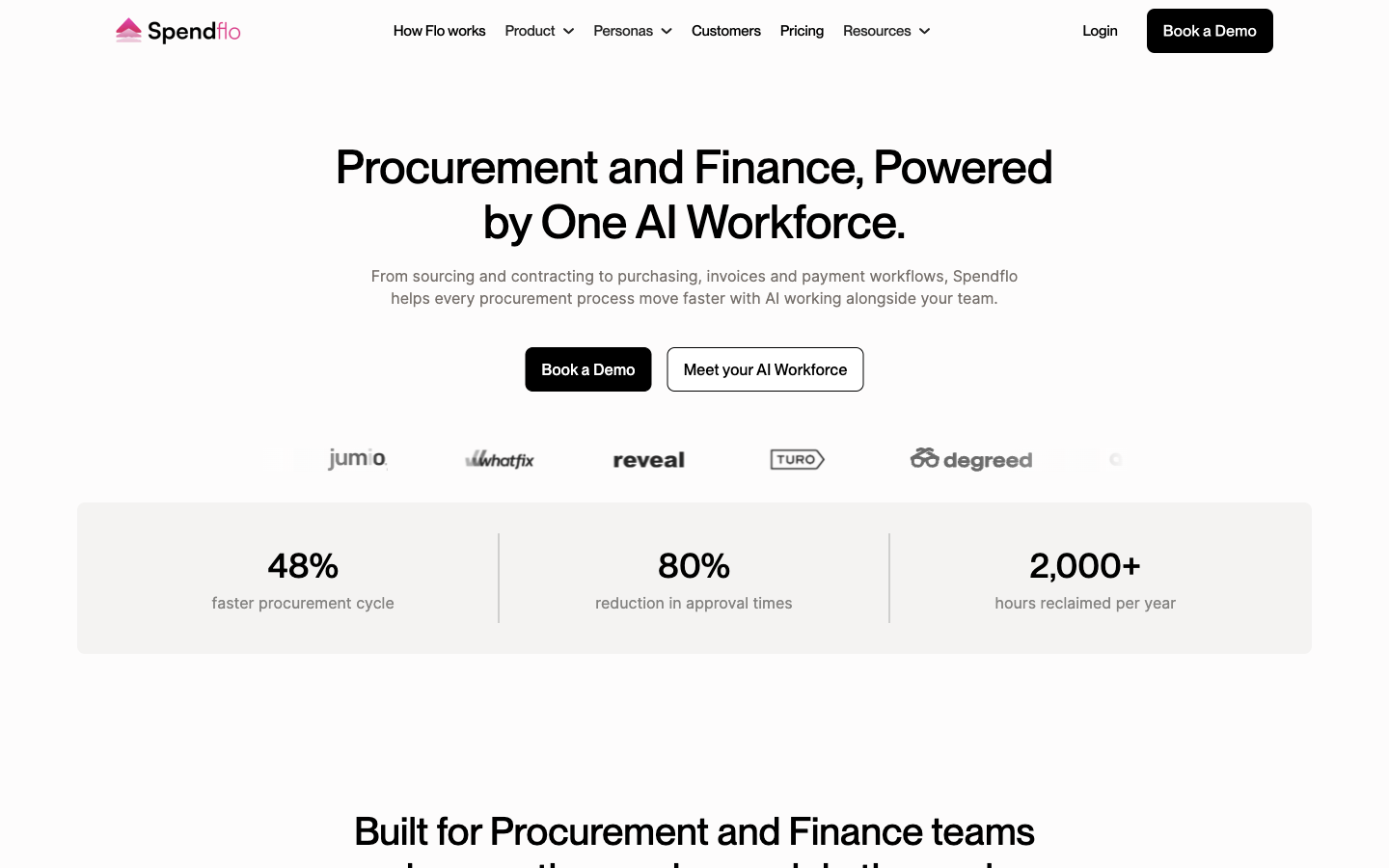
Teams using Flo report a 48% faster procurement cycle, an 80% reduction in approval times, and 2,000+ hours reclaimed per year.
Small, budget-conscious teams needing a customizable PO tool
From $99/mo + per-user fee
13. Tipalti
4.5 / 5
Global Payables Automation
8.7 / 10
Moderate (3–5 Months)
Reduces AP headcount only
Companies paying a high volume of global suppliers or partners
AP from $99/mo + transaction fees; procurement add-on by quote
14. Brex
4.8 / 5
Unified Spend & Corporate Cards
9.3 / 10
Fast (< 90 Days)
Reduces AP headcount only
Fast-growing companies needing cards, expenses, and bill pay in one account
Free (Essentials); Premium $12/user/mo
15. Rippling
4.8 / 5
HR, IT & Spend in One Platform
9.2 / 10
Moderate (2–3 Months)
Requires team to operate
Companies that want HR, IT, and spend management run from one platform
Custom quote
G2 ratings and Ease of Use scores from g2.com, checked November 2026. GEP SMART is listed on G2 as GEP Quantum Intelligence; Zycus is rated on 13 reviews. Time-to-value combines G2 reviewer data and vendor-reported rollout times. Pricing from each vendor's website, checked November 2026.
What is procurement software?
Procurement software is the system a business uses to control how it buys. It carries a purchase from the first request through approval, ordering, receipt, invoice and payment, and records every step, so procurement and finance can see what has been committed before money leaves the account.
Procurement management software is the same category - the longer name usually signals tools that also manage suppliers, contracts and renewals, not just purchase orders.
It replaces the manual chain of email approvals, spreadsheet trackers and shadow purchases. Requests come in from Slack, Teams or a web form, route through finance, IT, legal and security, become purchase orders, and reconcile against the invoice - while stakeholders see committed and recurring spend in real time.
How procurement software works
Intake - an employee requests a purchase through a form, Slack, Teams or a catalog, and the request is checked against policy and budget.
Approval - the request routes to finance, IT, legal or security based on amount, category and risk.
Sourcing and negotiation - for larger buys, the team compares suppliers or quotes and negotiates terms.
Purchase order - the approved request becomes a PO, sent to the supplier and synced to the ERP.
Invoice matching - the supplier invoice is captured and checked against the PO and contract before approval.
Payment and reporting - the invoice is paid, and spend is reported by department, supplier and category.
Procurement, purchasing, spend management, procure-to-pay and source-to-pay software are related categories, but they are not interchangeable. Knowing which type you need narrows a shortlist quickly.
Supplier onboarding, risk, documents and performance
Often a module in S2P suites
Key features of procurement management software
Intake and approvals - no-code routing rules by amount, category and risk, with requests raised in Slack, Teams or a web form. This is the core of procurement workflow software.
Purchase orders and catalogs - POs created from approved requests, plus catalogs with pre-negotiated supplier pricing.
Three-way matching - the purchase order, goods receipt and supplier invoice are checked against each other before payment.
Supplier and contract management - onboarding, risk reviews, obligations and renewal alerts.
Spend analytics - real-time dashboards on department budgets, supplier performance and savings, plus procurement tracking of every request, PO and renewal.
AI and automation - OCR invoice capture, contract risk insights and anomaly detection, the features that make it procurement automation software rather than a digital form.
ERP integrations - two-way sync with NetSuite, SAP, Oracle, Microsoft Dynamics, QuickBooks or Xero.
Benefits of procurement software
Faster approvals - requests stop waiting in inboxes; Spendflo customers report an 80% reduction in approval times.
Spend visibility - finance sees committed spend before the invoice arrives, not after.
Fewer missed renewals - contract dates and notice periods surface well before auto-renewal.
Policy compliance - every purchase has an approver, a PO and an audit trail.
Savings - benchmarked pricing before every purchase and renewal, so teams negotiate with data instead of accepting the first quote.
Procurement software vs purchasing software vs ERP
Procurement software manages the full buying lifecycle, from intake and approvals to suppliers, contracts, purchase orders, and invoices. Purchasing software is narrower. It handles transactions such as POs, receipts, and payments.
An ERP procurement module records POs and invoices inside the financial system. Most mid-market and enterprise teams use procurement software alongside their ERP rather than instead of it.
Every employee who buys, plus procurement, finance, IT and legal
Buyers and AP
Finance and AP
Strength
Control and visibility before spend is committed
Simple, low-cost PO handling
Single system of record for the ledger
Watch-out
Needs clean ERP integration
Little support for contracts or suppliers
Hard for employees to use for requests
Most mid-market and enterprise teams run procurement software on top of their ERP - NetSuite, SAP S/4HANA, Oracle, Workday or Microsoft Dynamics - rather than replacing it. The ERP stays the ledger; the procurement layer handles requests, approvals, suppliers and contracts, and writes POs and invoices back.
How procurement software uses AI
Most procurement software now claims AI. The useful question is whether the AI does the work - routes a request, reads a contract, matches an invoice - or only recommends what a person should do next.
AI capability
What it does
Why it matters
Procurement assistants
Answer policy questions and guide employees to the right request
Fewer tickets and back-and-forth for the procurement team
Workflow automation
Routes requests and approvals using business rules
Approvals finish faster and follow policy
Intelligent invoice processing
Extracts invoice data and checks it against the PO and contract
Less manual entry and fewer payment errors
Contract intelligence
Pulls out terms, obligations and renewal dates
Fewer missed renewals and better contract compliance
Supplier risk intelligence
Flags security, financial and compliance risk during onboarding
Risk reviews happen before money is committed
Sourcing support
Helps compare suppliers, quotes and bids
Shorter sourcing cycles
Spend analytics
Spots spending patterns, duplicates and anomalies
Clearer cost visibility and savings targets
Predictive analytics
Forecasts spend trends and upcoming renewals
Earlier, better-informed decisions
Spendflo is built around this idea: its Flo agents - Flo Procure, Flo Contracts and Flo AP - handle the cycle from purchase request to paid invoice, so the standard request closes without someone chasing it.
15 Best Procurement Management Software Platforms: Detailed Breakdown
1. Spendflo - best for mid-market and enterprise intake-to-pay
Spendflo is an intake-led procure-to-pay platform for mid-market and enterprise teams. Flo, its AI procurement workforce, runs the full cycle - intake, approvals, supplier onboarding, contracts, purchasing, and payment - across your existing ERP, CLM, and AP systems.
Flo works in three parts. Flo Procure takes a request from intake to an approved, budgeted PO. Flo Contracts reads every agreement, tracks obligations, and surfaces renewals early with pricing benchmarks attached. Flo AP runs two-way PO matching, keeps bill payment records, and sends exceptions to the right person with full context.
Spendflo syncs POs, bills, and vendor records with NetSuite and Sage, pulls requisitions and invoices from Coupa, and syncs org data from Workday. The Enterprise plan adds RBAC and SCIM provisioning, custom connectors, up to 10 custom agents, and a dedicated migration and implementation team. Teams report a 48% faster procurement cycle and an 80% reduction in approval times, and Flo goes live in 14 days.
Flo Procure, Flo Contracts, Flo AP - Three agents that handle the full cycle from purchase request to paid invoice. What's agreed upstream is already known downstream before the next step begins.
Intake-to-Procure Automation - Centralizes procurement requests across teams, routes approvals, and compresses 6-month procurement cycles into days without a ticket being raised manually.
Contract Intelligence - Reviews, compares, redlines, and executes contracts with AI. Tracks renewals, prevents auto-renewals without review, and manages 100+ agreements from a single system of record.
Pricing Benchmarks & Renewal Alerts - Flo flags auto-renewal clauses 60 days before the window closes and attaches pricing benchmarks, so your team negotiates before it is locked in.
Deep System Integrations - Syncs POs, bills, and vendor records with NetSuite and Sage, pulls requisitions and invoices from Coupa, and syncs org data from Workday - working across your existing ERP, CLM and AP systems.
Fast go-live - dedicated onboarding and live in 14 days, connected to NetSuite, Sage, Coupa and Workday.
Proven results - teams report a 48% faster procurement cycle, an 80% reduction in approval times and 2,000+ hours reclaimed per year.
AI-native from the ground up - Flo agents replace the execution layer across procurement, contracts, and AP - a 2-person team performs like a 10-person one without adding headcount.
Built for indirect spend - teams buying direct materials for manufacturing or supply chain need a supply-chain suite alongside it.
No formal sourcing events - RFx and reverse auctions are not part of the platform, so teams running large tenders pair it with a sourcing tool.
Mid-market and enterprise teams - companies that want one intake-led platform for requests, approvals, contracts, purchasing and payment, with RBAC, SCIM provisioning and a dedicated implementation team on the Enterprise plan.
Teams that want Flo to run intake-to-pay end-to-end - not a tool that just speeds up manual review, but agents that close the standard case without a person in the loop.
Companies already on NetSuite, Sage, Coupa or Workday - Flo works on top of that stack rather than requiring a rip-and-replace.
Reveal Data now runs procurement end to end on Spendflo and saved $500K.
2. Precoro - best for mid-market teams centralizing procure-to-pay
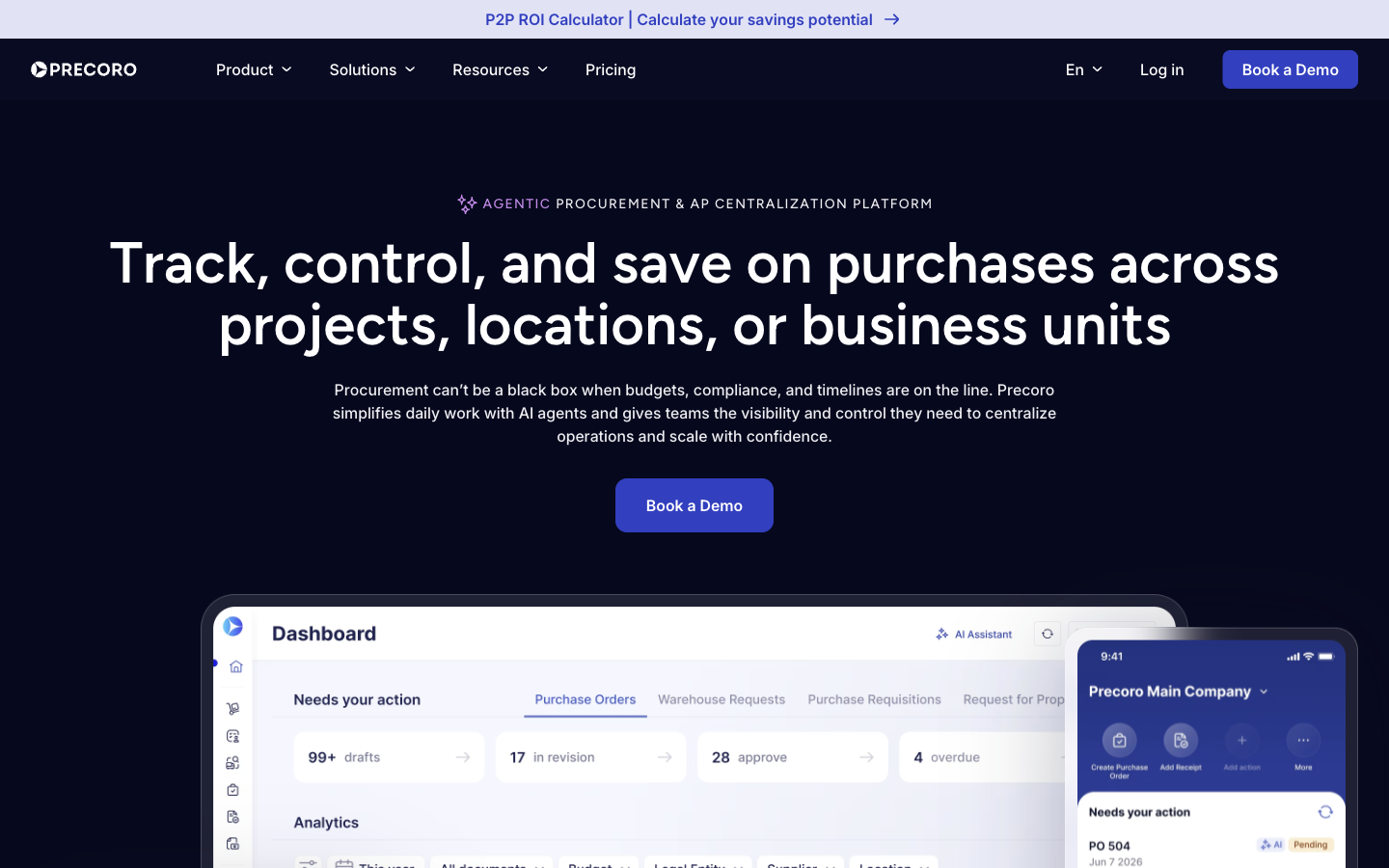
Precoro is a cloud-based solution for procurement centralization and automation. It unifies procurement operations, eliminates manual work, prevents maverick spend, and drives savings. The platform covers full procure-to-pay operations, including purchase orders, approval routing, supplier management, AP automation with AI-powered OCR, 3-way matching, spend management, and budget control across locations and departments.
It connects with ERP systems and business tools like NetSuite, QuickBooks, Xero, and Sage, and offers a free API for custom integrations. It is SOC 2 Type II compliant and supports SSO and 2-factor authentication, with painless onboarding that requires no IT involvement.
Approval Workflow - Fully customizable approval routing with unlimited levels, enabling fast and accountable procurement approvals across teams and subsidiaries.
Real-Time Budget Tracking - Monitors budget usage across locations and departments in real time, with visual progress tracking to prevent overspending.
AI-Powered OCR & AP Automation - Automatically extracts invoice data in the AP inbox, speeds up invoice processing, and supports 3-way matching to eliminate duplicate payments.
Supplier Management - Automates vendor onboarding and approval, provides a centralized supplier portal for communication, and stores all supplier information in one repository.
ERP & Tool Integrations - Seamlessly connects with NetSuite, QuickBooks, Xero, Slack, and Sage, automating data flow and reducing manual document handling.
Ease of use - Interface consistently praised for being intuitive, with predictable navigation that requires minimal training for new users.
Efficiency & simplicity - Streamlines the entire procurement cycle from requests to approvals, reducing back-and-forth emails and manual tracking.
Seamless approval process - Flexible approval matrix with unlimited customization levels that adapts to how teams actually operate.
Not intuitive for new users - The system can take time for newcomers to understand, especially when creating or reviewing requests for the first time.
Multi-subsidiary limitations - No central page to review or approve across different entities; users must navigate to each subsidiary individually.
Invoice processing issues - Some difficulties with approving invoices created from pictures in the AP inbox, and limited reconciliation between the P2P platform and accounting software.
Mid-market teams centralizing procure-to-pay in the cloud - companies that want purchase orders, approvals, and supplier management under one system without a full ERP rollout.
Organizations already on NetSuite, QuickBooks, Xero, or Sage - Precoro connects natively instead of requiring a new financial stack.
Teams that need SOC 2 Type II compliance and SSO out of the box - without pulling IT into the setup process.
3. Coupa - best for large, multi-entity enterprises
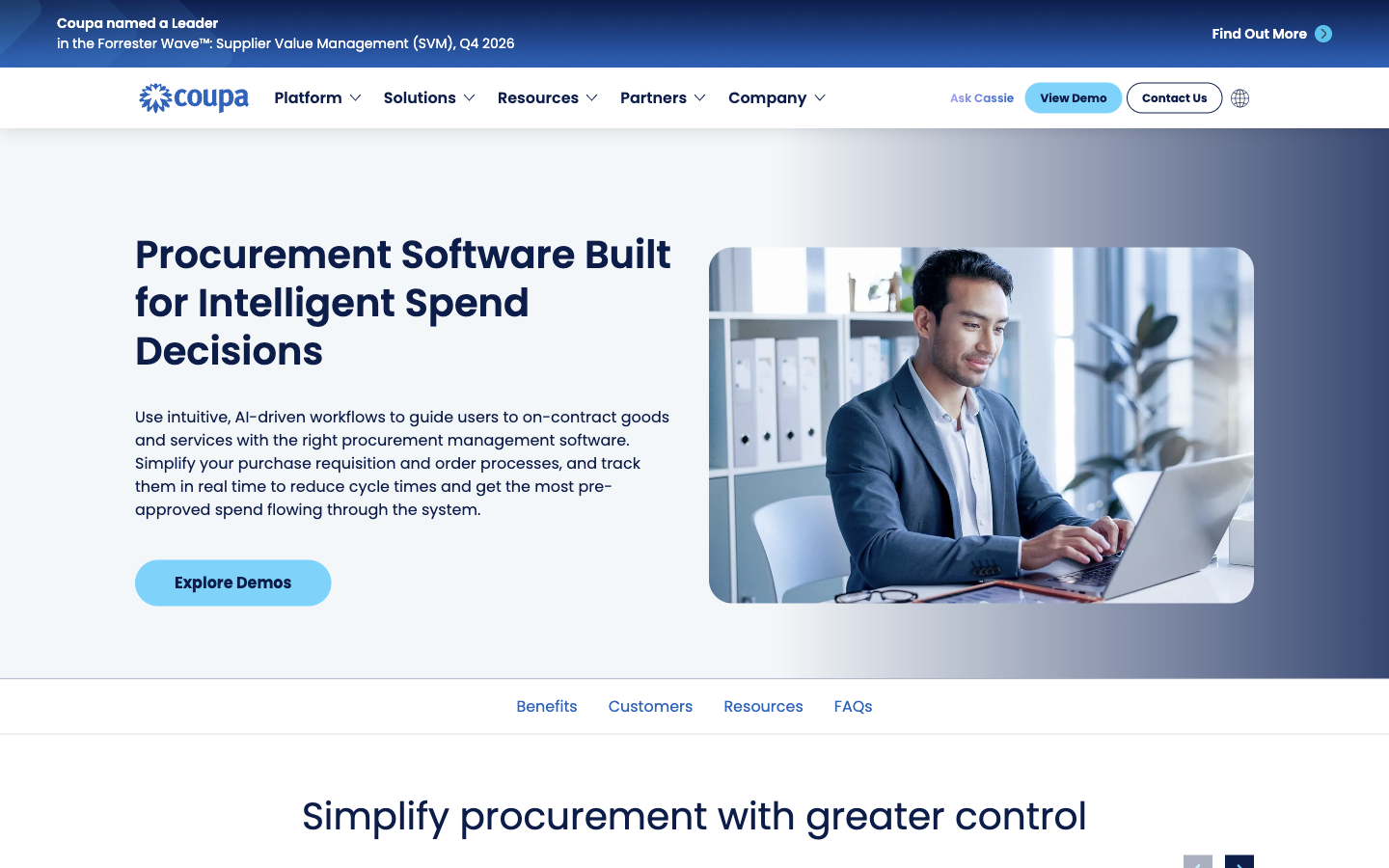
Coupa is the leading spend management platform built to help companies take control of their spend and position their business for resilience and growth. The platform centralizes requests and approvals, AP automation, vendor management, and global payments into a single unified system. It provides a guided buying experience that makes it easy for employees to find what they need and route requests to the right approvers.
Coupa automates and scales accounts payable with multi-level invoice validation, dynamic approval workflows, and full mobile access. It integrates easily with ERP systems to accelerate financial processes, ensure compliance, and give everyone in the organization a unified way to make smarter purchases.
Requests & Guided Buying - Centralized, intuitive buying experience that guides employees through purchases and routes requests to the right approvers automatically.
AP Automation & Invoice Management - Automates accounts payable with multi-level invoice validation, dynamic approval workflows, 3-way matching, and the ability to copy and create invoices directly from the inbox.
Expense Management - Streamlines expense reporting with mobile receipt capture, auto-population of purchasing card transactions, and full visibility for managers.
Vendor Management - Integrated vendor onboarding and management solution that allows vendors to self-service and eliminates silos between vendor management and accounts payable.
Global Payments - Fast, secure global payments platform that enables organizations to maximize rebates, manage working capital, and automate reconciliation all in one place.
Ease of use - Users find processing in Coupa straightforward, with all details viewable on a single screen and PO creation easy from start to finish.
Spend visibility & control - Easily track purchases, approvals, invoices, and expenses all in one place instead of juggling multiple systems or spreadsheets.
Automation saves time - Features like 3-way matching and expense approvals move smoothly, reducing manual follow-up and improving overall procurement efficiency.
Not user-friendly for vendors - Suppliers find the portal confusing and difficult to navigate, particularly when submitting invoices, which can delay transactions.
Poor interface design - The UI feels outdated across several tabs, navigation between modules can be slow and clunky, and the mobile app experience is less smooth than the desktop version.
Steep learning curve - New users take time to get comfortable with navigation; error messages can be vague, and the experience is not always consistent across modules.
Large, multi-entity enterprises - organizations running procurement, AP, and global payments across multiple business units or geographies that need one unified system.
Teams with dedicated procurement and AP staff - Coupa assumes a team operates it day to day, so it fits organizations that can staff that function.
Buyers prioritizing spend visibility over interface polish - companies willing to trade a longer rollout and a learning curve for purchases, invoices, and expenses tracked in one place.
4. SAP Ariba - best for SAP customers with large supplier bases
SAP Ariba is SAP's source-to-pay procurement software, built around the Ariba Network - a business network where buyers and suppliers exchange catalogs, purchase orders, order confirmations and invoices electronically. Its value comes from the supplier side as much as the buyer side: once a supplier is on the network, documents move between both companies without anyone rekeying them.
For a business with thousands of suppliers, that removes the per-supplier integration work that usually limits how much spend can be brought onto a system. Ariba also covers guided buying, sourcing events, contracts and supplier risk, and connects natively to SAP S/4HANA. The trade-offs are the usual enterprise ones: long implementations, custom pricing and a learning curve for occasional requesters.
Ariba Network - suppliers receive POs and send confirmations and invoices electronically.
Guided buying - steers requesters to preferred suppliers and contracted prices.
Sourcing and contracts - RFx events and contract management for direct and indirect spend.
Supplier management - qualification, risk and lifecycle management in one place.
Native SAP integration - built to work with SAP S/4HANA and SAP ERP.
Supplier network reach - no other procurement platform connects as many suppliers electronically.
Brings more of the supply base online than one-by-one supplier integrations allow.
The natural fit when SAP is already the financial system of record.
Usability - occasional requesters often find the interface hard to navigate.
Supplier fees - suppliers can pay network fees, which smaller vendors sometimes resist.
Value drops outside SAP - much of the advantage depends on running SAP ERP.
Large enterprises on SAP with supply bases in the thousands.
Organizations buying direct materials, where supplier connectivity drives the business case.
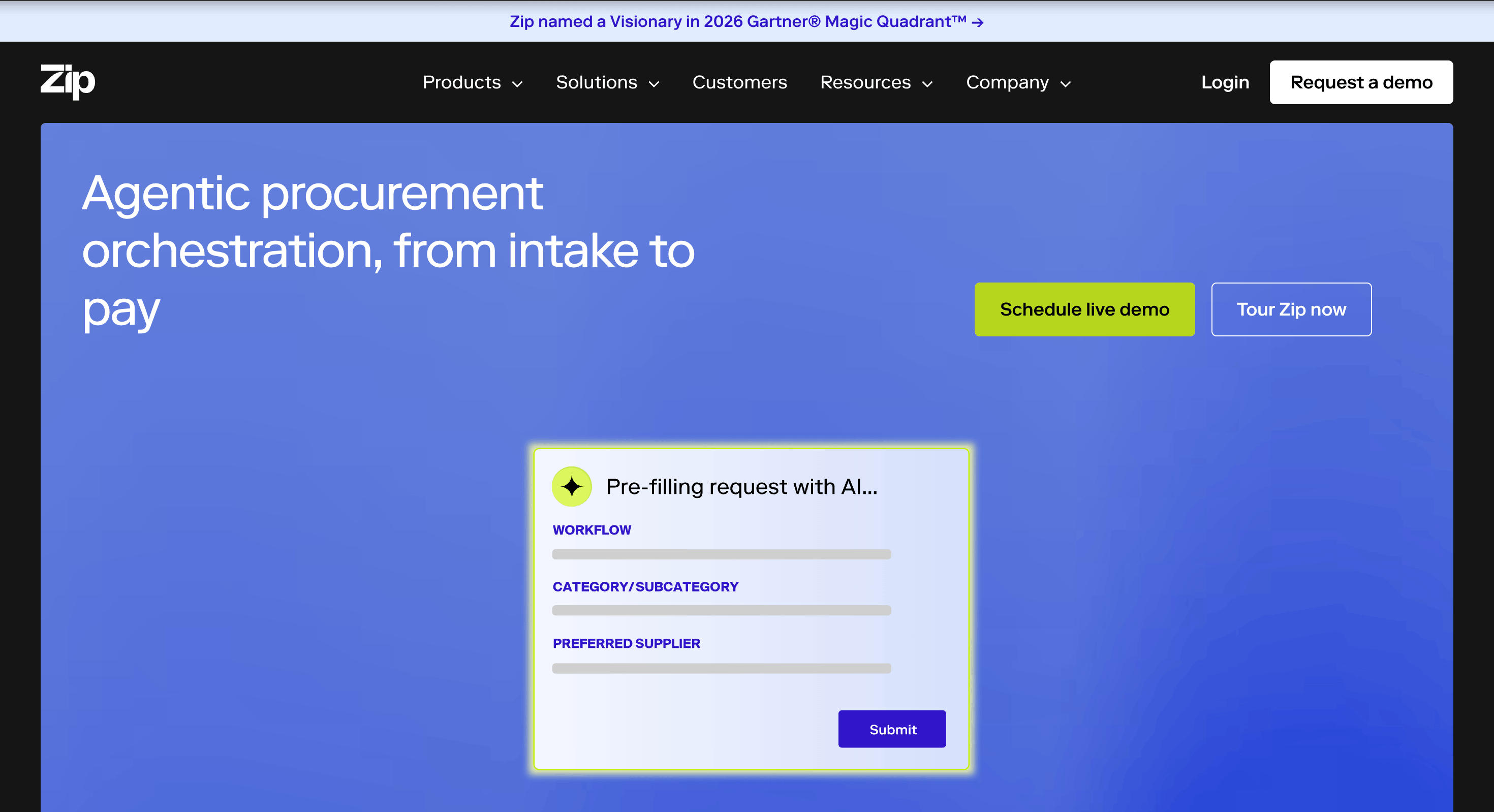
5. Zip - best for orchestrating approvals across existing systems
Zip is an intake and orchestration platform. Rather than replacing your ERP or contract system, it sits in front of them: every request starts in one intake form, and Zip routes it through legal, security, finance, IT and procurement, reading from and writing to the systems you already run.
That makes it a strong fit where the problem is approval sprawl - five teams, five processes and no single view of a request. It is less useful for a company with one ERP and a simple approval chain, because its value grows with the number of systems and teams it has to coordinate.
Single intake form for every request type and spend category.
Parallel routing across legal, security, finance, IT and procurement.
Two-way integrations with ERP, contract, ticketing and identity systems.
Supplier and renewal tracking across the request lifecycle.
AI agents that handle parts of review and routing.
Adds control without replacing the ERP.
Parallel reviews shorten approval cycles compared with sequential chains.
A clean requester experience, which helps adoption across the company.
Adds a layer to the stack rather than consolidating it.
Value depends on having several systems and teams to coordinate.
No published pricing, and it is priced above most mid-market tools.
Companies with an ERP they can't replace and approvals spread across many teams.
Organizations where approval cycle time is the main complaint.
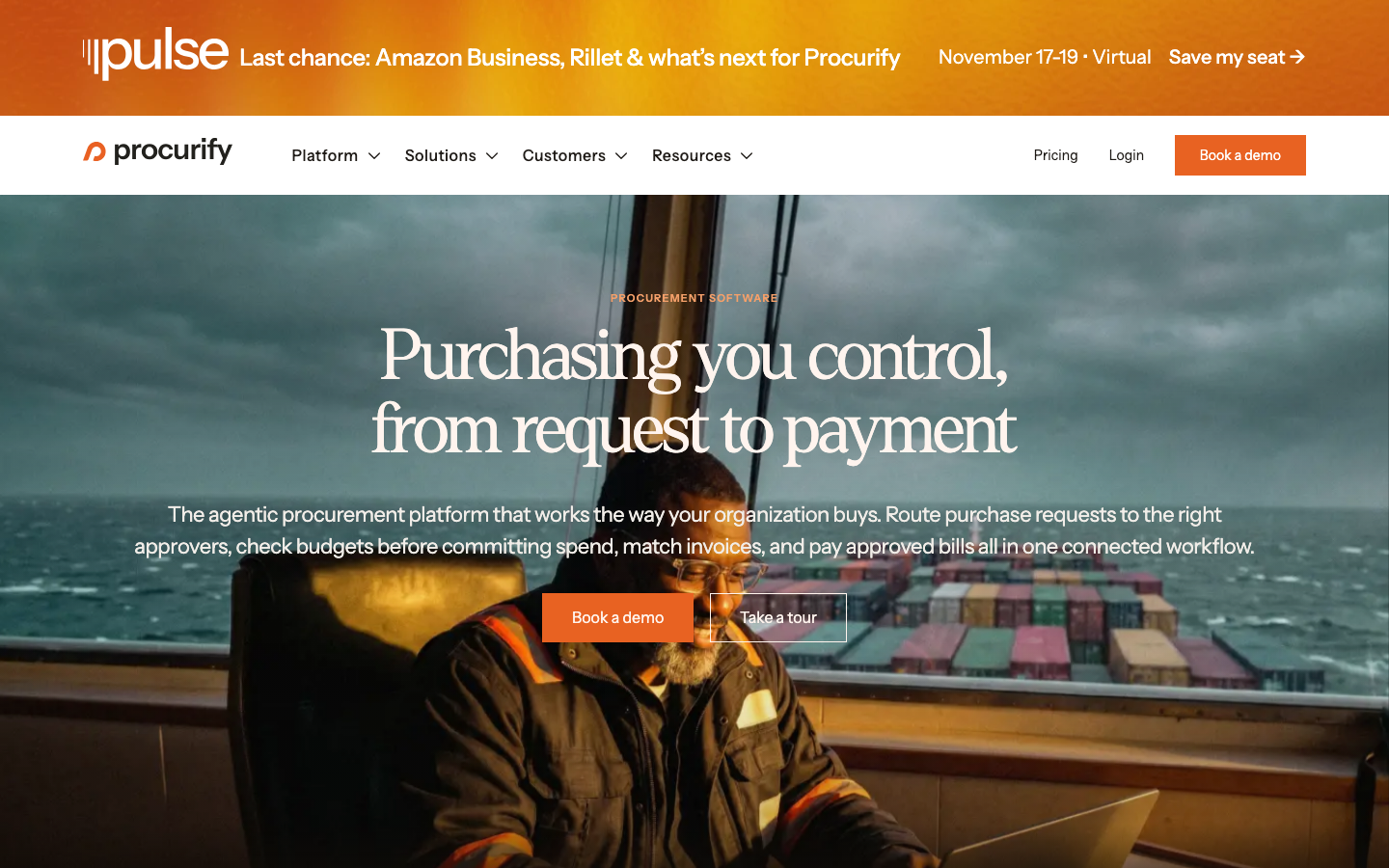
6. Procurify - best for budget control at the point of approval
Procurify is a cloud procure-to-pay platform for mid-market teams that is built around the budget. When a manager approves a request, they see how much of the budget is left at that moment, so an approval is a real spending decision rather than a formality.
It also links approvals to payment: Procurify can issue virtual and physical spend cards tied to an approved request and its limit. That closes the most common way purchasing gets bypassed, because the quick route - paying by card - becomes the controlled route. It has no sourcing or RFx module, so teams running formal tenders pair it with a sourcing tool.
Real-time budget visibility at the point of approval.
Virtual and physical spend cards issued against approved requests.
Requisitions, purchase orders and receiving in one workflow.
Mobile approvals for managers away from a desk.
Integrations with QuickBooks, Xero, NetSuite and Sage Intacct.
Cards tied to approvals close the biggest bypass route.
Budget-first design makes overspend visible before it happens.
Deploys in weeks, with a strong mobile experience for approvers.
Pricing isn't published.
No sourcing or RFx capability.
Card programs and their terms vary by region.
Mid-market companies where budget overruns are the main problem.
Distributed teams that buy on cards outside any approval process today.
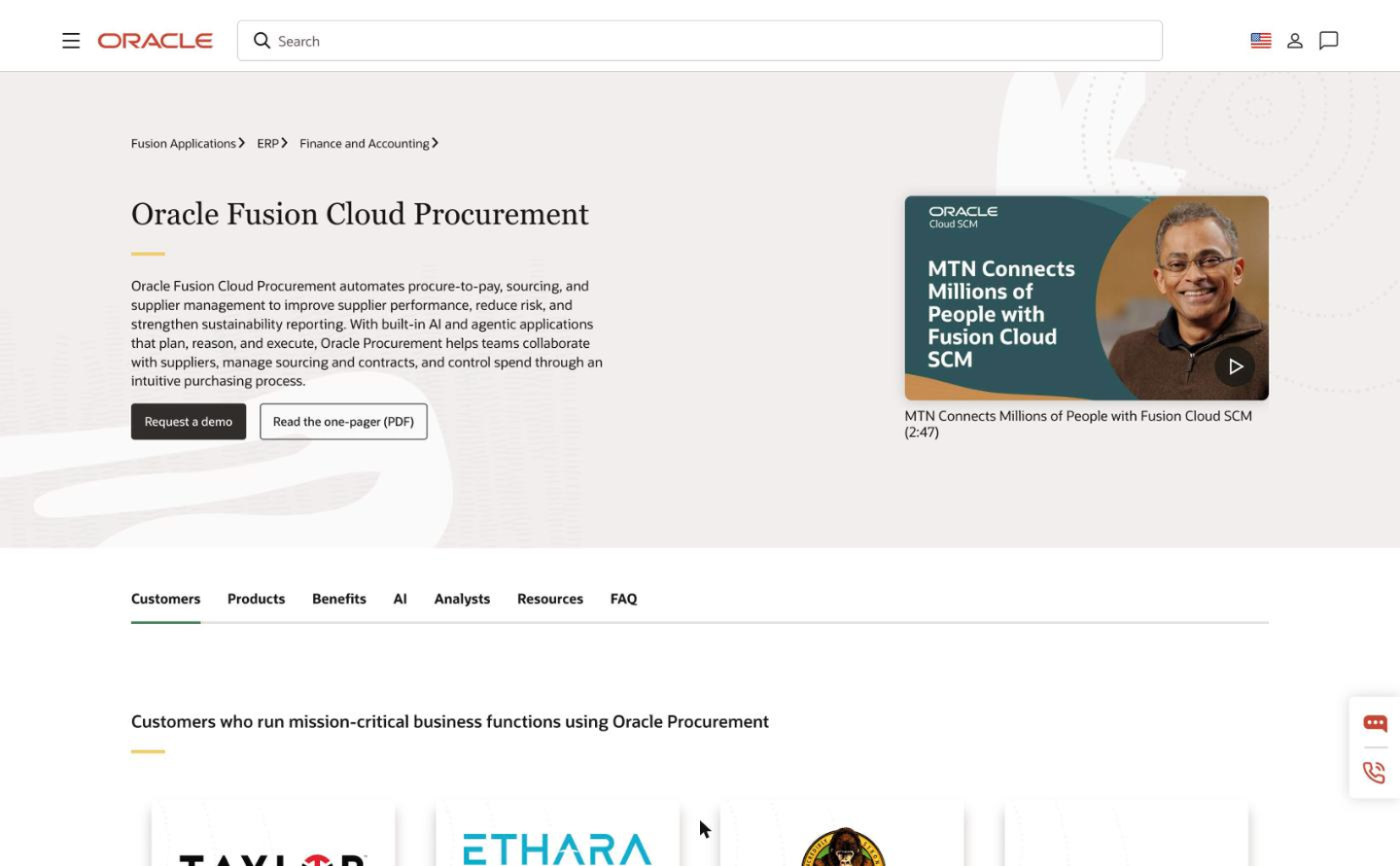
7. Oracle Fusion Cloud Procurement - best for Oracle ERP customers
Oracle Fusion Cloud Procurement is the procurement suite inside Oracle Fusion Cloud ERP. Its defining feature is that procurement, finance, projects and supply chain share one data model, so a purchase order, the budget it uses and the payable it creates are the same records rather than copies synced between systems.
For finance teams that spend real time reconciling procurement against the ledger, that removes the reconciliation step entirely. Outside an Oracle estate the advantage largely disappears, and implementations follow enterprise-suite timelines and pricing.
Long implementations that need dedicated internal resources.
Enterprises already running Oracle Fusion for finance or ERP.
Organizations where procurement-to-ledger reconciliation takes significant effort.
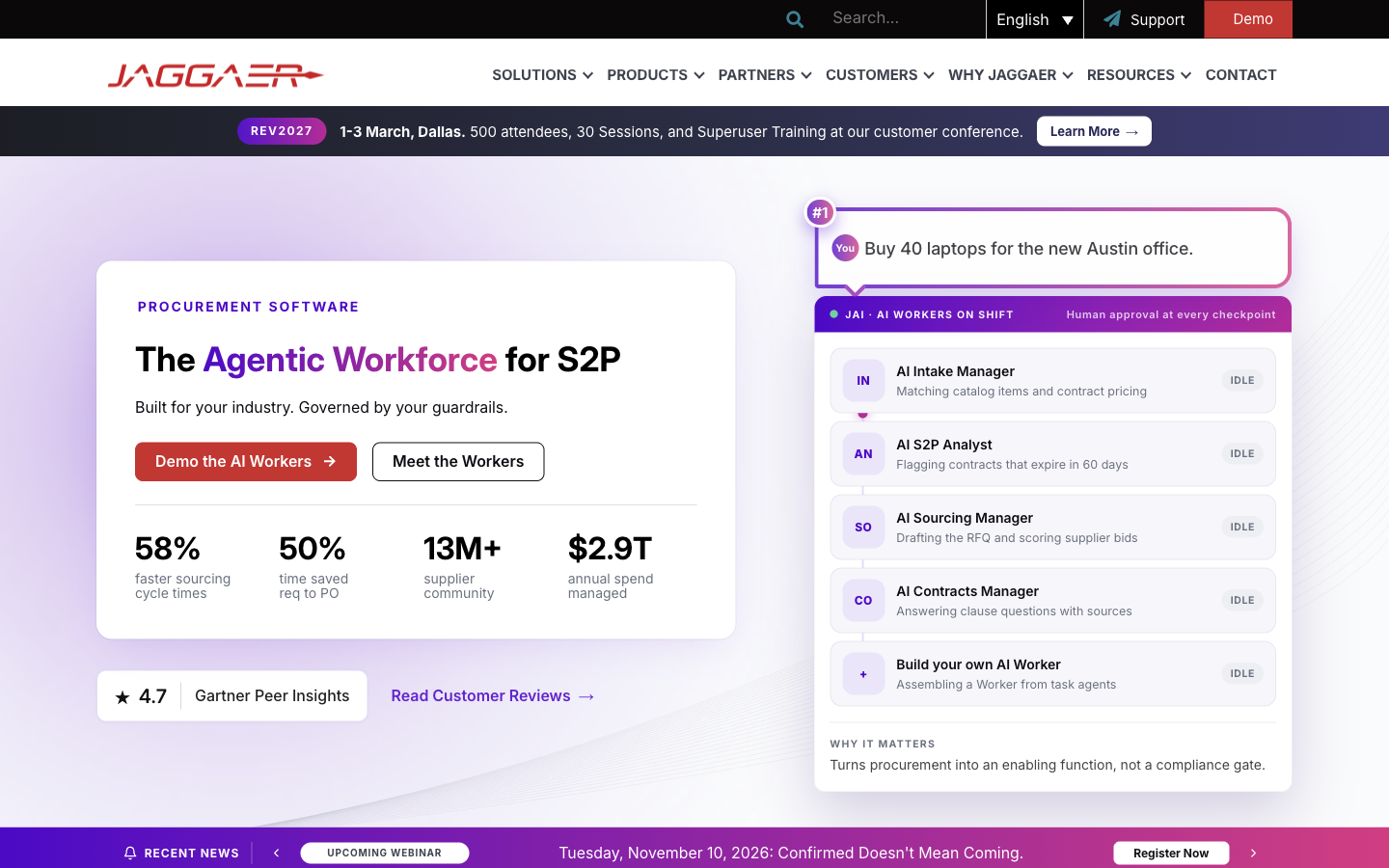
8. Jaggaer - best for complex direct and indirect sourcing
Jaggaer is a global leader in enterprise procurement and supplier collaboration, serving as a catalyst for enhancing human decision-making to accelerate business outcomes. It helps organizations manage and automate complex processes while enabling a highly resilient, accountable, and integrated supplier base.
Backed by more than 30 years of expertise, its AI-powered industry-specific solutions, services, and partnerships form JAGGAER One, serving direct and indirect, upstream and downstream procurement in settings demanding an intelligent and comprehensive source-to-pay solution. With 1,200 global employees, Jaggaer is focused on helping customers create value, transform their businesses, and accelerate their journey to Autonomous Commerce.
End-to-End Source-to-Pay Suite - Comprehensive JAGGAER One platform covering direct and indirect, upstream and downstream procurement processes in one connected system.
Supplier Collaboration & 360° View - JD SRM module offers supplier onboarding with a 360-degree view of suppliers, enabling collaboration across stakeholders and modules.
Highly Flexible & Customizable - Strong customization options across modules (especially JD SRM and JI) that allow organizations to design workflows tailored to specific business needs.
Punchouts, cXML Invoicing & Catalogs - Punchout capabilities, cXML invoicing, and compliant purchasing catalogs that automate invoice intake from top suppliers.
ERP & System Integrations - Connects with SAP S/4HANA Cloud, Workday, AppZen, EcoVadis, Moody's Analytics, Prewave, Workato, and more for seamless data flow.
Flexibility & Customization - Allows organizations to tailor the system to specific procurement needs across multiple modules.
End-to-End Process Coverage - Multiple modules can communicate to map end-to-end processes, harmonizing decentralized purchasing structures.
Strong Support Partners & Consultancy - Professional consultancy team with strong expertise that supports projects and ongoing improvements.
Complex UI/UX - Interface can feel confusing with too many clicks required to complete processes; lacks consistency across modules.
Slow Updates & Support Gaps - Slow release of new features and inconsistent customer support response on complex issues.
Long Implementation Time - Initial setup is difficult and time-consuming (10 months average), especially with non-SAP ERPs like Workday.
Large enterprises running complex direct and indirect sourcing across decentralized purchasing structures that need one connected system.
Organizations with dedicated procurement teams and consultancy budget - JAGGAER's customization depth pays off when a team can invest in tailoring workflows and manage a 10-month average implementation.
Companies already on SAP S/4HANA Cloud looking for the deepest native fit, though Workday and other non-SAP ERPs are also supported.
9. Ivalua - best for manufacturers buying direct and indirect
Ivalua is a source-to-pay suite known for configurability. Instead of asking you to adopt its process model, it gives you a no-code layer to shape workflows, fields, objects and approval logic around your own requirements - without custom development.
It also covers direct and indirect spend in one platform, which matters for manufacturers that need bills of materials, quality specifications and supplier qualification alongside everyday purchasing. The flip side is that configuration work sits with the customer, so it works best with a named internal owner and a clear process.
No-code configuration of workflows, fields, objects and approvals.
Direct and indirect spend managed in one platform.
Full source-to-pay: sourcing, contracts, orders, invoicing and payments.
Integration with several ERPs at once.
Supplier risk, performance and relationship management.
Handles requirements that push other suites into custom development.
One of few platforms that covers direct alongside indirect spend.
Multi-ERP support suits companies that grew by acquisition.
Configuration effort sits with the customer and needs an owner.
Less brand recognition than Coupa or SAP, so internal buy-in can take longer.
Enterprise pricing and timelines put it out of reach for most mid-market teams.
Manufacturers and complex enterprises buying both direct and indirect.
Organizations running several ERPs with no plan to consolidate.
10. GEP SMART - best for enterprises short on procurement headcount
GEP SMART is GEP's source-to-pay platform, covering sourcing, contracts, procurement and invoicing. What sets GEP apart is that it is also a procurement consulting and managed services firm, and its services teams work on the same platform its customers use.
That means a company without the people to run category strategy, supplier negotiations or tail spend can buy the capability as well as the software. The trade-off is deeper dependence on one provider, so it is worth agreeing documentation and knowledge-transfer terms up front.
Unified source-to-pay across sourcing, contracts, procurement and invoicing.
AI-driven automation across procurement processes.
Managed procurement services delivered on the same platform.
Supply chain software available from the same vendor.
Multi-ERP integration and enterprise supplier management.
Solves a capacity problem as well as a software problem.
Procurement and supply chain available from one provider.
Consulting depth behind the implementation.
Combining software and services makes the relationship harder to exit.
Know-how can build up at the provider instead of in-house.
Enterprise pricing with no published rates for software or services.
Enterprises whose constraint is procurement headcount rather than tools.
Organizations that want procurement and supply chain from one provider.
11. Zycus - best for high-volume enterprises with heavy manual processing
Zycus is a source-to-pay suite whose product direction leans heavily on AI agents. The aim is not just faster routing to people, but agents that complete steps - supplier discovery, data enrichment, contract term extraction, invoice exceptions and sourcing administration - without someone in the loop.
Those are the steps that take procurement time without needing judgment, so where the agents work well they change how many people the process needs. As with every vendor making agent claims, ask for reference customers running the agent features in production and which steps run without human review today.
AI agents for supplier discovery, data enrichment and exception handling.
Full source-to-pay: sourcing, contracts, procurement and invoicing.
Contract term extraction and obligation tracking.
Spend analysis and category management.
Integrations with SAP, Oracle, NetSuite and other ERPs.
One of the most agent-led product directions among the large suites.
Full suite coverage, so agents can work across the whole process.
Strong fit for high transaction volumes.
Agent capabilities across the category are ahead of proven production use.
Smaller North American reference base than Coupa or SAP.
Enterprise pricing with no published rate card.
Enterprises with high transaction volume and a large manual processing load.
Teams ready to run a proper proof of concept on agent features.
12. Tradogram - best for small teams that need core PO and invoice matching
TRADOGRAM provides customizable tools to streamline Requisitions, Purchase Orders, RFQs/RFPs, Contracts, Receiving, and Invoice Matching. It also helps manage the process with User Permissions, Locations, Budgets, Items Catalog, Supplier Management, Projects and much more. The platform offers the latest technology with top security and performance criteria at a straightforward price.
Requisitions, Purchase Orders, RFQs/RFPs, Contracts, Receiving, and Invoice Matching.
User Permissions, Locations, Budgets, Items Catalog, Supplier Management, and Projects.
Supplier Portal and 3-Way Invoice Validation with price comparison model and vendor onboarding.
AI Scan feature for procurement automation.
QuickBooks Online integration.
Ease of Use - User-friendly interface and intuitive to use and set up.
Tracking Ease & Organization - Centralizes purchasing tasks, making it easier to manage orders and track expenses.
Customer Support - Personal and genuinely invested customer service personnel.
Steep Learning Curve - Training was a little lackluster; many things had to be revised after learning the software.
Inefficient Procurement - Rigid system; not flexible to customize fields relevant to operations.
Integration Issues - Not cleanly compatible with other software without additional expense.
Small and budget-conscious teams that want requisitions, POs, and invoice matching in one tool without enterprise-level pricing.
Companies that need core procure-to-pay basics rather than deep ERP integration, since connections beyond QuickBooks Online require extra work.
Teams that can operate within a fixed field structure rather than needing heavy customization to match unique operational workflows.
13. Tipalti - best for companies paying a high volume of global suppliers
Tipalti is accounts payable automation software with procurement available as an add-on module. Its core is the payables side of procure-to-pay: suppliers onboard themselves through a self-service portal, invoices are captured and GL-coded automatically, POs are matched 2-way or 3-way, and payments go out in 200+ countries and territories on local rails, with W-9 and W-8 collection and tax ID validation built in.
Teams usually come to Tipalti to fix AP and then extend it upstream to purchase requests and POs with the Procurement module. It fits best when paying a large, international supplier base is a bigger problem than intake and approvals. It integrates with NetSuite, Sage Intacct, QuickBooks, Microsoft Dynamics and SAP, and supports multiple entities in one instance.
Supplier onboarding - self-service supplier portal with tax form collection (W-9/W-8) and tax ID validation.
Invoice automation - invoice capture, GL coding and 2-way or 3-way PO matching synced with the ERP.
Global payments - pay suppliers in 200+ countries and territories in local currency, with fraud and OFAC/AML screening.
Multi-entity support - manage several legal entities in one instance with entity-level rules and ERP sync.
Add-on modules - Procurement, Expenses and Treasury extend the platform beyond AP.
Ease of use - simplifies supplier onboarding and day-to-day invoicing.
Efficiency - fast online payments and smoother supplier interactions.
Responsive customer support - users report quick help when issues come up.
Payment timing - some users report occasional failed or delayed payments.
Reporting depth - reporting is more limited than some teams need.
Procurement is an add-on - request intake and approvals are not the core of the product.
Companies paying a high volume of global suppliers or partners across many countries and currencies from one system.
Multi-entity organizations that need centralized reconciliation and a faster month-end close.
Finance teams on NetSuite, Sage Intacct, QuickBooks, Microsoft Dynamics or SAP that want ERP-synced PO matching.
14. Brex - best for fast-growing companies running spend on corporate cards
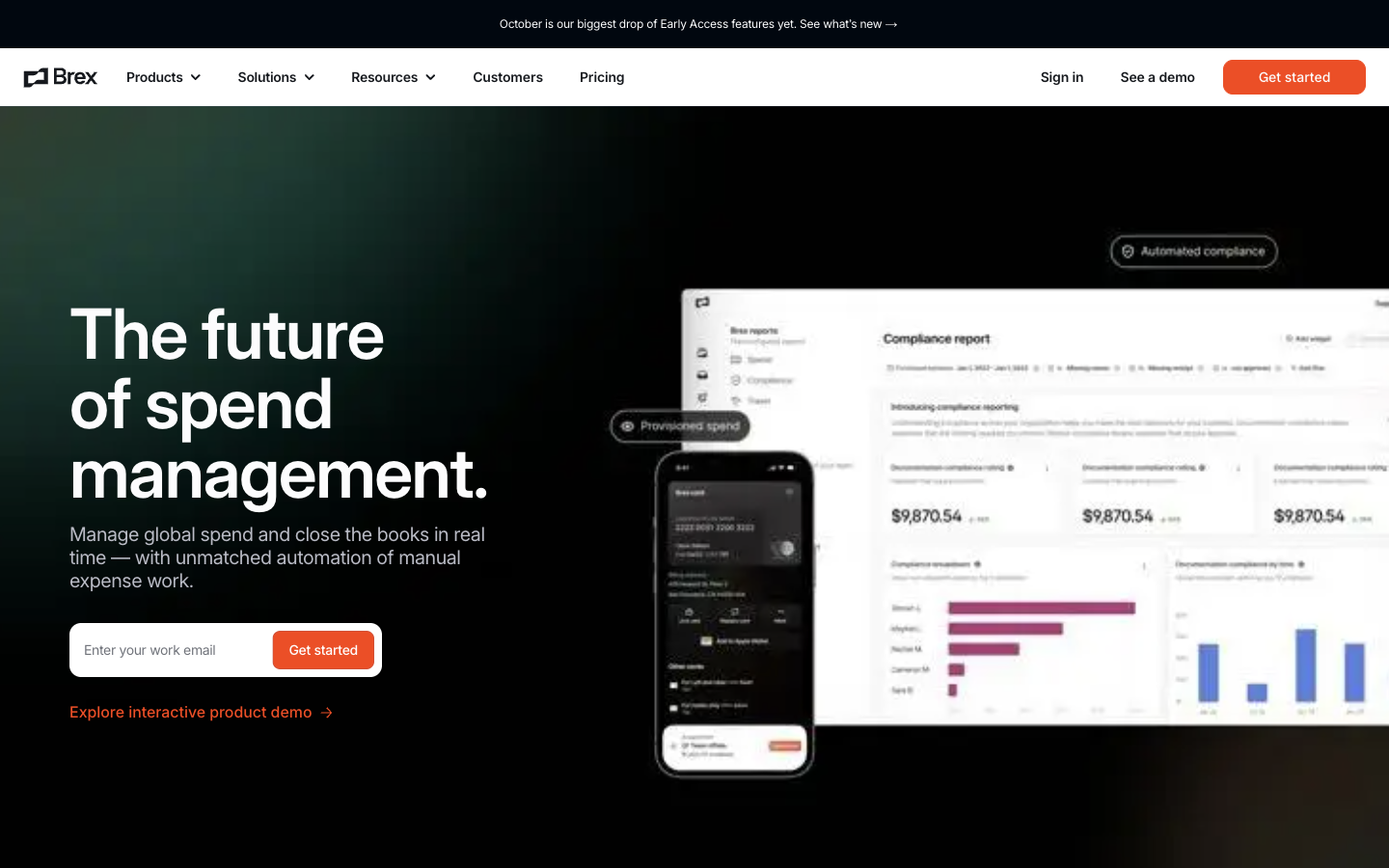
Brex is a spend management platform built around corporate cards. It combines cards, expense management, reimbursements, travel, bill pay and business accounts in one system, with spend limits, policies and approval chains set by team or role, so purchases are controlled when the card is used rather than after the receipt arrives.
For procurement, Brex covers the payment end of the cycle - card spend, bill pay and spend-limit approvals - rather than supplier onboarding, contracts or sourcing. Many teams run it alongside procurement software, which handles the request, vendor and contract side while Brex pays. It connects with NetSuite, QuickBooks, Xero, Workday and Coupa.
Ease of use - intuitive interface and quick setup.
Expense management - simplifies receipt uploads and expense tracking.
Customer support - responsive support with smooth onboarding guidance.
Approval friction - some users report friction in the approval process.
Manual entry - occasional manual entry is still needed despite automation.
Not a full procurement suite - supplier management, contracts and sourcing sit outside the product.
Fast-growing companies that want corporate cards, expenses and bill pay managed from one account.
Teams already on NetSuite, QuickBooks, Xero, Workday HCM or Slack that want spend data to flow straight into them.
Distributed teams that need cards issued and controlled from a single admin console.
15. Rippling - best for companies that want HR, IT and spend in one system
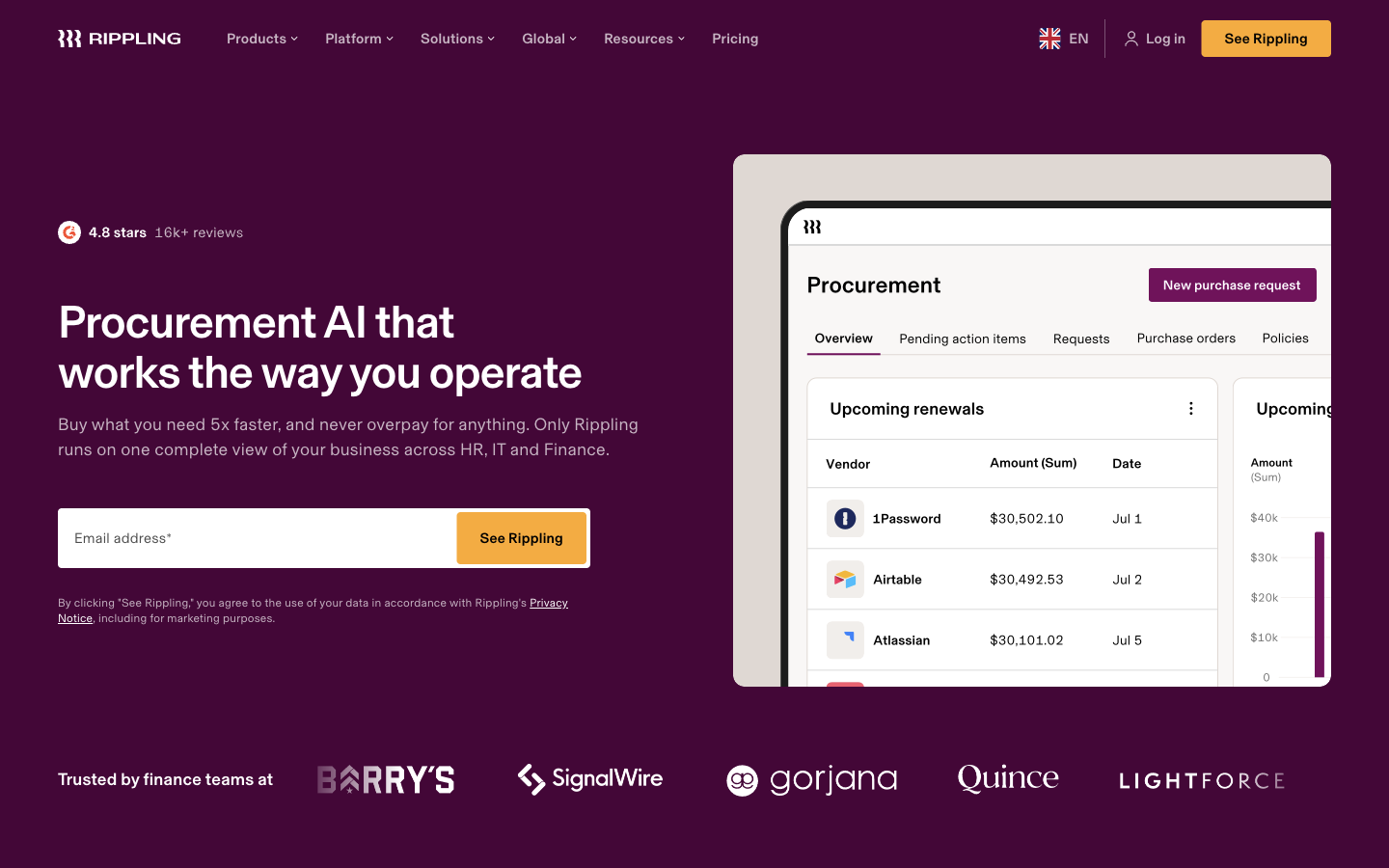
Rippling is a workforce platform that runs HR, payroll, IT and finance from one employee database. Its spend products - corporate cards, expenses, bill pay and procurement - use that same data, so approval rules can follow department, role and manager automatically, and spend policies update when someone joins, moves or leaves.
That makes Rippling strongest for companies that already run HR and IT on it and want purchasing to follow the same org chart. Procurement is one module among many rather than the core of the product, so teams with complex sourcing, supplier risk or contract needs usually pair it with dedicated procurement software.
"With Spendflo, we finally have a structured procurement process - no more redundant software, no more ambiguity, just complete oversight and cost savings."
"We started with just SaaS procurement, but now Spendflo is our full procurement-to-pay platform from vendor intake and due diligence to renewals and contract management"
"The Spendflo platform has been extremely useful to us. It's a repository of all our contract information, improves communication across teams, and consolidates everything in one place. It has truly optimized how we manage procurement."
How we evaluated these procurement software platforms
In 2027, the best procurement software doesn't just record purchases - it runs intake, approvals, contracts and payment with as little manual follow-up as possible. We evaluated 30+ platforms and selected these fifteen against seven criteria, each tied to a problem procurement teams face every day:
Criterion
What we checked
Challenge it tests
Intake and workflow coverage
Requests captured from Slack, Teams or a form and routed across finance, IT, legal and security
Off-system buying and slow approvals
Automation that acts
Whether the software routes, matches and flags on its own, or only reports
Lean teams buried in manual follow-up
Tracking and visibility
Request status, committed spend and cycle time visible in real time
"Where is my request?" and budget surprises
Supplier and contract management
Onboarding, risk reviews, obligations and renewal alerts
Supplier risk and missed renewals
ERP integration
Two-way sync with NetSuite, SAP, Oracle, Dynamics, QuickBooks or Sage
A second system of record and reconciliation work
Time-to-value
How quickly the first real request runs end to end
Long rollouts that stall adoption
Pricing model
Whether pricing is published, and what drives the cost
Budget surprises at signing and renewal
Where a vendor's own documentation and user reviews disagreed, we gave weight to what users reported.
Conclusion
Procurement teams used to compete on how many vendors they could manage. Now they compete on cycle time, savings rate, and the share of spend they actually see. Software is the tool that changes the math - but only if it's built for how teams actually buy today.
If you want one front door for every purchase, approvals that finish in days, and contracts and renewals tracked through to payment, an intake-led procurement platform will serve your team better than a legacy suite that takes a year to roll out.
It is business software that runs the buying cycle in one place - requests, approvals, purchase orders, supplier records, contracts, invoices and payments, plus reporting on where the money goes. Teams use it to replace email and spreadsheet buying with a controlled, auditable process.
2. What is the best software for procurement?
It depends on size and scope. Large enterprises running complex sourcing usually shortlist Coupa, SAP Ariba, Jaggaer, Ivalua or GEP SMART. Mid-market and enterprise teams that want fast intake and approvals over their existing ERP look at intake-led platforms such as Spendflo and Zip. Smaller teams that mainly need POs often pick Precoro, Procurify or Tradogram.
3. Which software is used in procurement?
Most companies use two layers: an ERP such as NetSuite, SAP, Oracle, Workday or Microsoft Dynamics as the financial system of record, and a procurement platform for intake, approvals, POs and suppliers. Larger teams add sourcing, contract management and supplier risk tools, or buy them together as a source-to-pay suite.
4. What are the top 5 procurement software tools?
Five names appear on most 2027 shortlists: Coupa, SAP Ariba, Ivalua, Zip and Spendflo. Coupa and SAP Ariba are common picks for large-enterprise spend management, Ivalua for highly configurable source-to-pay, and Zip and Spendflo for intake-led procurement that goes live in weeks rather than months.
5. What's the best procurement software for small businesses?
Small businesses usually need simple POs, approvals and budget checks rather than a full suite, so lighter tools such as Precoro, Procurify and Tradogram are common choices. Pick one that syncs with your accounting system - QuickBooks, Xero or NetSuite - and can grow into contracts and supplier management. More in our guide to procurement software for small business.
6. Procurement software vs. purchasing software - what's the difference?
Purchasing software handles transactions: POs, deliveries and payments. Procurement software covers the full lifecycle - intake, approvals, suppliers, contracts and analytics. One is tactical, the other strategic.
7. Is procurement software the same as P2P or S2P?
Procure-to-pay (P2P) is one slice of procurement software. Source-to-pay (S2P) adds sourcing events and contract evaluation on top. Procurement software - or procurement management software - is the umbrella category that contains both.
8. How much does procurement software cost?
It depends on company size, the modules you need and how the vendor prices - per user, per module or by spend under management. Lightweight PO tools cost the least, intake-led platforms sit in the middle, and enterprise source-to-pay suites cost the most once implementation is included. Ask each vendor for a quote based on your request volume and ERP.
9. How long does procurement software take to implement?
Modern platforms: 4 - 8 weeks. Legacy enterprise suites: 6 - 12 months. Implementation speed is one of the most underrated buying criteria.
10. What is procurement automation software?
Procurement automation software is procurement software that removes manual steps from buying. It captures requests, routes approvals, creates purchase orders, matches invoices and tracks renewals automatically, so the procurement team isn't forwarding emails or retyping data into the ERP.
11. What is procurement workflow software?
Procurement workflow software decides who approves a purchase and in what order. It branches by category, cost center, risk and amount, enforces policy before a PO is issued, runs reviews in parallel and keeps an audit trail of every approval.
12. What is procurement tracking software?
Procurement tracking software shows where every request, purchase order and invoice stands, how much budget has been committed, and when contracts renew. It replaces status-check emails with a live view for requesters, finance and procurement.
13. How do I choose a procurement software provider?
Start with company size, your ERP and the problem you need to fix. Then compare providers on time to first live request, who runs the implementation, full pricing including modules and renewals, two-way ERP integration, and a reference customer similar to you. US companies should also check SOC 2 Type II, SSO and vendor privacy reviews.
Better Procurement, straight to your inbox
Latest trends and best practices for finance and procurement teams.
Find out why dozens of Finance and procurement leaders use Spendflo to optimize their SaaS spend.
You can schedule a meeting time on the next screen.
In your demo with one of our expert buyers:
Renewals done for you
No more requests stuck in approval queues
No more contracts signed without a risk check
No more invoices paid without a PO match
4.6/5 on G2
With Spendflo, we finally have unified visibility. We can look in one portal and see all our spend, upcoming renewals, and how we’re actually using the licenses we’re paying for.