




Something changed in the last couple of years. Not incrementally. Structurally.
The most efficient procurement functions at mid-market companies today are not the ones with the most software or the most headcount. They're the ones who figured out something earlier than everyone else.
AI agents are now capable of doing procurement work. Not routing it. Not summarising it. Actually doing it.
That shift created a new role. We call it the procurement engineer.
The procurement engineer doesn't process requests. They design the systems that process them. They configure agents that triage intake, read contracts, match invoices, and benchmark renewals. Then they tune those agents against outcomes until the system gets sharper with every transaction.
One procurement engineer running a well-configured agent stack handles the workload of a team three times their size.
This isn't a prediction. It's already happening inside mid-market companies running Flo today. The people doing it are the same procurement leads, category managers, and AP coordinators who were already closest to the work. They didn't change jobs. They changed what the job means.
In this guide, we share how procurement engineering is taking shape inside companies running Flo, describe live workflows, and offer a practical framework for how to structure and hire for the role.
Why procurement engineering is breaking out now
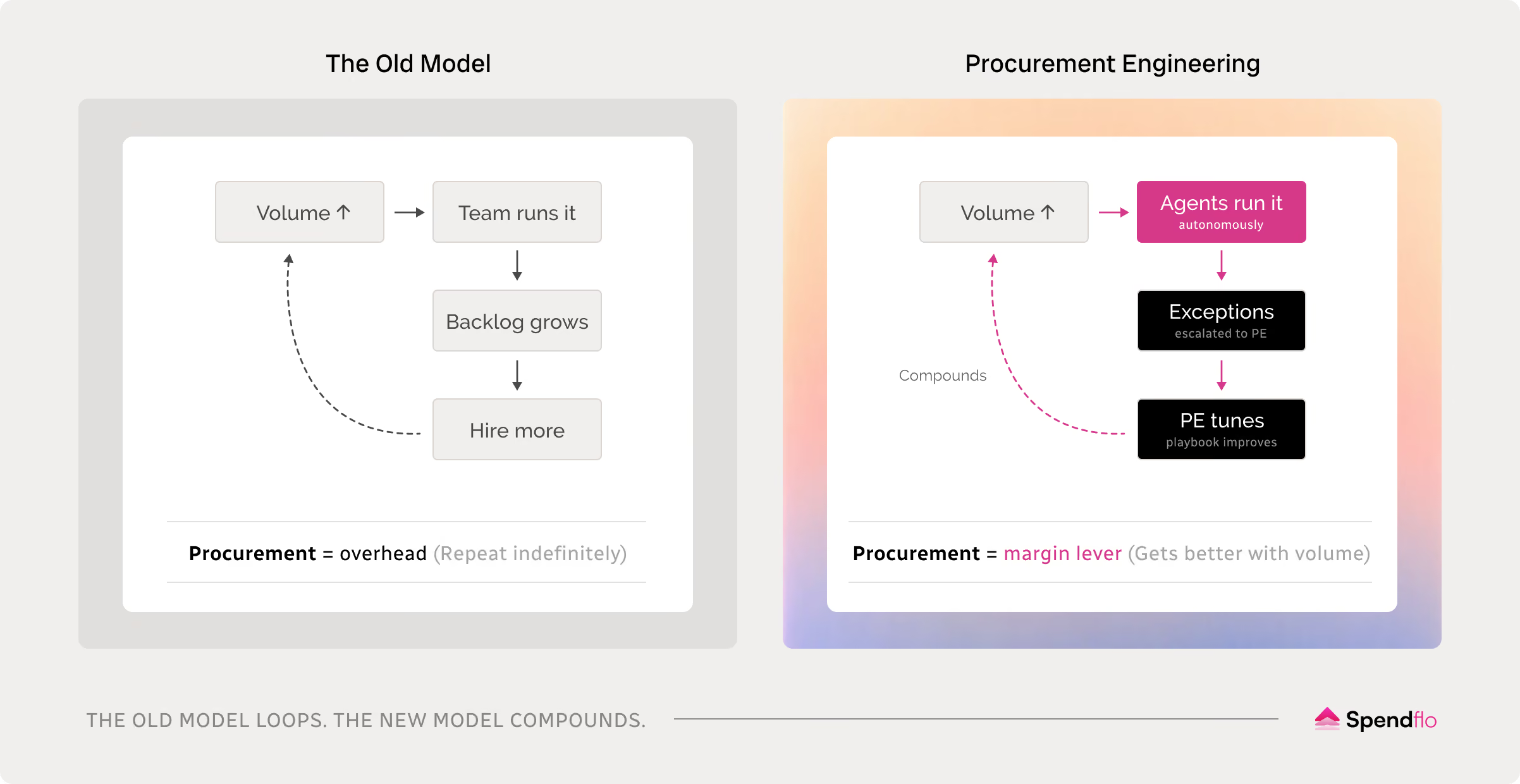
For thirty years, the answer to a growing procurement workload was the same.
Buy better software. Hire more coordinators. Repeat.
Every new platform promised to organise the work. None of them did the work. The backlog kept growing. Procurement kept being seen as overhead.
Two shifts made that model obsolete. They happened fast, and they happened at the same time.
Shift one: volume outgrew the team
A mid-market company today onboards dozens of new vendors a quarter, manages hundreds of active contracts, and processes hundreds of invoices a month.
Procurement headcount hasn't kept pace. It's the same 1 or 2 people it's been for years.
Better software made each person faster. It didn't change the underlying equation. When you add 40 new SaaS vendors in a year and your procurement team stays flat, the backlog wins.
Shift two: agents crossed the capability threshold
This is the part that changed fast. Not gradually. Abruptly.
Until recently, an AI model reading a 34-page MSA against your legal playbook and flagging off-market clauses was not a real thing. Today it is.
Two years ago, matching a non-standard invoice to the PO and the contract before escalating the exception required a rules-based system with brittle edge cases. Today an agent does it without rules.
Not long ago, benchmarking a renewal quote against what comparable companies pay for the same vendor required a procurement consultant or a week of research. Today it takes minutes.
These aren't marginal improvements. A capability threshold was crossed. The tasks that required a trained human two years ago can now be configured into an agent running autonomously. That changes the operating model entirely.
One shift created the pressure. The other created the way out. Rising volume made the old model impossible to staff through. Capable agents made it possible to run without staffing it.
What procurement engineering actually is
Procurement engineers run intake-to-pay using AI agents instead of headcount.
They configure the agents, tune the playbooks against outcomes, and own the exceptions the agents escalate. The role sits at the intersection of procurement expertise and systems operation.
A useful analogy: think about what happened to accounting when spreadsheets replaced ledger books. Accountants didn't disappear. The job changed. The people doing it stopped being human calculators and started being financial analysts. The spreadsheet handled the computation. The accountant owned the interpretation and judgment.
Procurement engineering is that same shift, compressed into a shorter timeframe.
"The job is changing from transaction processor to systems operator: someone who configures the agents, tunes the playbooks, and reads the outcomes."
Procurement engineers own outcomes across every part of the intake-to-pay cycle:
- Sourcing and intake. Configure agents that triage requests, apply policy, route approvals, and benchmark vendors against historical spend — without a single ticket sitting in a queue.
- Contracts. Configure agents that read every MSA, order form, and renewal against your playbook, flag risk clauses, extract obligations, and surface renewals before they auto-fire.
- AP and payments. Configure agents that match invoices to POs and contracts, approve the clean ones, and surface only the genuine exceptions.
When procurement teams turn into procurement engineers, they stop processing requests and start engineering how spend gets controlled.
What it is not
Procurement engineering is not automation. Automation follows rules. An automation rule breaks the moment it encounters a non-standard invoice or an unusual contract clause. It escalates everything it wasn't explicitly programmed for — which is most of the interesting cases. Agents exercise judgment. They read the situation, apply context, and decide. The exceptions they escalate are genuine exceptions, not noise.
It is not a new software deployment. Most procurement software assumes your team runs the workflow. Someone opens the request. Someone reviews it. Someone routes it. The software organises the work. Procurement engineering assumes the agent runs the workflow. The team configures the agent and reviews the exceptions. One model makes your team faster. The other makes the work happen without your team in the loop.
And it is not a copilot. A copilot surfaces information and waits for a human to act. A procurement engineer deploys agents that act, then escalate only what genuinely requires human judgment. The job isn't to use AI. It's to design a system where AI runs the execution layer and humans own the decisions that matter.
The last concern worth naming directly: most procurement leads worry that if they configure all of this, their stakeholders will route around it anyway. Three systems in four years, each abandoned within six months. That fear is earned. The difference with agent-based procurement engineering isn't tighter rules — it's a faster, more frictionless experience for the employee submitting the request. When intake takes 90 seconds and the approver gets everything they need in one view, people stop routing around the system because the system stops feeling like an obstacle.
How it works: the three rungs
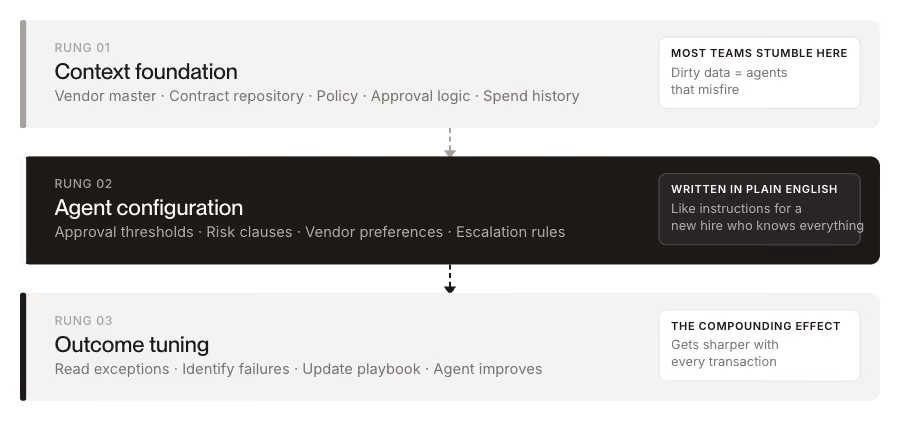
Everything a procurement engineer builds rests on the context underneath it. From there, the work climbs three rungs, and each rung is only as strong as the one below it.
Rung 1: context foundation
Without your vendor history, contracts, benchmarks, policy, and approval logic, an agent is a chatbot. With them, it's a procurement professional.
Context foundation means pulling every vendor, contract, PO, invoice, and approval rule into one layer. Deduplicating vendors across subsidiaries. Mapping ownership. Encoding policy in plain English an agent can act on.
Most teams stumble here. They run agents on top of a dirty vendor master and a contract repository nobody has touched in two years. The agents misfire. Trust breaks down. The project stalls.
None of this works on a shaky foundation. Every dollar a PE recovers traces back to clean context: accurate vendors, complete contracts, policy an agent can actually act on.
Rung 2: agent configuration
Once the context is solid, the procurement engineer writes the playbooks each agent runs on.
Approval thresholds. Risk clauses to flag. Vendor preferences. Exception logic. Escalation rules.
This is not coding. It's closer to writing instructions for a capable new hire who knows everything about your vendor history and contract portfolio but needs to be told how you want decisions made. The procurement professional who has negotiated these contracts and matched these invoices is exactly the right person to write those instructions.
Rung 3: outcome tuning
After the agent runs, the procurement engineer reads what it did: where it escalated, where it got it wrong, where the thresholds need adjusting. That feedback goes back into the playbook.
The agent gets sharper with every transaction. A well-configured agent running on clean context gets better over time — which is the opposite of what happens with a human team under volume pressure.
Procurement engineering at Spendflo
At Spendflo, our procurement engineers operate like an internal ops team for the procurement function. They identify spend leaks, configure agents, ship workflows, and scale what works.
Success is measured in dollars saved, cycle time compressed, and touchless transactions processed.
Their work covers intake, contract review, vendor management, AP, and month-end close. They build new agent playbooks and scale tactics that one customer figured out into something the entire customer base can run.
A controller at one company built a playbook for catching duplicate invoices across subsidiaries. The PE team templated it and rolled it out across every multi-entity customer within a week.
Our procurement engineers also act as consultative operators. Spendflo uses procurement professionals to configure Flo. They've negotiated the contracts. They've matched the invoices. They speak the language of the buyer because they've done the buyer's job.
How it works across sourcing, contracts, and AP
Here are real workflows from our customer base.
Sourcing and intake
Contracts
AP and payments
How procurement engineering org structures are taking shape
No two of our customers roll this out the same way. The shared goal is constant: run more spend through agents and fewer transactions through humans.
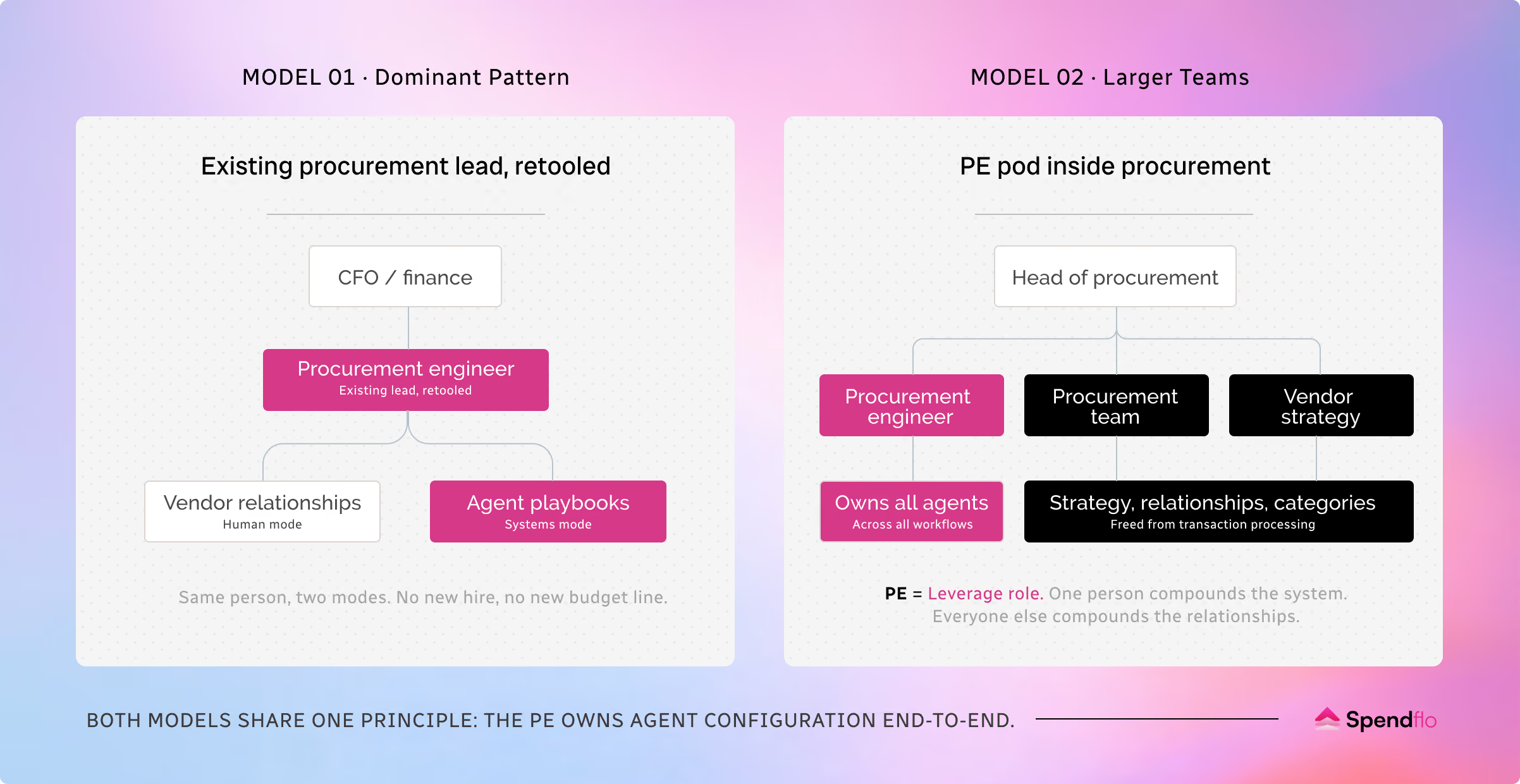
Model 1: the existing procurement lead, retooled (the dominant pattern)
At most mid-market companies, the procurement engineer is the procurement lead they already have.
The function splits into two modes: managing vendor relationships and configuring agent playbooks. In a 1-person team, both modes sit on the same person.
The procurement lead owns Flo configuration end-to-end: intake, approvals, contracts, vendor benchmarks. Finance sees the output and signs off on policy changes.
One PE manages every agent across the intake-to-pay cycle. Policy decisions stay with the procurement lead. Execution sits with the agents.
Why it works: the procurement team already owns the vendors, the contracts, and the policy. Giving them the agent layer draws a straight line from "we have a gap" to "we shipped the fix." No new hire. No new budget line.
Model 2: PE pod inside a larger procurement function
A second pattern emerges at companies with 3–5 person procurement teams.
One person becomes the dedicated PE. The others shift from transaction processing to vendor strategy, category management, and supplier relationship management.
The PE role is the leverage role. One person compounds the system. Everyone else compounds the relationships.
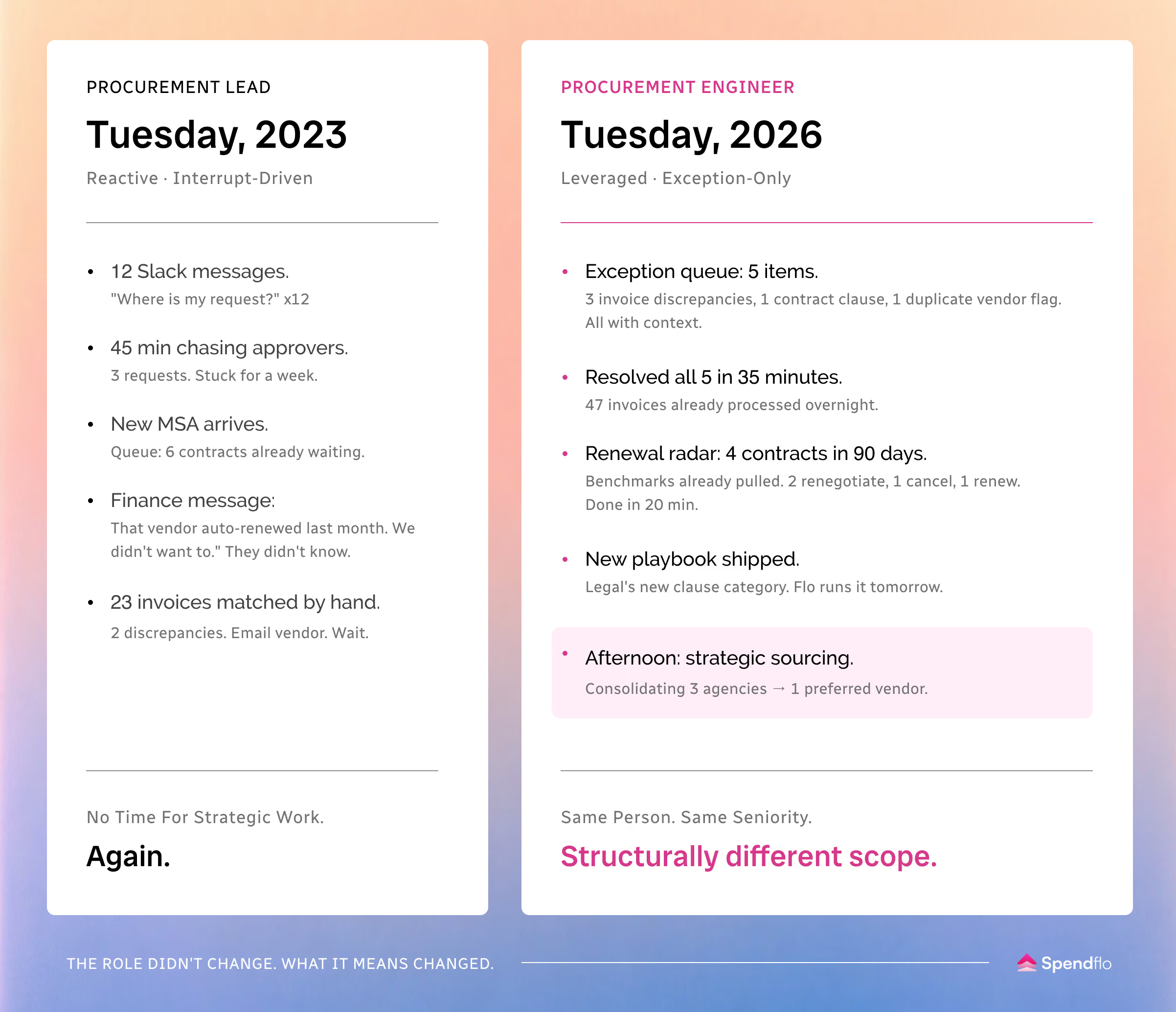
What a procurement engineer's week actually looks like
Abstract role descriptions don't move people. A concrete Tuesday does.
If you're the procurement lead reading this
Most of this guide is written for people thinking about building a procurement engineering function. But there's a good chance you are the procurement engineer being described.
You're the one who built the Notion tracker to manage renewals because nothing else caught them. You wrote the macros to clean the vendor master. You configured the Zapier between Slack and NetSuite because it was faster than waiting for IT. You've been doing procurement engineering with the wrong tools.
The shift to the PE role isn't a career change. It's the natural next step for anyone who has already been thinking in systems.
A few things that tend to accelerate the transition:
- Own the context layer first. Before you configure a single agent, spend two weeks getting the vendor master clean, the contract repository complete, and the approval policy documented in plain English. This is unsexy work. It's also the work that determines whether everything else succeeds.
- Start with one workflow. Don't try to automate everything. Pick the most painful one — usually invoice matching or intake triage — build the playbook, and prove it works. One win builds more internal trust than a hundred slides.
- Measure in the language your CFO uses. Touchless transaction rate. Cycle time. Renewal capture rate. Dollars recovered. Not "efficiency improvements."
- Treat every escalation as a playbook note. When an agent gets something wrong, that's not a failure. It's data. Write it into the playbook so it doesn't happen again.
The procurement teams that build this muscle now will be operating at a different level than those who wait for the role to become mainstream. It's not mainstream yet. That's the point.
How to hire a procurement engineer
If you're building out a team rather than evolving an existing role, here's what the hire looks like.
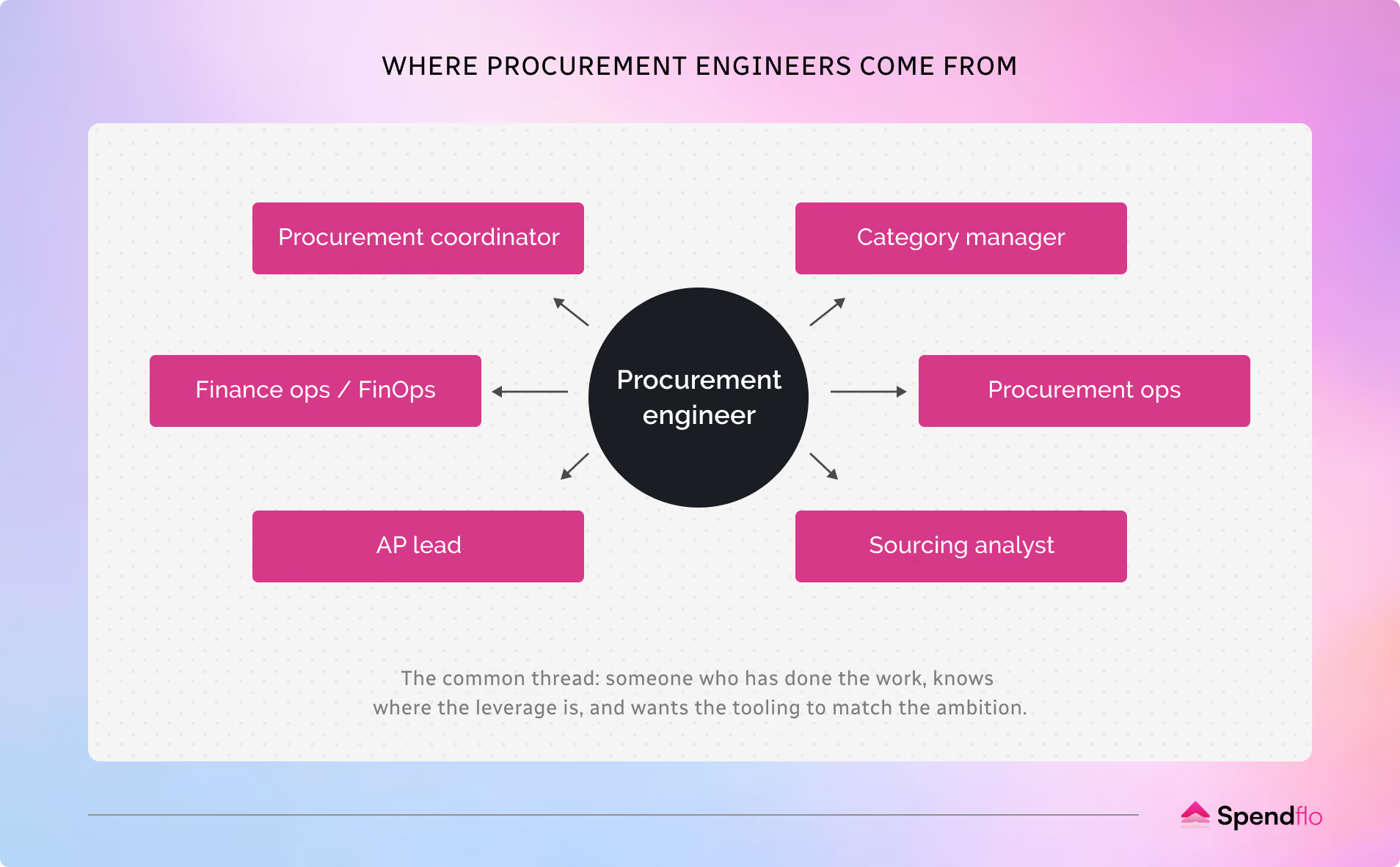
The best procurement engineers pair deep procurement instinct with the mindset of a systems operator. Think procurement leads who are drawn to configuring tools, or category managers who care more about cycle time than spreadsheet formulas.
Where to find them
Most teams already have one.
The AP lead who built a spreadsheet to track every duplicate invoice. The category manager who wrote macros to clean the vendor master. The ops person who runs Zapier between Slack and NetSuite. They've been doing procurement engineering with the wrong tools. Give them the right ones.
For external hires: look in procurement operations communities and anywhere people post about workflow automation. The people sharing these builds publicly are the ones who think in systems.
What to look for
- Domain depth. They know what a clean MSA looks like, why an auto-renewal clause matters, how a three-way match works, and what good vendor benchmark data costs. You can't configure an agent for work you've never done.
- Commercial bias. They think in dollars saved and days compressed, not tickets closed. They ask "how much did this cost the company before we automated it?"
- Comfort with AI tools. They've used Claude or ChatGPT for real work. They've configured at least one agent or workflow. They're not afraid to write a system prompt.
- Experimental mindset. They test, measure, and iterate. They know an agent's first configuration is never its last.
How to assess them
1. Business problem investigation
Hand them a real spend leak: "Our SaaS spend grew 40% last year. Why?" Strong candidates start by asking which categories grew, which vendors are duplicates, how many auto-renewals fired without review, and what utilisation looks like on the top 10 contracts. They work backwards from the leak to the system that caused it.
2. Agent playbook sketch
Have them outline how they'd configure an agent to catch the next leak. Can they pick the right signals to track, define the thresholds, and write escalation rules in plain English? Watch for operator mindset: someone who designs for the exception, not just the happy path. Red flag: anyone who wants a rule for every case. That's automation thinking, not agent thinking.
3. Mini build challenge
Give a take-home: design a playbook for catching duplicate vendors across two subsidiaries. Any tool is fair game. A strong submission explains how the agent identifies "same vendor, different name," defines what gets auto-merged versus escalated, shows how to measure success in dollars saved, and names the failure cases the playbook has to handle.
Procurement engineer: job description template
Use this as a starting point. Adjust based on whether you're hiring an external candidate or formalising the role for someone already on your team.
- The procurement teams that win the next five years
Procurement has always been the function closest to how a company spends money.
Agents change what it can be. Not a queue that processes requests. A system that controls spend.
The teams that win the next five years will be the ones running through agents, configured by procurement engineers. Once everyone has the same tools, the advantage isn't the tooling. It's how cleanly you've built your context, how well you've tuned your playbooks, and how much each transaction sharpens the next.
Asking for 2 more coordinators every time volume jumps 20% isn't a strategy. It's a tax on the function.
The procurement teams pulling ahead aren't waiting for this to become mainstream. They're building the operating model now, with tools that exist today, using the procurement professionals they already have.
Spend doesn't leak because your team is too small. It leaks because no one ever engineered the system around it. Procurement engineers are how you build that system.
Frequently asked questions
What is a procurement engineer?
A procurement engineer runs intake-to-pay using AI agents instead of headcount. They configure the agents, tune the playbooks against outcomes, and own the exceptions the agents escalate. The role emerged because agents are now capable enough to handle the execution layer of procurement — which means the procurement professional's job shifts from doing the work to designing the system that does it.
Do procurement engineers need to know how to code?
No. The signal is comfort with configuration, not engineering. Flo agents are configured in plain English. A procurement professional who has built spreadsheet models, configured approval workflows, or used Claude to draft a vendor email already has the foundation. The skill that compounds is writing clear instructions for an agent the way a procurement leader writes clear instructions for a new hire.
Where should a procurement engineer sit in the org?
Most companies start by retooling the existing procurement lead into the PE role, then expand as the agent footprint grows. The role typically reports to the head of procurement or, in smaller companies, directly to the CFO. The key is that the PE owns agent configuration end-to-end. Splitting ownership across multiple people is the most common reason these implementations stall.
What's the biggest mistake companies make when starting?
Running agents on top of dirty context. A messy vendor master, an incomplete contract repository, approval logic that lives only in someone's head — these aren't minor inconveniences. They're why agents misfire. The PE teams that get results fast spend the first few weeks getting the context layer right before touching agent configuration. Nail the foundation. Everything else compounds from there.
What if our stakeholders route around the system anyway?
This is the real question — and the one most procurement engineering guides don't answer. The answer isn't tighter rules. It's a faster, more frictionless experience. When intake takes 90 seconds and the approver gets everything they need in one view, people stop routing around the system because the system stops feeling like an obstacle. The adoption problem is almost always a friction problem in disguise.


.avif)








.avif)
.avif)