


Most teams evaluating Vendr alternatives are solving for one of three things: costs that climb as software spend grows, too much reliance on a third-party negotiator, or procurement workflows that feel boxed in. Vendr is a capable managed-procurement platform, but its spend-based pricing and services-led model don't fit every team.
This Blog covers nine alternatives - and, more usefully, how they differ where it counts: pricing model, who owns the benchmark data, and how much of the cycle runs in-product.
The 9 Best Vendr Alternatives
1. Spendflo: Three agents. One shared context. Full intake-to-pay - handled.
2. Zylo: Identifies license waste and shadow IT via AI-powered financial discovery.
3. Torii: Automates IT lifecycles, specializing in no-code onboarding and offboarding.
4. Sastrify: Centralizes European renewals with GDPR-compliant visibility and transparency.
5. Tropic: Streamlines vendor approvals by combining intake workflows with supplier data.
6. Zluri: Automates Identity Governance and access reviews across the SaaS stack.
7. BetterCloud: Secures SaaSOps through automated policy enforcement and data protection.
8. Vertice: Optimizes both SaaS and Cloud (AWS/GCP) spend in one dashboard.
9. CloudEagle: Automates license harvesting and renewals via AI-driven HRIS integrations.
1. Spendflo
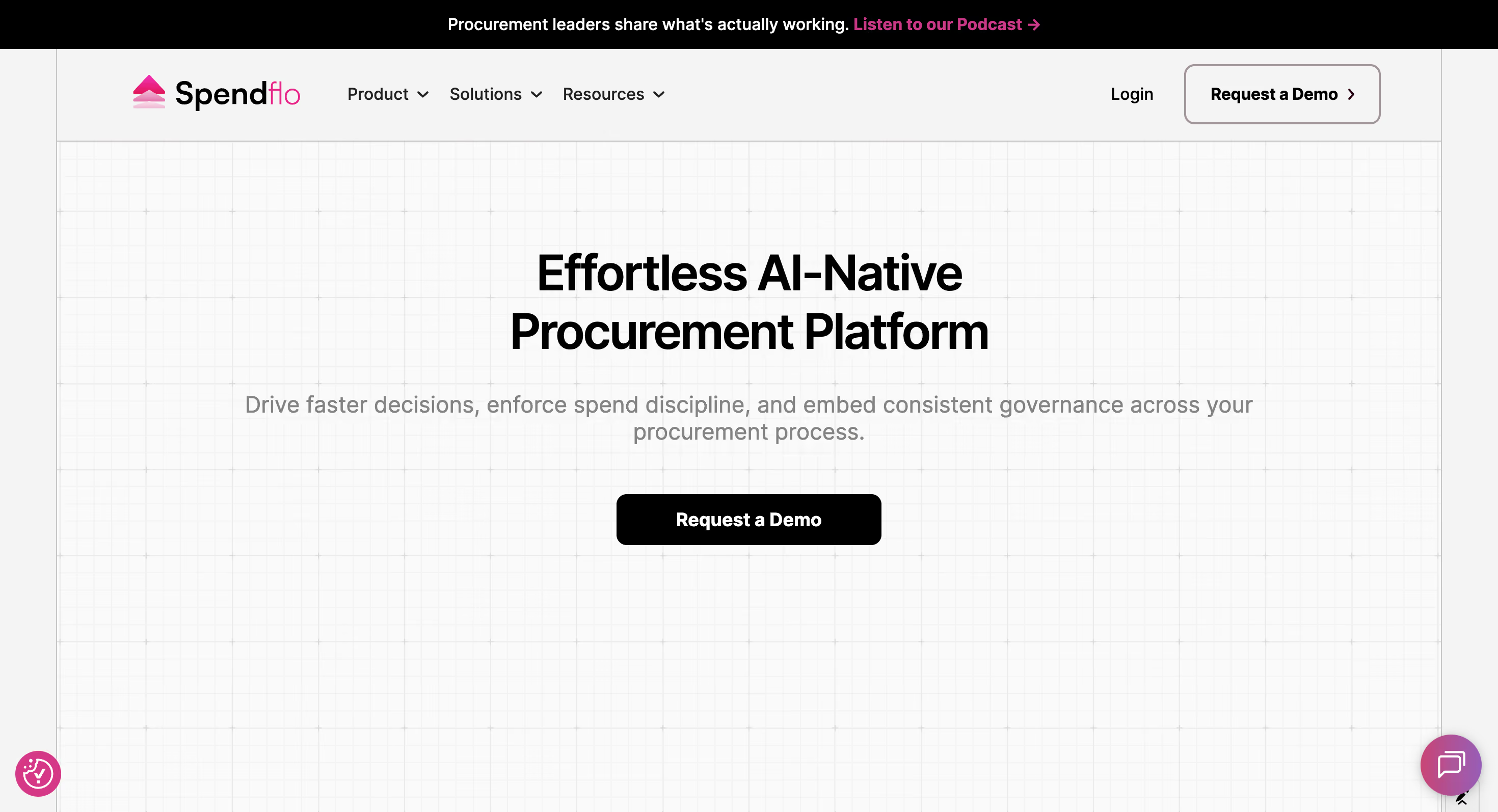
Spendflo is the AI-native intake-to-pay platform, and the system of record for your procurement, contracts, and spend. Flo is the autonomous AI workforce that sits on top of it, handling the full intake-to-pay cycle across your existing ERP, CLM, P2P, and AP systems through three agents: Procure, Contracts, and AP. Spendflo holds the data; Flo acts on it.
Modern procurement is broken: 11 stakeholders per deal, 6-month cycle times, and $5M in recoverable waste inside a typical $12M indirect spend. Flo handles contracts, vendor onboarding, spend analysis, and AP - so your team focuses on the decisions that need a human.
Deep integrations with NetSuite, Coupa, Ironclad, Jira, and Slack sit as an execution layer on top of your existing stack - centralizing intake-to-procure workflows, surfacing pricing benchmarks, and catching every renewal before it auto-renews unreviewed. By Spendflo's own data, the platform has processed $3.7B+ in spend across 15,000+ analyzed agreements. Procurement shouldn't be a bottleneck. With Flo, it closes.
2. Zylo
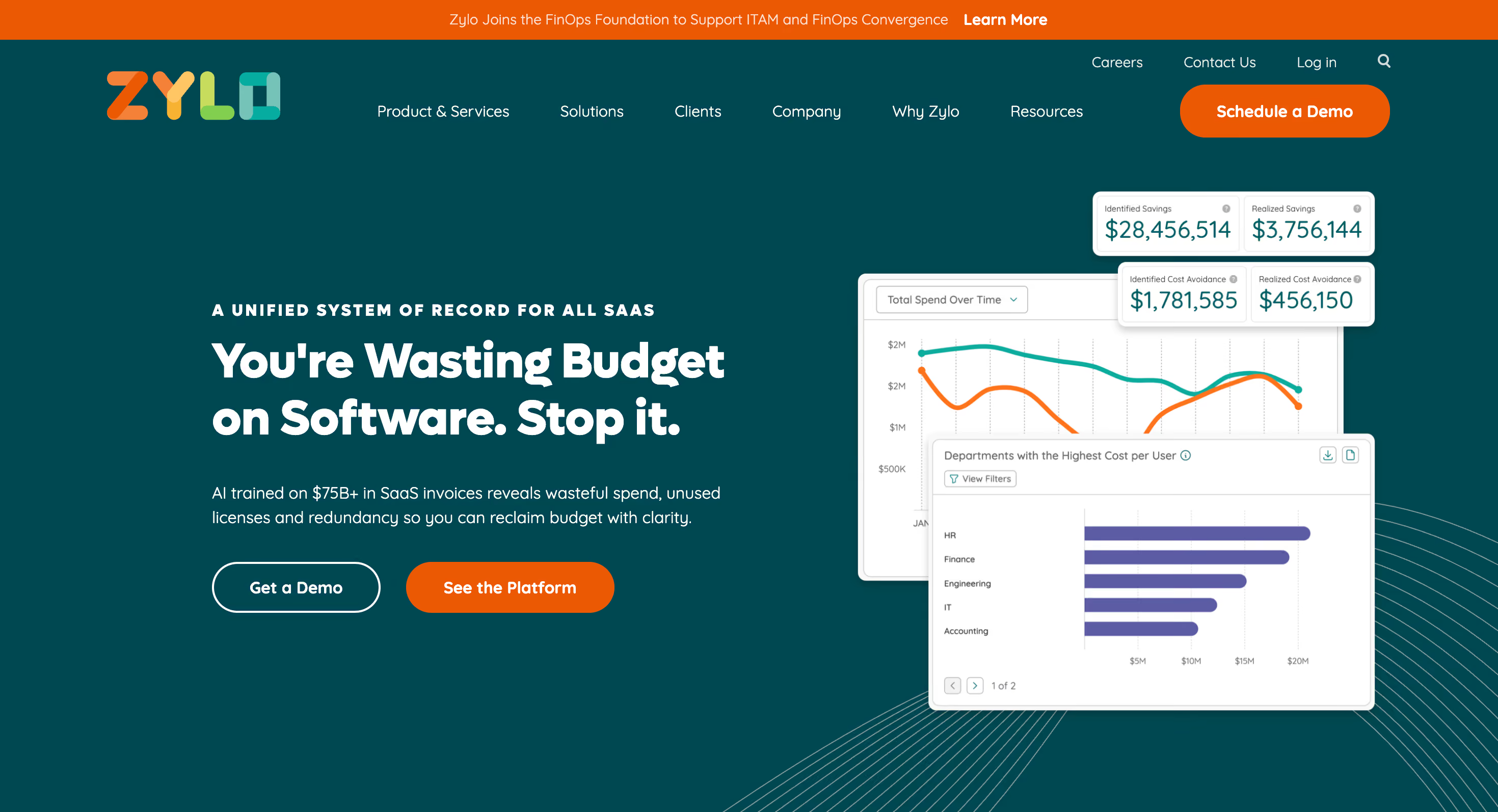
Zylo is an SaaS management platform that specializes in providing comprehensive visibility into software inventory and spend. It is designed for large organizations that face "SaaS sprawl" and need to consolidate thousands of licenses.
Zylo’s platform utilizes a patent-pending AI discovery engine that monitors financial transactions to catalog every application used across a company, regardless of how it was purchased. Beyond simple visibility, Zylo provides prescriptive insights into renewal optimization and license reclamation.
While it is a robust software platform, it is frequently used by enterprise teams that require a blend of data-driven insights and professional procurement services to manage their massive, global software portfolios and drive return on investment.
3. Torii
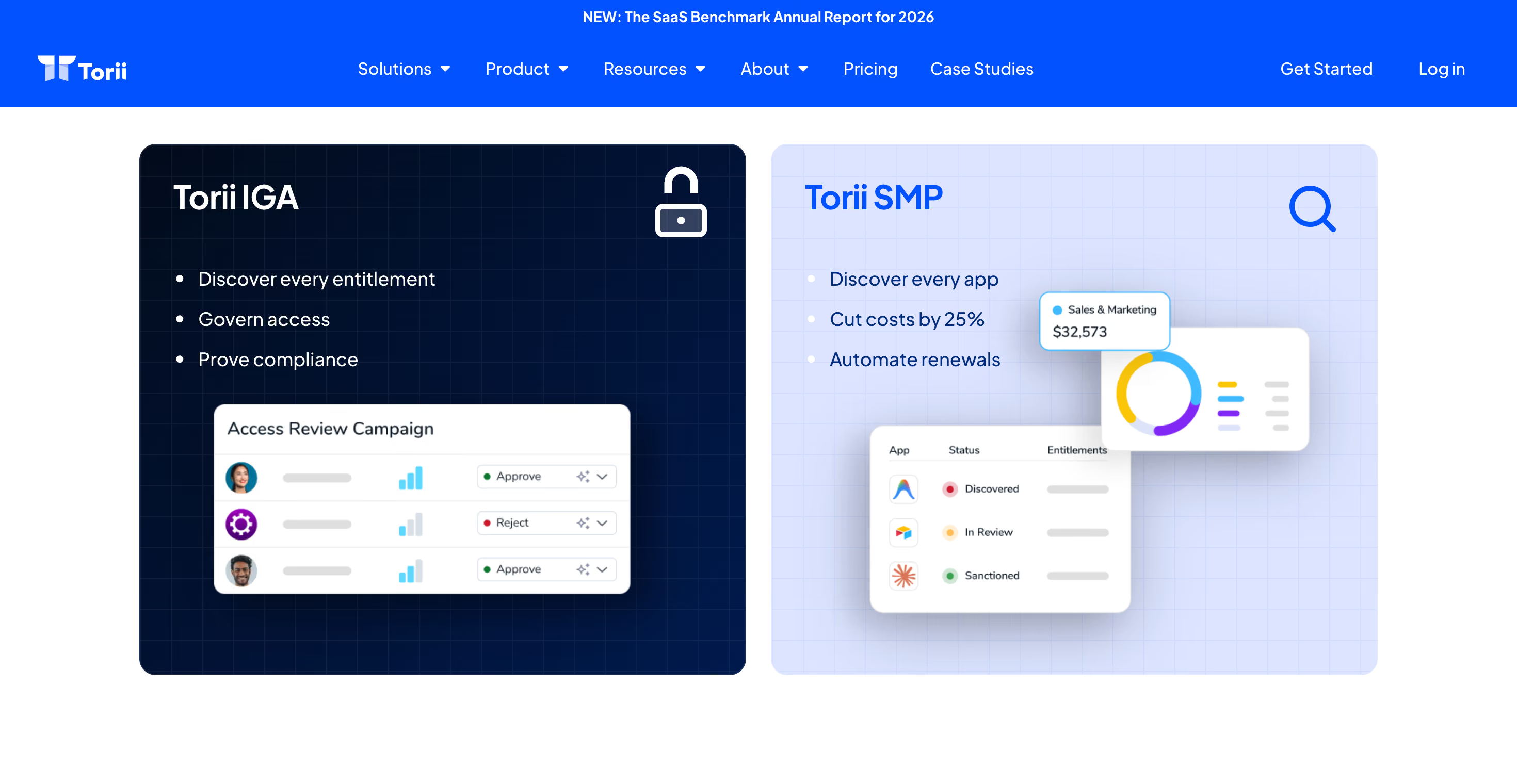
Torii is a SaaS Management Platform (SMP) that empowers IT and procurement teams to regain control over their cloud ecosystem through "No-Code Automation." It is built to bridge the gap between IT operations and financial spend management.
Torii’s primary value proposition is its ability to automate the repetitive parts of the software lifecycle, such as employee onboarding, license assignments, and offboarding.
By providing a centralized console for all SaaS apps, Torii helps teams discover "Shadow IT" and measure actual application usage. It focuses heavily on operational efficiency, allowing admins to create complex automated workflows that trigger based on real-time app events, making it a favorite for IT-centric procurement teams.
4. Sastrify
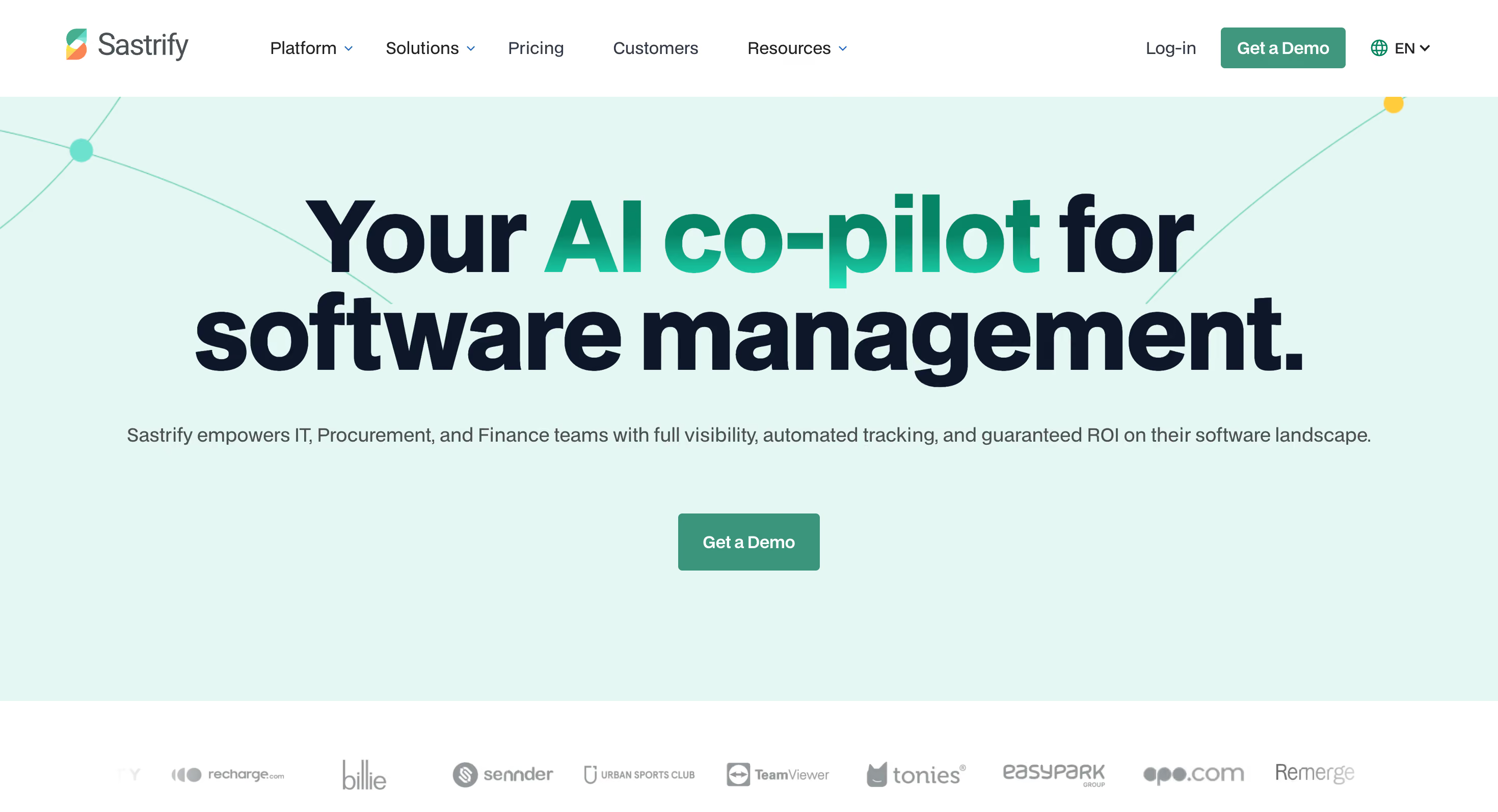
Sastrify is a digital procurement platform that helps companies centralize their SaaS lifecycle, from discovery to contract renewal. It is designed to act as a collaborative hub where Finance, IT, and Procurement teams can align on software strategy.
Sastrify positions itself as a partner that brings transparency to a traditionally opaque buying process, providing users with a database of market benchmarks to ensure they never overpay.
The platform is especially strong in the EMEA market, offering tailored support for local compliance and vendor ecosystems. By consolidating all contracts and spend into a single dashboard, Sastrify helps teams proactively manage their renewals and identify opportunities to eliminate overlapping tools, ultimately driving down the total cost of ownership.
5. Tropic
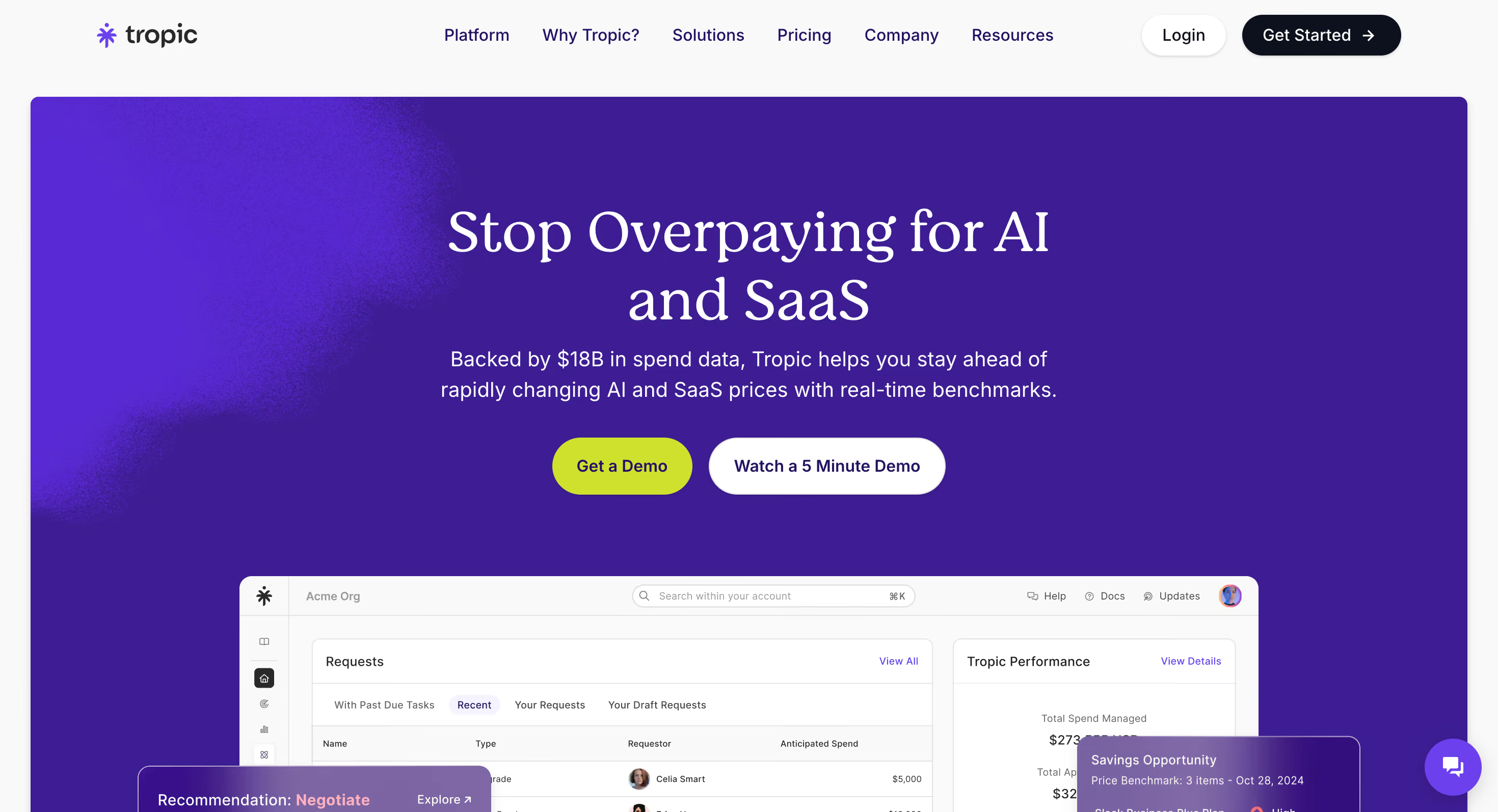
Tropic is an intelligent spend management platform that gives procurement teams the leverage they need to buy and renew software with confidence. It combines procurement workflow software with a massive database of "Supplier Intelligence" to provide a more scientific approach to buying.
Tropic is built to reduce the friction of vendor management by providing standardized intake forms and automated approval routing. A core part of its identity is "Supplier Intelligence," which gives users deep insights into vendor pricing behavior and contract terms.
Tropic is often selected by companies that want to move away from messy spreadsheets and adopt a professional procurement process that balances automated software with data-backed negotiation support.
6. Zluri
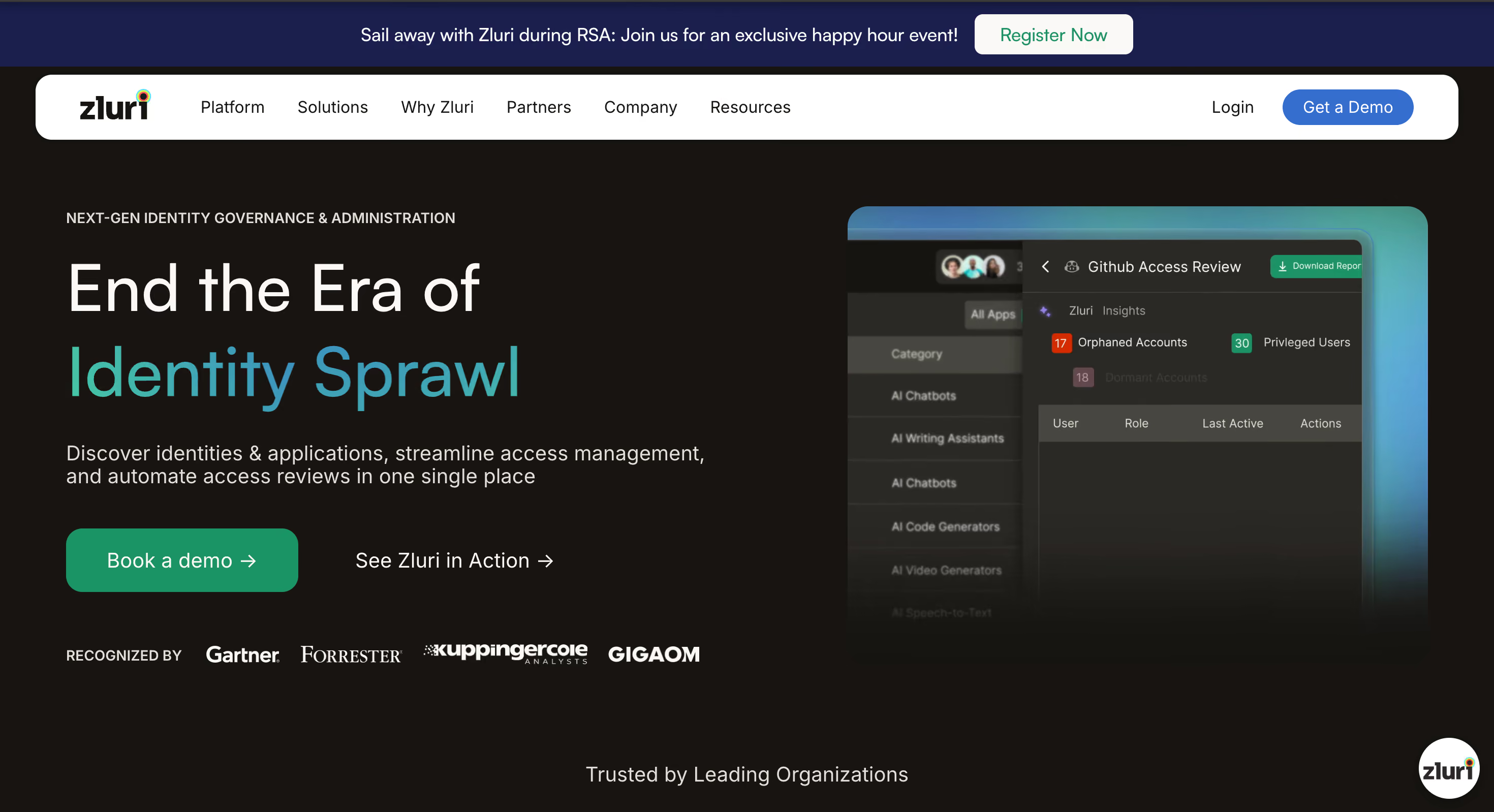
Zluri is an AI-driven SaaS management platform that focuses heavily on "Governance and Automation." It is designed for IT and Procurement teams that need deep visibility into their software ecosystem to ensure compliance and cost-efficiency.
Zluri uses multiple discovery methods to find every app used in an organization, including browser extensions and direct API integrations. Its standout capability is "Identity Governance," which automates the process of checking access rights and ensuring that employees only have the licenses they need.
Zluri helps teams manage the entire software lifecycle - from procuring the initial license to automating the offboarding of users - while providing clear financial insights to help Finance teams stay on budget.
7. BetterCloud
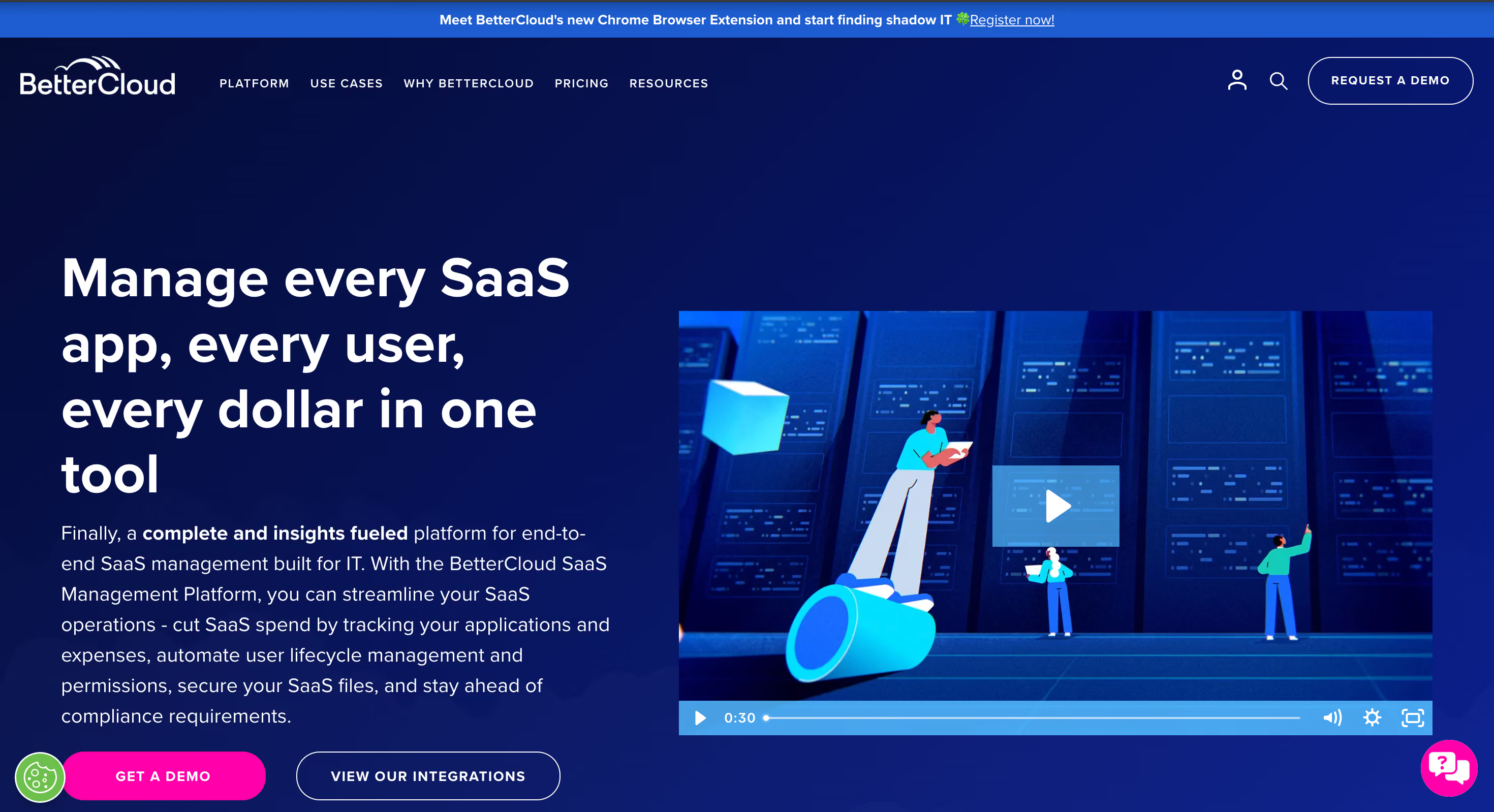
BetterCloud is the leading platform for SaaS Operations (SaaSOps), specializing in the security and management of cloud-based applications. While many tools focus on the "cost" of SaaS, BetterCloud focuses on the "operation" and "security" of the stack.
It allows IT and procurement teams to set automated security policies that monitor for risky behavior, such as a user sharing sensitive company data publicly. BetterCloud’s core strength is its ability to centralize management across disparate apps like Google Workspace, Slack, and Salesforce.
It is an essential tool for companies that want to automate the mundane parts of IT - like password resets and permission management - while ensuring that their entire SaaS environment remains compliant with corporate security standards.
8. Vertice
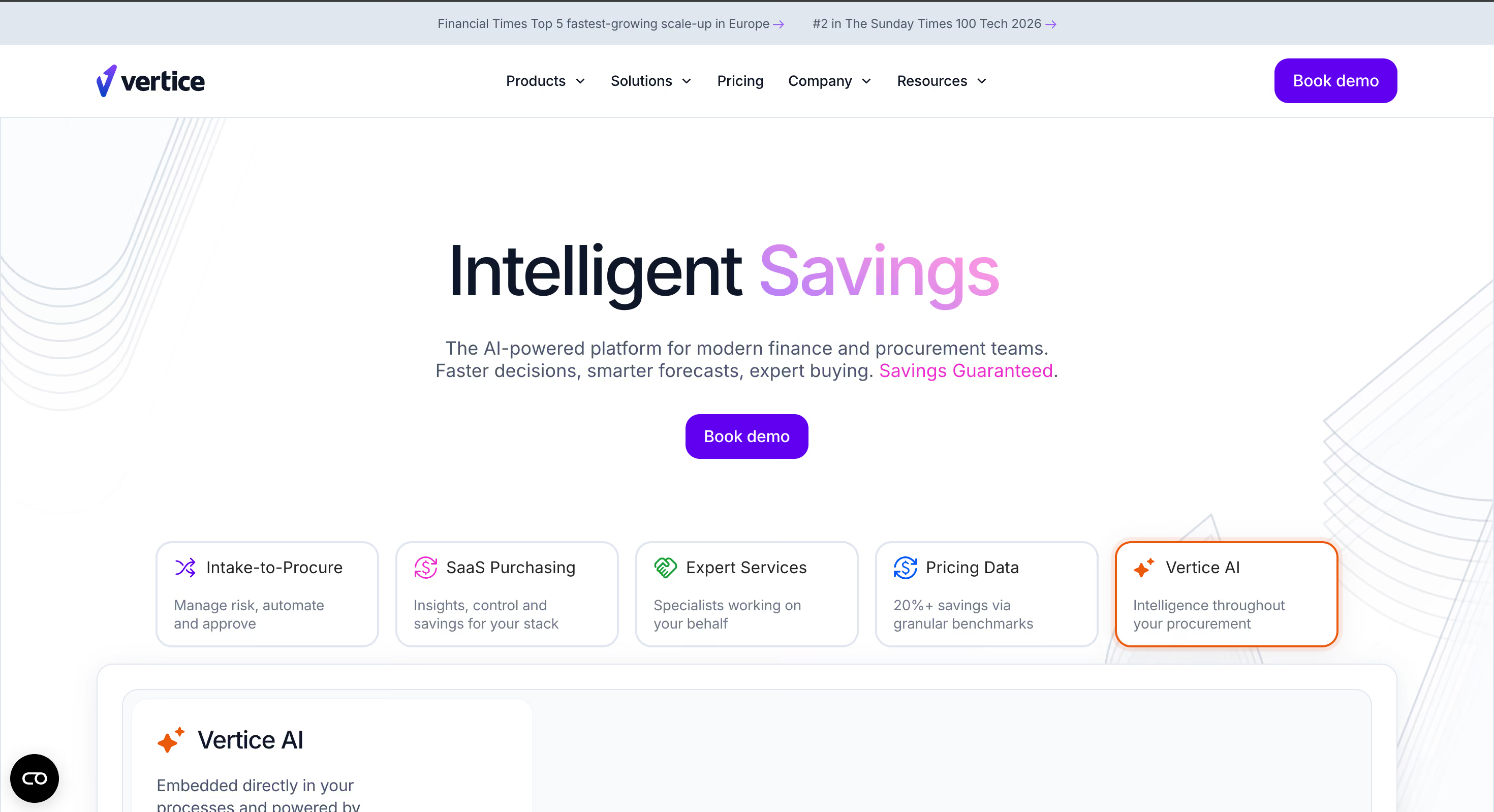
Vertice is an intelligent procurement platform built specifically to help companies optimize their spend across both SaaS and Cloud infrastructure. It addresses the dual challenge of managing thousands of software seats and complex, fluctuating cloud bills from providers like AWS and GCP.
Vertice provides Finance and Procurement leaders with a single, unified dashboard to view their total technology spend, upcoming renewals, and savings opportunities. By providing granular visibility and market-based pricing benchmarks, Vertice empowers teams to negotiate more effectively.
The platform is designed to halve procurement cycles and deliver significant cost savings, making it a powerful "ROI-first" solution for modern enterprises that want to control their largest non-payroll expenses in one place.
9. CloudEagle
CloudEagle is an AI-native "SaaS Command Hub" that unifies data from IT, HR, Finance, and Security to give organizations complete control over their software stack. It is designed to expose "Software Waste"- such as duplicate applications, underutilized licenses, and "Shadow AI" usage.
CloudEagle emphasizes automation, offering Slack-native workflows that handle everything from the initial purchase request to the automated offboarding of a departing employee. By providing users with "Instant Negotiation Power" through peer-to-peer benchmarking, CloudEagle ensures that procurement teams have the data they need to secure the best possible deals.
It is a comprehensive solution for teams that want to eliminate manual data entry and manage their entire SaaS ecosystem from a single, AI-powered dashboard.
The Selection Logic: How We Verified the Top 9
We didn't just pick names off a list. To identify the leading procurement platforms for 2026, we used a strict Logic Engine to separate true AI-native automation from manual "services." Here is the criteria used to verify every winner:
1. Autonomous Workflow Orchestration
A tool must do the work, not just track it. We prioritized platforms that automate the entire Intake-to-Procure lifecycle - moving a request from an initial Slack or Teams message to a signed contract with zero manual routing or administrative friction.
2. AI-Native Intelligence
We look for AI that acts as a core infrastructure rather than a "bolt-on" feature. Every selected brand uses AI for:
- Contract Intelligence: Instantly parsing PDFs to extract metadata and renewal dates.
- Pricing Benchmarks: Providing real-time, global data so your team owns the negotiation leverage.
3. Single System of Record Visibility
A platform is only as good as its clarity. We evaluated each tool’s dashboard for its ability to provide 100% visibility into total spend, underutilized licenses, and upcoming renewal risks in under 30 seconds.
4. Integrated Governance & Compliance
In the era of Shadow AI, security must be built into the workflow. We selected platforms that function as a Governance Engine, featuring automated vendor risk assessments and native compliance with SOC2, GDPR, and HIPAA standards.
5. Quantifiable Financial ROI
Value for money is non-negotiable. We only included brands with a proven track record of delivering 3x to 5x ROI through proactive license right-sizing and the total elimination of unmanaged auto-renewals.
Conclusion: Own Your Procurement Destiny
The shift from manual "buying services" to AI-native procurement orchestration is the most significant change for Finance and IT teams in 2026. As we’ve seen, the top platforms on this list are no longer just repositories for contracts; they are the intelligent engines that drive your company’s efficiency.
The shift isn't from one vendor to another. It's from outsourcing procurement to owning it. Flo gives your team the agents, the data, and the context to run procurement without depending on a third party. With Intake-to-Procure automation and real-time Pricing Benchmarks, you gain the transparency needed to stop shadow IT and the leverage required to own your vendor relationships. In the era of high-velocity SaaS, the best procurement strategy is the one that runs on data, not manual labor.
Ready to own your vendor relationships? See how Flo handles procurement end to end - Book a demo.
Frequently Asked Questions
1. Why should I choose an AI-native platform over a traditional managed service?
Managed services often act as "black-box" intermediaries, keeping the data and negotiation leverage for themselves. AI-native platforms like Spendflo empower your internal team by providing the data transparency and pricing benchmarks you need to negotiate from a position of power, while automating the repetitive workflows that slow you down.
2. How does "Intake-to-Procure" automation actually save money?
Most overspending happens because employees buy software outside of the official process (Shadow IT). By automating Intake through Slack or Teams, you capture every request at the source. This allows you to identify duplicate tools, verify budget, and ensure security compliance before the first dollar is spent.
3. Can these tools handle both SaaS and Cloud (AWS/GCP) costs?
While most focus purely on SaaS, advanced platforms like Vertice and Spendflo offer unified visibility. Managing both in one dashboard is critical for 2026 because cloud infrastructure often represents a significant portion of "hidden" technology spend that traditional procurement tools miss.
4. How long does it take to see a return on investment (ROI)?
For software-first platforms, the Time-to-Value is typically under 90 days. Because AI-native tools can ingest your current contracts and financial data instantly, they can identify license waste and upcoming renewal risks in the first quarter of deployment.
5. Is security a core part of these procurement tools?
Yes. In 2026, every top procurement platform functions as a Governance Engine. They feature automated vendor risk assessments and native compliance tracking (SOC2, GDPR, HIPAA) to ensure that every new tool added to your stack meets your company’s security standards by default.


-compressed.avif)








.avif)
.avif)