5 Best Procurify Alternatives and Competitors in 2026
Discover the top 5 alternatives to Procurify for 2026, including pricing, key features, and ideal business use cases for each procurement solution.
Key Takeaway
While legacy platforms like Coupa and SAP Ariba are known for deep financial controls, modern teams are shifting toward AI-native orchestration that delivers the same control with faster deployment and less manual overhead.
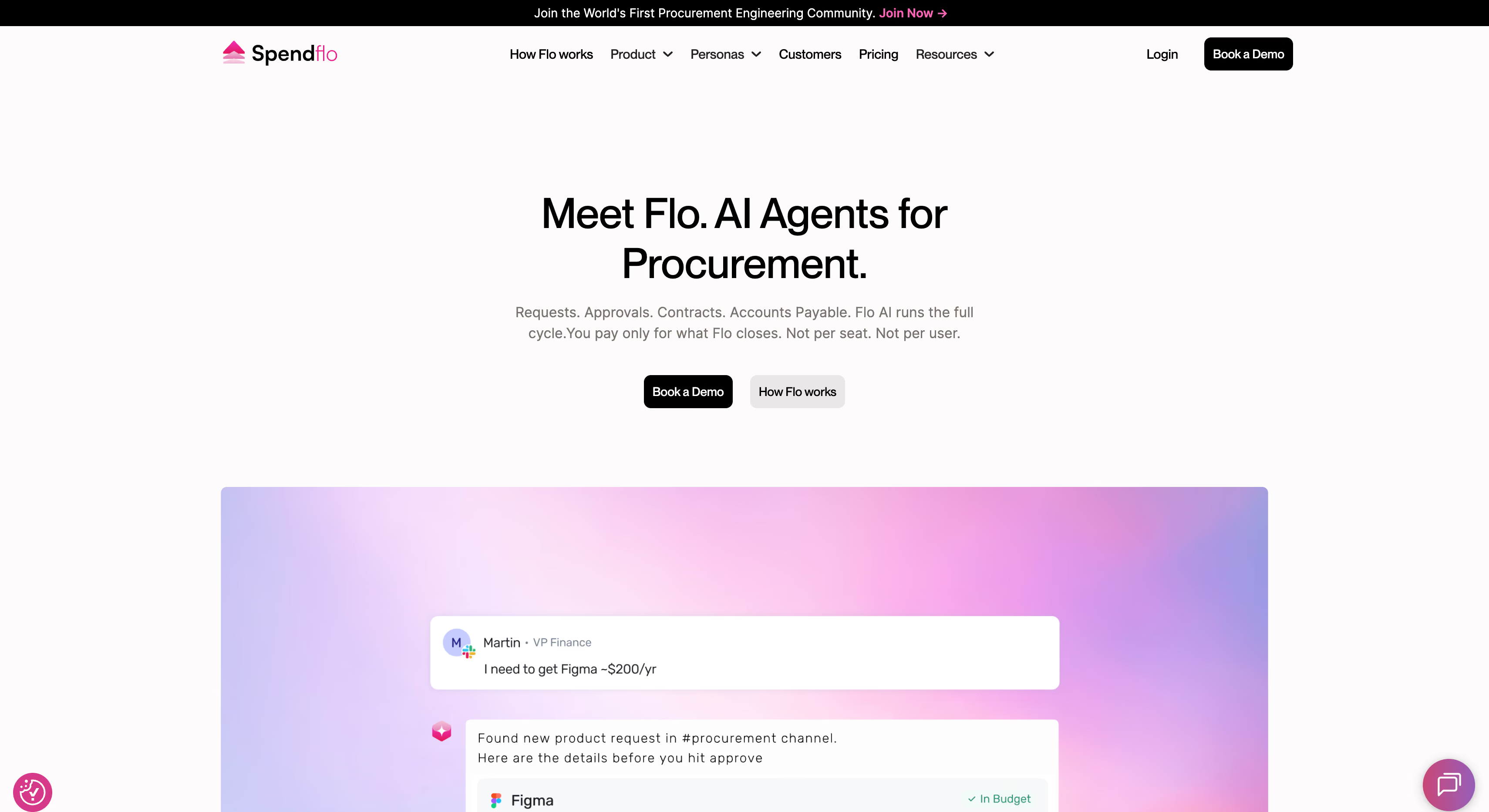
Spendflo: Flo handles the full intake-to-pay cycle - Procure, Contracts, and AP - as three agents on a shared knowledge layer.
Selection depends on agility versus scale: Precoro offers rapid budget management for mid-market teams, while Zip provides a specialized "front door" for complex procurement orchestration.
Strategic advantages like real-time automated workflows and contract intelligence empower internal teams to own their procurement destiny without relying on manual services.
Avoiding common transition pitfalls, such as neglecting cross-departmental approval logic or skipping data migration, is critical for a successful shift to these automated platforms.
The 5 Best Procurify Alternatives
1. Spendflo: Automates intake-to-pay workflows with Slack orchestration and pricing benchmarks.
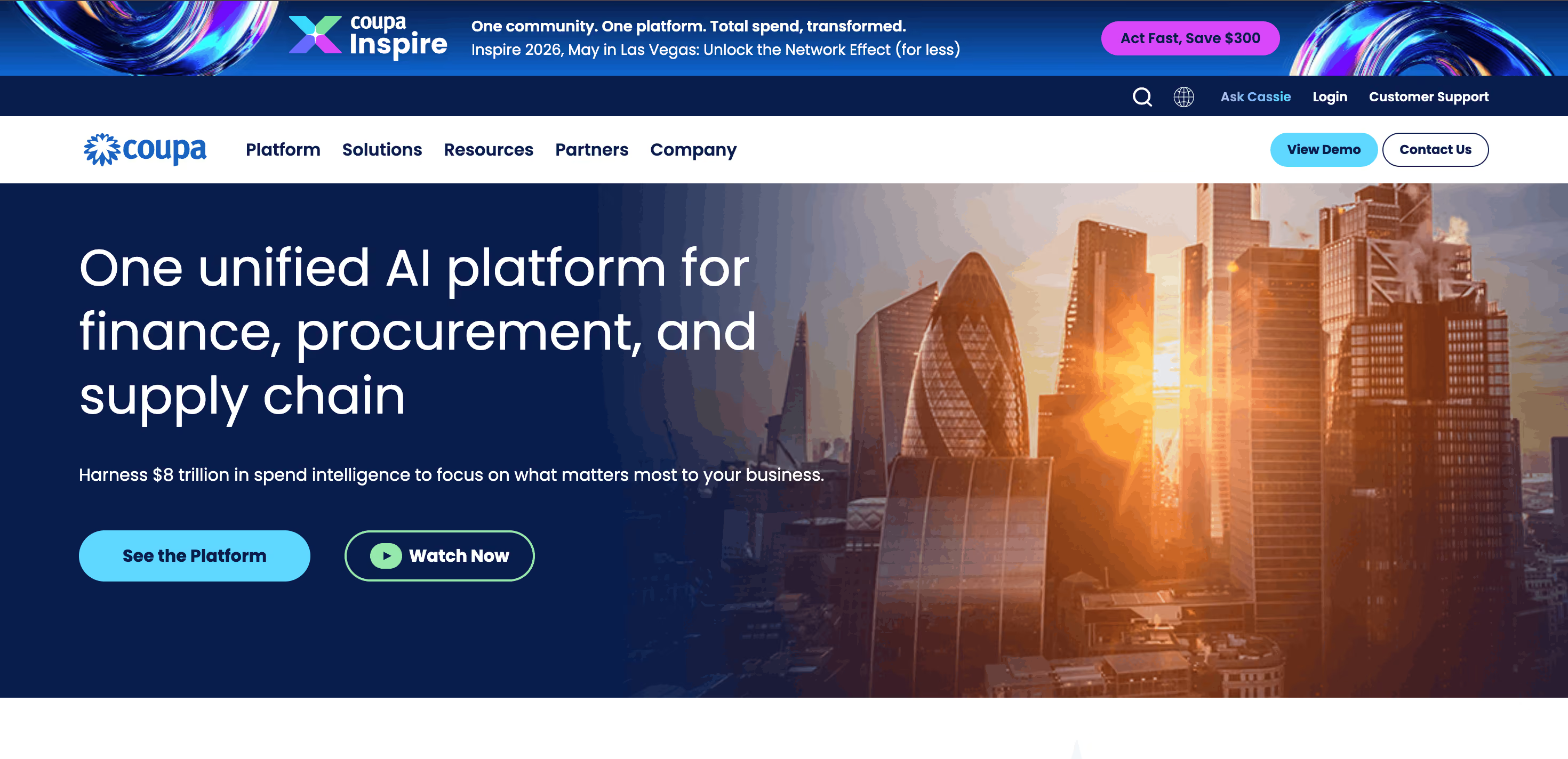
2. Coupa: Centralized spend management platform for visibility and financial control.
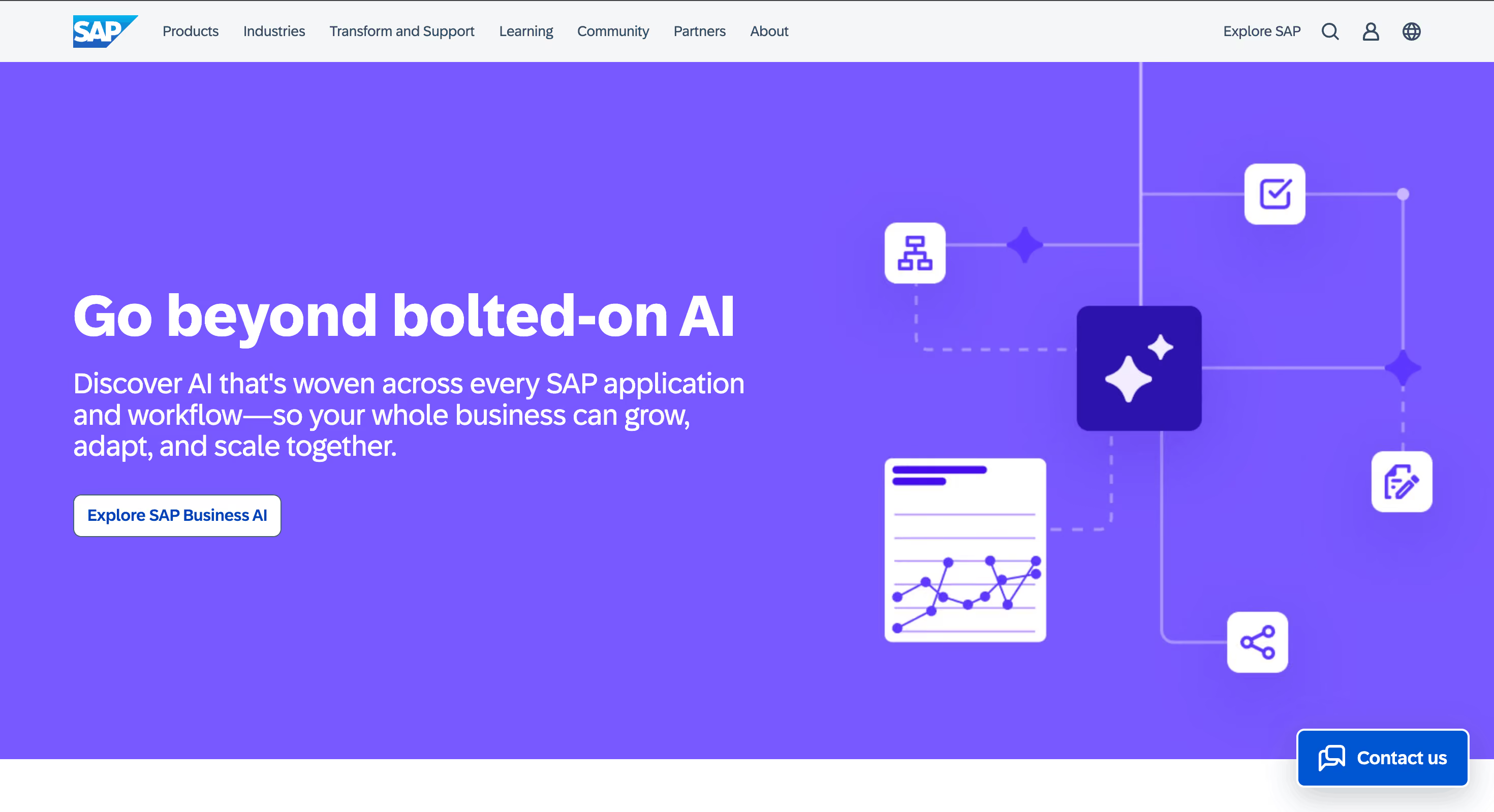
3. SAP Ariba: Automated cloud-based purchasing lifecycle and spend visibility tool.
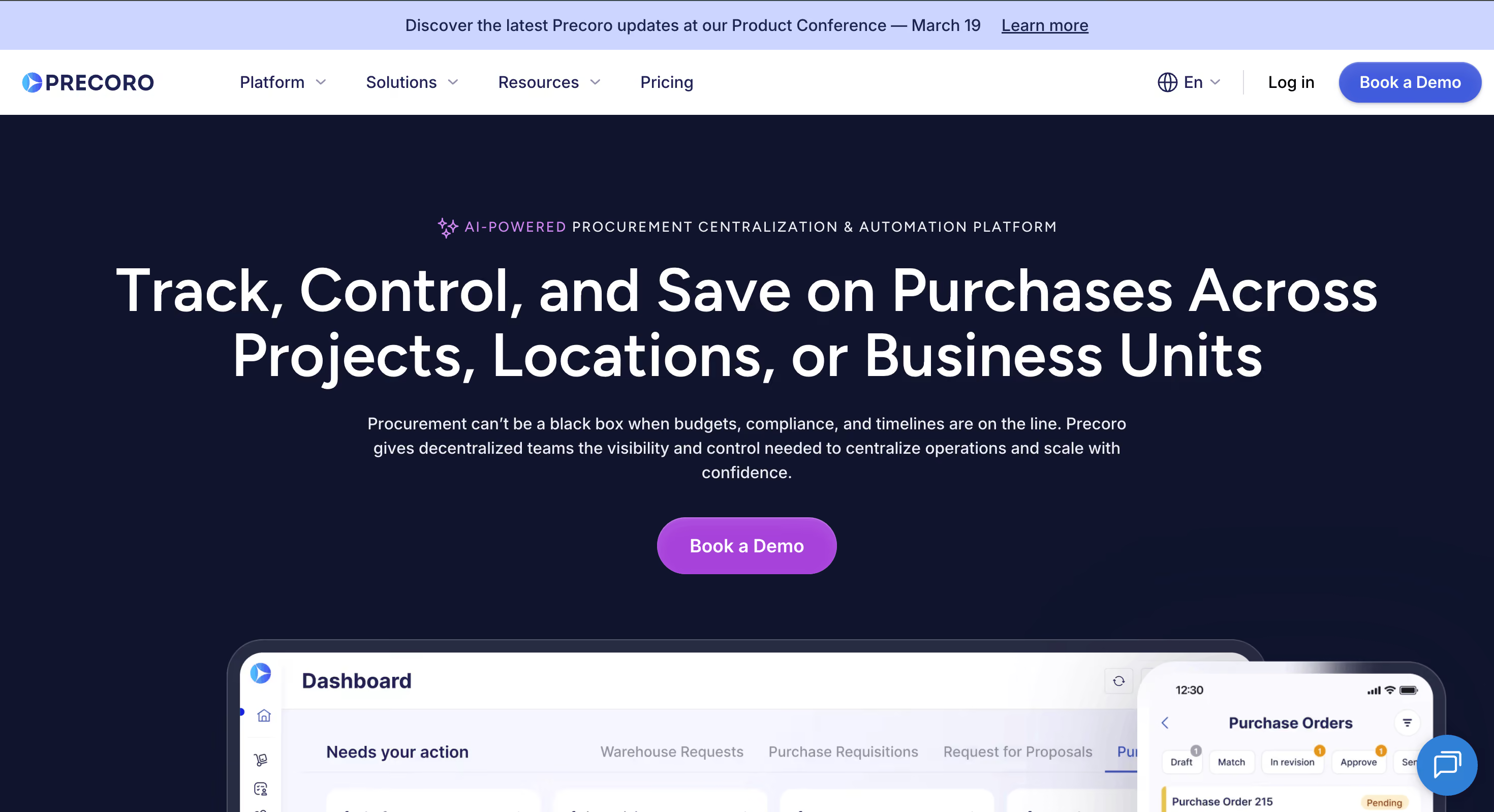
4. Precoro: Agile procurement and AP automation for real-time budget management.
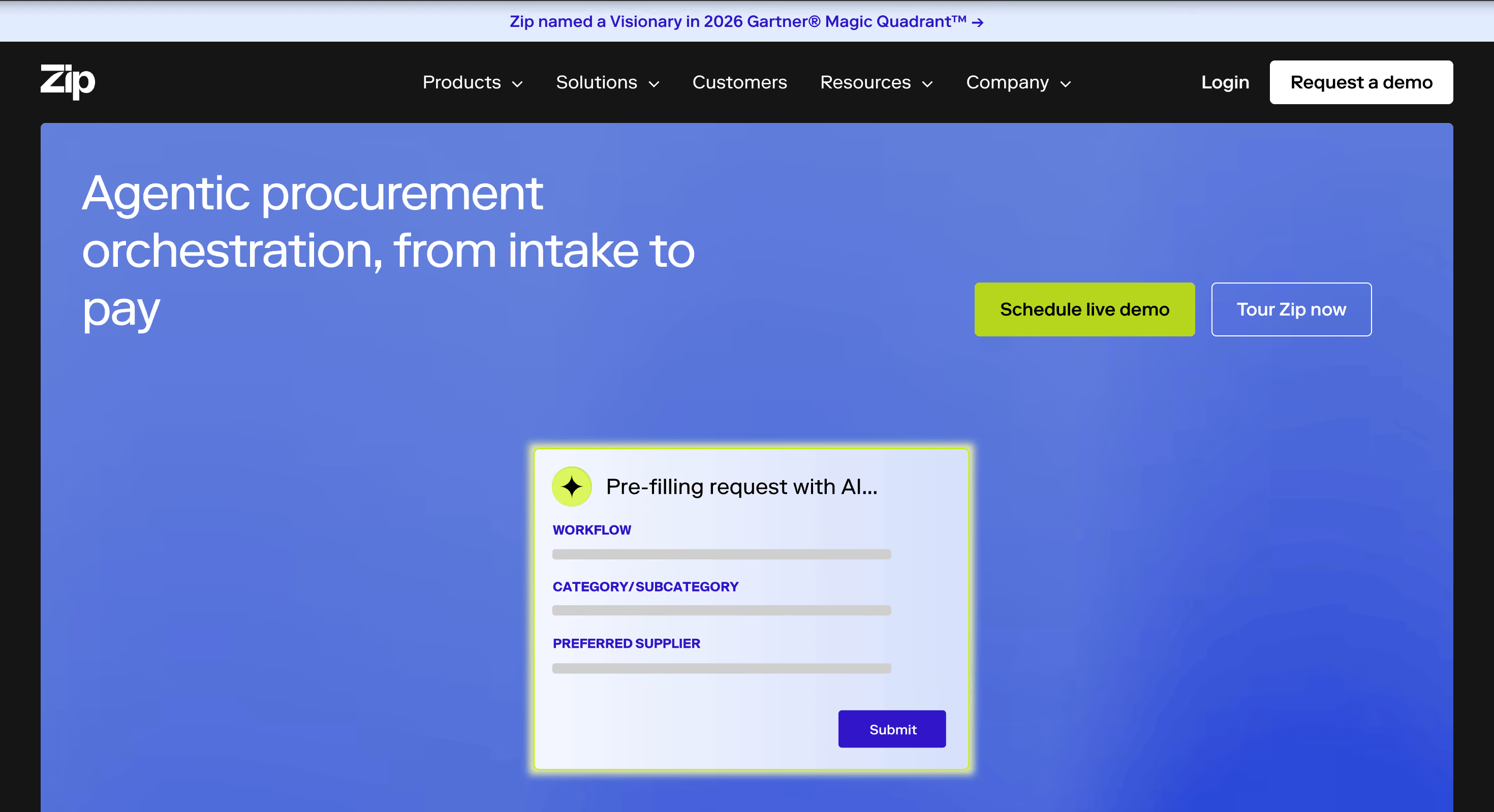
5. Zip: Intuitive intake-to-procure orchestration for streamlined vendor requests.
Procurify Alternatives at a Glance
Brand
G2 Rating
Main Procurement Feature
Ease of Use
Time-to-Value
Headcount Impact
1. Spendflo
4.6 / 5
Intake-to-Pay Automation
9.2 / 10
Fast (< 90 Days)
Replaces procurement execution layer
2. Coupa
4.2 / 5
Guided Buying & AP Automation
8.0 / 10
Enterprise (6+ Months)
Requires team to operate
3. SAP Ariba
4.1 / 5
Ariba Network & Supplier Discovery
7.5 / 10
Enterprise (6+ Months)
Requires team to operate
4. Precoro
4.7 / 5
Approval Workflow Routing
9.1 / 10
Fast (< 90 Days)
Requires team to operate
5. Zip
4.5 / 5
Intake-to-Procure Orchestration
8.8 / 10
Moderate (3-4 Months)
Requires team to operate
1. Spendflo
Spendflo is the AI-native intake-to-pay platform, and the system of record for your procurement, contracts, and spend. Flo is the autonomous AI workforce that runs on top of it, handling the full intake-to-pay cycle across your existing ERP, CLM, P2P, and AP systems through three agents: Procure, Contracts, and AP. Spendflo holds the data; Flo acts on it. Modern procurement is broken: 11 stakeholders per deal, 6-month cycle times, and $5M in recoverable waste inside a typical $12M indirect spend. Procurement shouldn't be a bottleneck - with Spendflo, it becomes your competitive advantage.
Deep integrations with NetSuite, Coupa, Ironclad, Jira, and Slack sit as an execution layer on top of your existing stack - centralizing intake-to-pay workflows, surfacing pricing benchmarks, and catching every renewal before it auto-renews unreviewed. 15,000+ agreements analyzed. $3.7B+ spend processed. 30% average cost savings. Procurement shouldn't be a bottleneck - with Spendflo, it becomes your competitive advantage.
Agents handle the full cycle from request to paid invoice. The agents run on a layer of shared context, ensuring that what's agreed upstream is known downstream before the next step begins.
Intake-to-Procure Automation - Centralizes procurement requests across teams, routes approvals, and compresses 6-month procurement cycles into days without a ticket being raised manually.
Contract Intelligence - Reviews, compares, redlines, and executes contracts with AI. Tracks renewals, prevents auto-renewals without review, and manages 100+ agreements from a single system of record.
Pricing Benchmarks & Negotiation Data - Built on 15,000+ agreements and $3.7B+ spend data, Spendflo surfaces vendor pricing intelligence so your team negotiates from a position of power.
Deep System Integrations - Bidirectional connections with NetSuite, Coupa, Ironclad, Jira, Slack, SAP, Oracle, Sage and more - acting as an execution layer across your existing ERP, CLM, P2P, and AP stack without replacing it.
Rapid Time-to-Value: Users report implementation taking as little as 2 months with immediate ROI.
Exceptional Support: High marks for responsiveness and proactive management of renewals.
Seamless Chat Integration: Effectively centralizes procurement requests without changing user behavior.
Newer platform than legacy incumbents.
Some integrations are still expanding.
Most impactful for indirect spend.
Built for teams ready to work with AI agents.
2. Coupa
Coupa is a comprehensive spend management platform designed to provide businesses with visibility and control over their financial processes. It centralizes requests, approvals, invoices, and payments into a single, unified source to help organizations scale and automate their accounts payable and procurement practices.
Guided Buying: An intuitive interface that helps employees find needed items while ensuring compliance.
AP Automation: Multi-level automated invoice validation and dynamic approval workflows.
Spend Guard: Uses AI and machine learning to automatically detect errors and fraud in purchases and invoices.
Inventory Management: Real-time tracking of locations, par values, and cycle counts to avoid duplicate ordering.
Global Payments: A secure platform that enables automated reconciliation and global working capital management.
Centralized Spend Visibility: Users appreciate having a single source of truth for all purchases, approvals, and invoices.
Effective Automation: Features like 3-way matching and automated expense approvals significantly reduce manual follow-ups.
Versatility: The platform is capable of handling both simple and complex financial tasks for various business sizes.
Interface Performance: Some users report that the system can feel slow or "clunky" when navigating between modules.
Steep Learning Curve: The depth of the program can be overwhelming for new users to navigate initially.
Supplier Portal Friction: Suppliers sometimes find the portal confusing, which can lead to delays in transactions.
3. SAP Ariba
SAP Ariba is a cloud-based solution that automates the entire purchasing lifecycle for both indirect goods and services. It is built to streamline workflows, expedite approvals, and provide end-to-end spend visibility for companies ranging from small businesses to global enterprises.
Guided Buying: A consumer-grade shopping experience that directs employees to preferred suppliers at pre-negotiated rates.
SAP Business Network: Connects users to a digital marketplace of over 5 million companies for supplier discovery and collaboration.
Strategic Sourcing Suite: Tools for managing structured RFQs/RFPs and selecting vendors based on clear evaluation criteria.
Supplier Lifecycle & Performance: Centralized management of vendor information to ensure onboarding efficiency and compliance.
Contract Management: Digitalizes the creation, negotiation, and execution of contracts to reduce manual paper-based processes.
Robust Supplier Collaboration: The platform excels at centralizing communication and documentation between buyers and vendors.
Spending Transparency: Provides deep visibility into spending patterns and contract compliance.
Enterprise Integration: Offers strong synchronization with existing SAP ERP systems for data consistency.
Complex Navigation: Users frequently note that the menus can be visually overwhelming and require too many clicks for simple tasks.
Dated UI: The interface is often described as non-intuitive and less modern compared to newer platforms.
Rigid Customization: Some workflows can feel inflexible, making it difficult for users to adapt the system to unique business needs.
4. Precoro
Precoro is a cloud-based procurement and AP automation solution that unifies operations and prevents maverick spend. It is designed to be easy to implement without IT involvement, helping companies digitize purchase orders, orchestrate approvals, and manage budgets in real time.
AI-Powered OCR: Automatically extracts data from invoices to speed up processing in the AP inbox.
Dynamic Approval Matrix: Highly flexible approval routing that allows for unlimited levels of customization.
Budget Management: Visualizes spending status with progress bars and pie charts to prevent overspending.
PunchOut Catalogs: Integration with supplier catalogs to monitor the most profitable offers in one place.
3-Way Matching: Automated verification of purchase orders, receipts, and invoices to eliminate duplicate payments.
User-Friendly Simplicity: The interface is consistently praised for being intuitive and easy to learn for both requesters and admins.
Seamless Integrations: Users highlight the smooth connection between Precoro and accounting tools like NetSuite and Xero.
Responsive Support: The customer success team is noted for being fast, helpful, and attentive to user issues.
Reporting Limitations: Some users feel the reporting tools could be enhanced to provide more granular or functional data analysis.
UI Inconsistencies: Updates to certain areas (like SKU descriptions) have occasionally made it harder to view detailed information at a glance.
Repetitive Steps: Certain internal request processes can feel repetitive, requiring users to navigate through multiple screens for simple tasks.
5. Zip
Zip is a procurement orchestration platform that provides a single, intuitive "front door" for employees to initiate purchase or vendor requests. It focuses on consolidating the various steps and tools used across finance, legal, IT, and procurement into one streamlined workflow.
Intake-to-Procure Orchestration: A standardized starting point for all requests that removes guesswork and centralizes documentation.
No-Code Workflows: Flexible approval chains that use conditional logic without requiring any coding knowledge.
Vendor Portal: A configurable portal for collecting vendor documents (like SOC II or W-9) and questionnaires.
Parallel Approvals: Supports simultaneous workflows across different departments to speed up the procurement cycle.
NetSuite Integration: Robust integration with ERP systems to automate PO creation and payment tracking.
Streamlined Intake: Users value how the system cuts down on back-and-forth communication by centralizing approvals in one place.
High Visibility: Provides a clear audit trail showing exactly who is next in the approval chain and the status of any request.
Ease of Implementation: Many reviewers found the initial setup and adoption across the company to be smooth and fast.
Rigid Workflows: Small changes or exceptions to established workflows can sometimes be difficult to implement or require extra steps.
System Slowness: Some users have reported delays when loading complex requests or navigating between different pages.
Reporting Gaps: The platform's native reporting functionality is occasionally cited as lacking more advanced or user-friendly analytics tools.
How to Choose: Our Selection Criteria
In 2026, the best procurement tools aren't just software - they are autonomous engines. We selected our top five based on these five critical pillars:
Selection Criteria
Automation: We prioritize Zero-Touch Procurement. The platform must automatically route approvals, generate POs, and handle 3-way matching to turn weeks of manual follow-ups into hours of automated workflow.
AI-Native Logic: We look for Agentic AI that goes beyond data entry. The tool must extract contract metadata and flag "maverick" spend instantly, acting as a 24/7 internal auditor for your entire stack.
Clear Dashboard: A command center providing Real-Time Visibility. You need a single pane of glass where your CFO can see total spend, renewal risks, and approval bottlenecks in 30 seconds or less.
Security & Compliance: Every purchase must be Audit-Ready. Platforms must centralize SOC 2 reports and enforce mandatory security checks automatically before a single dollar is ever committed to a vendor.
Value for Money: We focus on Time-to-Value. A tool is only a "deal" if it delivers measurable ROI through software savings and headcount efficiency in under 90 days, rather than a year-long implementation.
Why Spendflo is the Smarter Alternative to Procurify
Procurify tracks what you've already spent. It doesn't act on what's coming. It tracks what you’ve already spent, but it doesn’t help you spend less.
Flo handles the journey from request to signature - routing approvals, reviewing contracts, and matching invoices without your team touching standard transactions.
The Solid Reason: Automation vs. Documentation
While Procurify relies on manual data entry, Spendflo uses Slack-native workflows to automate the friction. Flo routes requests through Security, Legal, and Finance automatically, cross-referencing your stack to prevent duplicate purchases before they happen.
Value for Money: ROI You Can See
Procurify: A passive system of record that still requires manual team management for every renewal.
Spendflo: An active savings tool providing real-time procurement intelligence. You gain visibility into global market trends and vendor data, giving you total leverage during negotiations.
The Bottom Line: Procurify keeps you organized, but Spendflo pays for itself by tracking every renewal before it auto-renews unreviewed and automating hundreds of manual hours.
1. How does Intake-to-Procure differ from traditional P2P software?
Traditional Procure-to-Pay (P2P) tools like Coupa focus on the back-end transaction, such as invoicing and payment. Modern orchestration platforms like Spendflo and Zip create a "front door" for employees, managing approvals across Legal, IT, and Finance before a purchase happens to stop unapproved spend at the source.
2. Why choose Spendflo over Procurify for mid-market procurement?
While Procurify is a solid system for documenting budget buckets, Spendflo is an autonomous engine. Flo handles the full intake-to-pay cycle — not just Slack routing. It manages approvals, contracts, and invoice matching as three autonomous agents on a shared knowledge layer.
3. Can I use these tools alongside an ERP like NetSuite or SAP?
Yes. In 2026, the best practice is to "wrap" an orchestration layer (like Zip or Spendflo) around your ERP. These tools sync with your accounting system, allowing employees to use a simple interface while the ERP handles the heavy-duty financial records.
4. How fast can my team see ROI from these procurement platforms?
It depends on the "Time-to-Value." Agile platforms like Precoro and Spendflo can be operational in 30–60 days, often delivering ROI within the first few months. Enterprise suites like SAP Ariba offer deep global governance but typically require 6–9 months for a full rollout.
5. What is the most important procurement feature for 2026?
Autonomous workflow automation. In a high-velocity environment, Flo handles request routing, renewal tracking, and invoice matching without your team touching standard transactions - escalating only what genuinely needs a human decision. This reduces manual errors and ensures your team stays audit-ready without increasing headcount.
Better Procurement, straight to your inbox
Latest trends and best practices for finance and procurement teams.
Find out why dozens of Finance and procurement leaders use Spendflo to optimize their SaaS spend.
You can schedule a meeting time on the next screen.
In your demo with one of our expert buyers:
Renewals done for you
No more requests stuck in approval queues
No more contracts signed without a risk check
No more invoices paid without a PO match
4.6/5 on G2
With Spendflo, we finally have unified visibility. We can look in one portal and see all our spend, upcoming renewals, and how we’re actually using the licenses we’re paying for.


.avif)
.avif)



-compressed.avif)











.avif)
.avif)