

.avif)


“More than 60% of organizations have experienced at least one third-party data breach in the past year.” - Ponemon Institute, 2024
As businesses rely on more external vendors than ever, the quality of vendor risk assessments has become critical. Building a thorough process takes people, technology, and discipline, but maintaining that quality at scale is where many teams struggle. One proven way to strengthen and standardize these assessments is through the Standardized Information Gathering (SIG) questionnaire.
What is a SIG questionnaire?
A SIG (Standardized Information Gathering) questionnaire is a structured assessment used to evaluate third-party vendors’ security, privacy, and compliance practices. It covers areas like information security, business continuity, and regulatory adherence (HIPAA, GDPR, PCI DSS). Organizations use it to streamline due diligence and manage vendor risk consistently and efficiently.
Why Was the SIG Questionnaire Created? (History & Purpose)
The SIG questionnaire was created to address the growing need for a standardized approach to vendor risk management. As organizations increasingly rely on third-party vendors to support their operations, they also face new risks related to data security, privacy, and compliance.
Also, a data breach or security incident at a vendor can have serious consequences for an organization, including:
- Financial losses: Recovery costs, legal fees, and lost revenue
- Reputational damage: Negative publicity, loss of customer trust, and damage to brand reputation
- Legal liabilities: Regulatory fines, lawsuits, and breach of contract claims
Before the SIG questionnaire, organizations often used their own custom questionnaires to assess vendor risks.
However, this approach was time-consuming and inconsistent, making it difficult to compare risks across different vendors. The SIG questionnaire provides a common framework that organizations can use to evaluate vendors consistently and efficiently.
The SIG questionnaire was developed by a consortium of leading organizations, including the Santa Fe Group and the Shared Assessments Program. These organizations recognized the need for a standardized approach to vendor risk management and worked together to create a comprehensive questionnaire that could be used across industries.
Who Develops It?
Modern computing wasn’t created by one person but evolved through centuries of innovation. Early pioneers like Charles Babbage laid the foundation with his mechanical computer designs, while Alan Turing introduced the idea of a universal machine that could perform any calculation. John von Neumann shaped the architecture used in most computers today, and Claude Shannon developed information theory, which became the backbone of digital communication.
Later, innovators transformed these ideas into the technology we use daily. John Mauchly and J. Presper Eckert built the first general-purpose electronic computer, Tim Berners-Lee invented the World Wide Web, and Douglas Engelbart created the computer mouse. Ray Tomlinson sent the first email, Jack Kilby and Robert Noyce built the first silicon chip, and Guido van Rossum developed Python, one of today’s most popular programming languages.
Key Features of the SIG Questionnaire
The SIG Questionnaire offers a structured, efficient way to evaluate third-party vendors and manage risk consistently. It combines standardization, flexibility, and regular updates to help organizations stay compliant and confident in their vendor relationships.
Standardization
The SIG Questionnaire follows a consistent framework for vendor assessments. This makes it easier to compare vendors and understand risk across your entire vendor network.
Comprehensive Coverage
It spans multiple risk domains, up to 21, depending on the version, including information security, privacy management, business continuity, risk management, and compliance.
Flexibility
Organizations can tailor the questionnaire to fit their needs. Whether you’re doing a quick review or a deep vendor evaluation, the SIG adapts to your level of scrutiny.
Efficiency
Pre-defined questions save time and simplify the process. Both the Core and Lite versions are built to make vendor risk assessments faster and easier to manage.
Regulatory Alignment
The SIG maps its questions to widely recognized frameworks and regulations like GDPR, ISO 27001, and NIST. This helps teams stay compliant and demonstrate due diligence.
Scoring Methodology
It includes repeatable scoring methods, such as binary or weighted scoring, to create measurable risk ratings. These ratings support vendor segmentation and remediation planning.
Regular Updates
Shared Assessments updates the SIG annually to reflect new regulations, emerging risks, and evolving best practices. This ensures your assessments stay current and relevant.
What are the types of SIG questionnaires?
The Shared Assessments SIG (Standardized Information Gathering) Questionnaire comes in two main versions: SIG Core and SIG Lite. Each is designed for a different level of vendor risk and assessment depth.
SIG Core
The SIG Core is a detailed questionnaire built for vendors that handle sensitive data or provide critical services. It includes 855 questions across a wide range of risk domains, from information security and compliance to business continuity and privacy management. Because of its depth, the SIG Core typically takes more time to complete but provides a full view of a vendor’s risk posture.
SIG Lite
The SIG Lite is a shorter, simplified version of the questionnaire meant for lower-risk vendors or for initial screening. It includes 126 questions that focus on the most essential risk areas. The SIG Lite helps organizations perform quick yet consistent assessments without the extensive time commitment required for the Core version.
Difference between SIG Core vs SIG Lite
The main difference between the SIG Core and the SIG Lite is the level of detail and the scope of the questions.
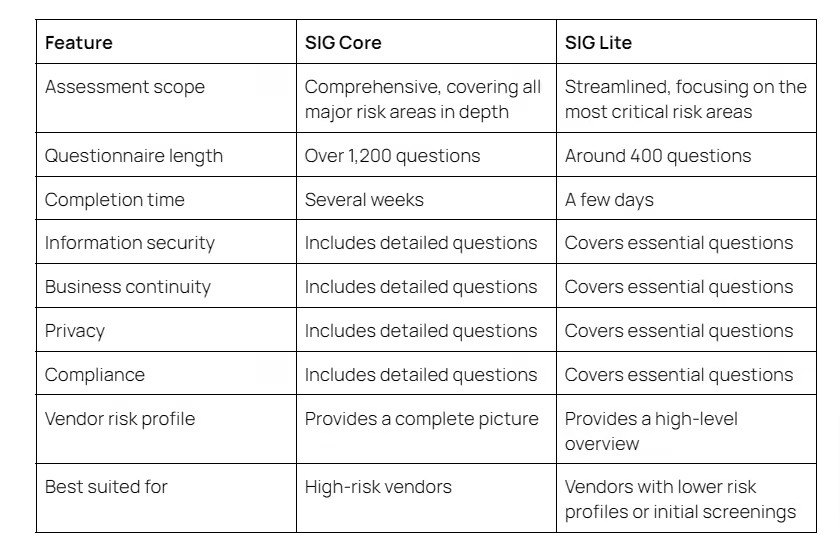
SIG Core:
- Comprehensive assessment covering all major risk areas in depth
- Includes detailed questions on information security, business continuity, privacy, and compliance
- Provides a complete picture of a vendor's risk profile
- Best suited for high-risk vendors
SIG Lite:
- Streamlined assessment focusing on the most critical risk areas
- Includes a subset of questions from the SIG Core
- Suitable for vendors with lower risk profiles or initial screenings
- Can be completed more quickly than the SIG Core
SIG Questionnaire Vs Other Vendor Risk Questionnaire
The 21 Risk Domains in the SIG Questionnaire (2026)
The SIG Questionnaire is designed to help organizations assess third-party vendors across every major area of operational and information security risk.
It’s structured around 21 risk domains, forming a standardized and repeatable framework that supports consistent vendor evaluations.
This structure ensures that assessments cover not only cybersecurity but also privacy, governance, and even ESG (Environmental, Social, and Governance) practices , giving a full picture of a vendor’s trustworthiness.
Below is a detailed overview of the 21 SIG risk areas that make up the SIG Questionnaire structure for 2026:
1. Access Control
This domain evaluates how vendors manage and protect user access to systems, data, and applications. It looks at authentication methods, password policies, and identity management processes to prevent unauthorized entry.
2. Application Security
Focuses on how vendors develop, test, and maintain secure software applications. It includes reviewing source code controls, vulnerability management, and application-layer defenses.
3. Artificial Intelligence (AI)
Examines governance and ethical use of AI and machine learning systems. This domain ensures that AI models are secure, transparent, and compliant with regulatory standards.
4. Asset and Information Management
Assesses how vendors classify, track, and safeguard digital and physical information assets. It ensures sensitive data is inventoried, labeled, and protected throughout its lifecycle.
5. Cloud Hosting Services
Reviews security practices for cloud environments, including configuration management, access controls, and third-party cloud provider oversight.
6. Compliance Management
Ensures vendors adhere to relevant laws, frameworks, and standards such as GDPR, ISO 27001, and SOC 2. This domain demonstrates how compliance is monitored and maintained.
7. Cybersecurity Incident Management
Evaluates the vendor’s ability to detect, respond to, and recover from cybersecurity incidents. It also covers escalation procedures, communication protocols, and post-incident reviews.
8. Endpoint Security
Examines controls for securing devices such as laptops, desktops, and mobile endpoints. It focuses on antivirus protection, patch management, and endpoint monitoring.
9. Enterprise Risk Management
Look at how vendors identify, assess, and mitigate risks across their business operations. It also assesses governance structures and reporting mechanisms for risk oversight.
10. Environmental, Social, Governance (ESG)
Addresses sustainability, corporate responsibility, and governance practices. This ESG risk assessment ensures vendors align with ethical standards and manage social and environmental impacts effectively.
11. Human Resources Security
Evaluates how vendors handle security awareness, employee training, background checks, and role-based access management to reduce insider risk.
12. Information Assurance
Focuses on maintaining data integrity, confidentiality, and availability. It also reviews how vendors validate and monitor the trustworthiness of their data systems.
13. IT Operations Management
Examines how IT services are managed, monitored, and maintained to ensure consistent performance and minimal downtime.
14. Network Security
Reviews security controls that protect internal and external networks from attacks. This includes firewalls, intrusion detection, and encryption mechanisms.
15. Nth Party Management
Assesses how vendors evaluate and monitor their own suppliers and subcontractors. Managing nth party risk ensures security and compliance extend beyond direct vendor relationships.
16. Operational Resilience
Focuses on how vendors plan for, respond to, and recover from disruptions such as cyberattacks or natural disasters. It ensures continuity and minimal business impact.
17. Physical and Environmental Security
Covers physical safeguards for offices, data centers, and equipment. It assesses building access controls, surveillance, and environmental protection systems.
18. Privacy Management
Reviews how vendors handle personal and sensitive data. It ensures compliance with privacy laws and demonstrates responsible data collection, storage, and sharing practices.
19. Server Security
Evaluates protection measures for both on-premises and virtual servers, including configuration management, patching, and hardening standards.
20. Supply Chain Risk Management (SCRM)
Analyzes how vendors identify and mitigate risks across their supply chains. This domain ensures visibility into supplier dependencies and resilience planning.
21. Threat Management
Assesses how vendors identify, monitor, and mitigate cyber threats. It includes proactive defense mechanisms, threat intelligence sharing, and regular risk assessments.
SIG Compliance Mapping: 35+ Frameworks Covered
One of the biggest advantages of the SIG Questionnaire is how it aligns vendor assessments with major global compliance frameworks. This built-in SIG compliance mapping saves organizations significant time by connecting each question in the questionnaire to established standards. It ensures your vendor due-diligence process meets the expectations of auditors, regulators, and internal governance teams alike.
The SIG Questionnaire frameworks include mappings to more than 35 global standards across security, privacy, and risk management. Below are some of the most widely recognized frameworks and regulations supported:
How to Use the SIG Questionnaire in Vendor Risk Management (VRM)
The SIG questionnaire can be used throughout the vendor risk management lifecycle, from initial vendor selection to ongoing monitoring.
Vendor selection:
The SIG questionnaire can be used to evaluate potential vendors during the procurement process. By requiring vendors to complete the questionnaire, organizations can quickly identify vendors that meet their security and compliance requirements.
Contracting:
The SIG questionnaire can be used to inform contract negotiations with vendors. Organizations can use the questionnaire responses to identify areas where vendors may need to implement additional controls or agree to specific security requirements.
Ongoing monitoring:
The SIG questionnaire can be used to periodically reassess vendors to ensure they continue to meet the organization's security and compliance standards. Organizations can require vendors to update their questionnaire responses annually or whenever significant changes occur.
How to Customize and Scope the SIG Questionnaire
The SIG Questionnaire is designed to be flexible. You don’t have to use all 855 questions from the Core version or even all 21 risk domains. Instead, you can tailor it to match your organization’s vendor risk level, regulatory scope, and internal policies. This process, known as SIG scoping, helps you save time and focus only on what matters most for your business.
Here’s how to customize the SIG Questionnaire effectively:
1. Filter by Risk Domain
Start by identifying which of the 21 SIG risk domains are relevant to your vendor or project. For example, a cloud services vendor might require deeper assessment under Cloud Hosting Services, Access Control, and Privacy Management, but not Physical and Environmental Security.
This SIG risk domain filtering approach ensures your assessment focuses on applicable risk areas instead of unnecessary ones. It keeps your evaluation concise and more aligned with vendor responsibilities.
2. Select Control Categories
Within each risk domain, the SIG provides predefined control categories, specific groups of questions covering detailed security and compliance topics. For instance, under Network Security, you’ll find controls related to firewall configurations, encryption, and intrusion detection.
By selecting only the relevant SIG control categories, you can scale the questionnaire’s depth to match vendor criticality or project sensitivity.
3. Map to Compliance Frameworks
A major strength of the SIG is its built-in SIG compliance mapping. Every question can be cross-referenced with well-known standards such as ISO 27001:2022, NIST CSF 2.0, PCI DSS v4.0, HIPAA, and GDPR.
When you map questions to these frameworks, you align your vendor assessments directly with your internal or regulatory requirements, eliminating redundant reviews and ensuring consistency across audits.
4. Create Custom SIG Templates
Once you’ve filtered domains and selected control categories, you can create custom SIG templates for different use cases, like onboarding new SaaS vendors, reviewing critical infrastructure partners, or assessing niche suppliers.
Custom templates simplify recurring assessments and make it easier for teams to standardize reviews across departments while maintaining flexibility for specific risks or frameworks.
5 Proactive Strategies to Complete SIG Questionnaires Faster
Completing a SIG questionnaire can be a time-consuming and resource-intensive process for vendors.
However, there are several proactive approaches vendors can take to streamline the process:
Maintain up-to-date documentation
Vendors should maintain comprehensive documentation of their security controls, policies, and procedures. Having this documentation readily available can make it easier to complete the SIG questionnaire and respond to customer inquiries.
Assign dedicated resources
Vendors should assign dedicated resources, such as a compliance officer or security specialist, to manage the completion of SIG questionnaires. These resources can help ensure that questionnaires are completed accurately and efficiently.
Conduct self-assessments
Vendors can conduct regular self-assessments using the SIG questionnaire to identify gaps in their security controls and processes. Proactively addressing these gaps helps vendors to be better prepared to complete the questionnaire when requested by customers.
Leverage Past Responses
Keep track of previous SIG submissions and reuse verified responses where applicable. Many questions remain the same across customers or assessments, so a pre-approved library of answers can save hours of manual work.
Engage with customers
Vendors should engage with their customers to understand their specific security and compliance requirements. With open communication and collaboration, vendors can ensure that they are meeting customer needs and can more easily complete the SIG questionnaire.
SIG Questionnaire and the Shared Assessments Ecosystem
The SIG Questionnaire is part of a broader ecosystem developed by Shared Assessments, an industry-recognized authority in third-party risk management. Together, these tools help organizations assess, monitor, and improve vendor security and compliance in a consistent, scalable way.
This Shared Assessments toolkit combines several interconnected components that extend the value of the SIG beyond a simple questionnaire, turning it into a full framework for continuous third-party risk governance.
1. SIG and VRMMM: Measuring Risk Maturity
The SIG works hand-in-hand with the VRMMM (Vendor Risk Management Maturity Model).
While the SIG focuses on collecting standardized vendor information, the VRMMM helps organizations assess the maturity of their third-party risk management program itself.
It measures capabilities across key areas like governance, due diligence, and ongoing monitoring, helping teams identify where they stand and what to improve next.
This combination of SIG and VRMMM supports both sides of the equation: vendors demonstrate compliance, and customers benchmark program maturity.
2. SCA: Validating Controls Onsite
The Standardized Control Assessment (SCA) is the validation layer in the SIG Questionnaire ecosystem.
It provides a structured way to perform onsite or remote audits to verify vendor responses and test security controls in action.
By using the SCA, organizations can move from a “trust but verify” approach to a proven, evidence-based validation process that enhances confidence in vendor assessments.
3. Privacy Tools for GDPR and CCPA Alignment
Shared Assessments also offers privacy-specific modules and templates designed to help vendors comply with data protection regulations like GDPR and CCPA.
These privacy tools complement the SIG by providing deeper checks into data handling, consent management, and cross-border data transfers, ensuring that vendors meet global privacy standards.
4. Building a Complete Third-Party Risk Program
Together, the SIG, VRMMM, and SCA form the foundation of a mature third-party risk maturity model.
Organizations can use these tools to:
- Collect vendor information through the SIG.
- Evaluate internal risk program maturity with the VRMMM.
- Validate security and compliance practices with the SCA.
This integrated model helps teams streamline vendor reviews, ensure audit readiness, and maintain ongoing compliance, all within a single, standardized framework.
Third Party Risk Assessment with Spendflo
Managing third-party risk is no longer optional, it’s a business necessity. With the growing number of vendors, compliance requirements, and cybersecurity threats, even one oversight can expose your organization to serious financial or reputational damage.
That’s where Spendflo makes a difference.
When a leading SaaS company struggled to track vendor compliance across 60+ suppliers, their finance and procurement teams turned to Spendflo. Within 45 days, they achieved complete visibility into vendor risk, automated follow-ups for assessments, and cut manual review time by 40%.
The same challenges might sound familiar, limited oversight, inconsistent reporting, and growing audit pressure. Spendflo helps you solve them with a centralized, AI-powered risk management system built for modern procurement teams.
With Spendflo, you can:
- Simplify vendor due diligence and onboarding through automated workflows.
- Monitor vendors continuously with real-time alerts and risk scoring.
- Customize risk assessment frameworks to fit your industry and compliance standards.
- Centralize oversight with a unified view of all vendors and their current risk posture.
- Integrate seamlessly with your existing procurement, contract, and security tools.
Don’t wait for a vendor issue to become a business risk. Take control of your third-party ecosystem with a smarter, faster way to assess and manage vendor compliance.
Book a demo with Spendflo to see how you can strengthen your vendor risk management process today.
Frequently Asked Questions About SIG Questionnaire
1. How often is the SIG questionnaire updated?
The SIG questionnaire is typically updated annually to reflect changes in industry standards, regulations, and best practices. The Shared Assessments Program, which maintains the SIG questionnaire, releases new versions of the questionnaire in the fourth quarter of each year.
2. Who created the SIG questionnaire?
The SIG questionnaire was created by the Shared Assessments Program, a member-driven organization that develops standardized tools and best practices for third-party risk management. The Shared Assessments Program is managed by The Santa Fe Group, a strategic advisory firm specializing in cybersecurity, privacy, and risk management.
The development of the SIG questionnaire involved collaboration among Shared Assessments Program members, which include leading organizations from various industries, such as financial services, healthcare, and technology. These organizations contributed their expertise and insights to create a comprehensive and standardized assessment tool that could be used across sectors.
3. Can vendors prepare for a SIG questionnaire assessment?
Yes, vendors can prepare for a SIG questionnaire assessment by familiarizing themselves with the questionnaire, conducting self-assessments, gathering relevant documentation, and engaging with customers to understand their specific requirements. Taking these proactive steps can help vendors streamline the assessment process and demonstrate their commitment to security and risk management.
4. How many questions are in a SIG?
The number of questions in a SIG (Standardized Information Gathering questionnaire) can vary depending on the specific version and customization. Typically, a full SIG questionnaire contains around 700-850 questions covering various aspects of information security, privacy, and risk management.


.avif)



.avif)










.avif)
.avif)