


According to a 2024 Gartner study, over 78% of enterprise buyers refuse to engage with SaaS vendors that lack SOC 2 compliance. In a world where data breaches cost businesses millions and trust drives every deal, being SOC 2 compliant is no longer optional, it’s the new entry ticket to enterprise sales.
Yet, many growing companies still struggle with the SOC 2 audit process, unclear compliance requirements, and the time and cost involved. This guide breaks down everything you need to know about achieving SOC 2 compliance, from understanding the framework and trust principles to preparing for your first audit, so you can protect customer data and win enterprise confidence faster.
What is SOC 2?
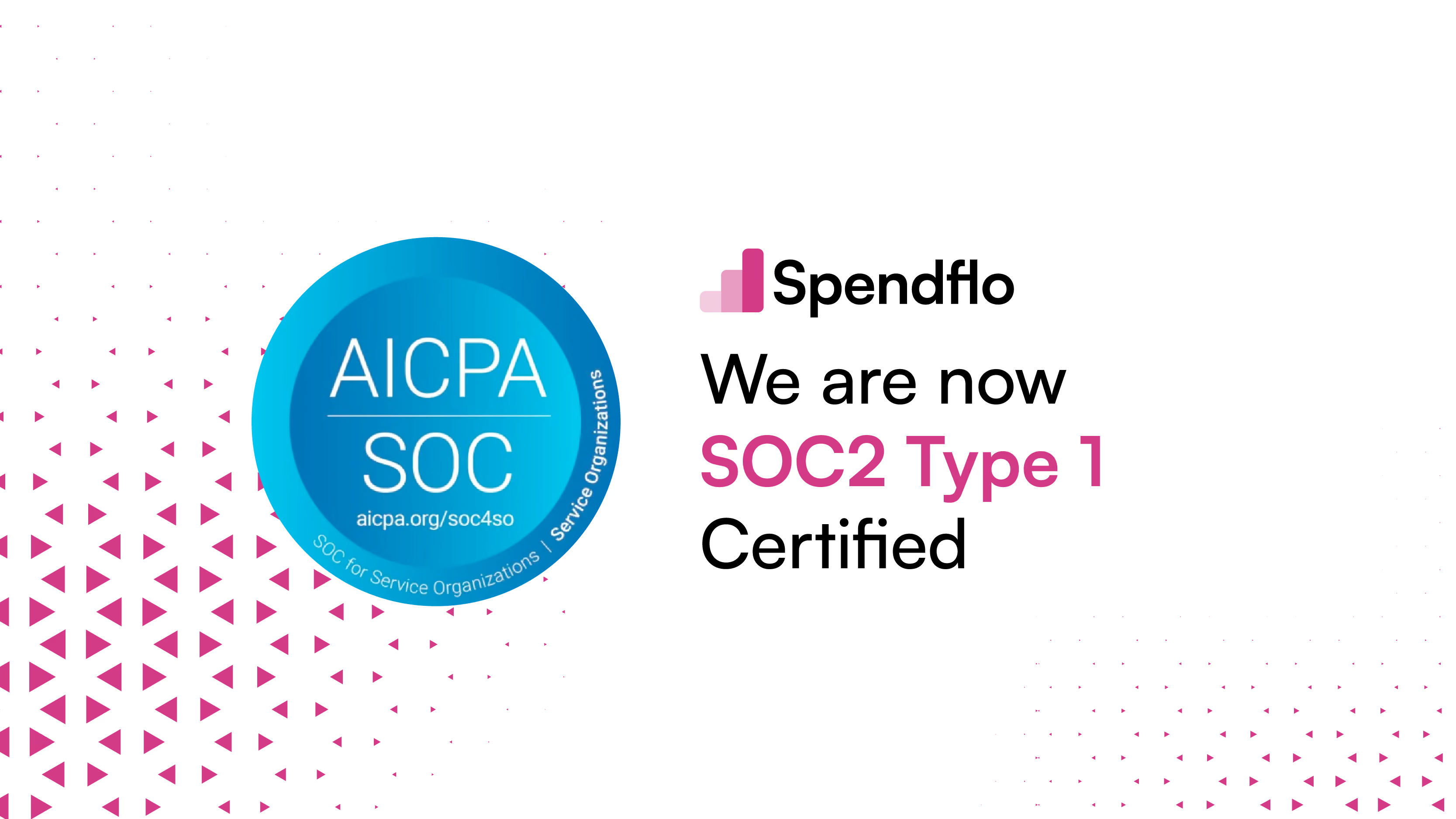
SOC 2 is a security standard by the American Institute of CPAs (AICPA) that defines how companies should handle customer data. Built on five trust principles: security, availability, processing integrity, confidentiality, and privacy it shows SaaS platforms like Spendflo maintain strong data protection and reliability.
What Does SOC 2 Stand For?
SOC stands for Service Organization Control 2. It’s a framework that helps organizations demonstrate how they protect the information entrusted to them. The “2” refers to the specific type of report focused on controls relevant to data security and privacy,especially for cloud-based or SaaS providers.
What is SOC 2 Compliance?
Being SOC 2 compliant means an organization has the proper systems and processes to safeguard customer data according to AICPA’s trust principles. Rather than a certification, SOC 2 involves an attestation by an independent auditor who evaluates how well the company’s controls meet these standards. Passing the audit shows that a company takes data protection seriously and consistently maintains it over time.
Who Developed SOC 2?
SOC 2 was created by the American Institute of Certified Public Accountants (AICPA), the professional body that sets auditing and assurance standards in the United States. The AICPA designed SOC 2 to give organizations a way to demonstrate accountability, transparency, and security in how they manage customer data.
SOC 2 Trust Services Criteria (The Five Trust Principles)
The SOC 2 Trust Services Criteria (TSC) are a set of standards developed by the American Institute of Certified Public Accountants (AICPA) to evaluate how well an organization protects and manages customer data. These criteria are designed around five trust principles, security, availability, processing integrity, confidentiality, and privacy.
Each principle defines a specific aspect of data management and operational reliability. Together, they form the foundation for a SOC 2 report, helping organizations prove that they can be trusted to safeguard customer information, maintain system uptime, and handle data responsibly.
Let’s look at each principle in detail.
1. Security
What it covers: The security principle focuses on protecting systems and data from unauthorized access, misuse, or malicious activity. It ensures that only authorized users can access sensitive information and that systems are monitored for any unusual behavior. This is the only required principle in every SOC 2 audit, all other principles are optional depending on the nature of the business.
Key requirements:
- Strong access controls that restrict data and system access based on user roles
- Firewalls, intrusion detection systems, and endpoint protection tools
- Continuous monitoring for suspicious activity or attempted breaches
- Incident response plans to address security events quickly and effectively
- Regular vulnerability assessments and patch management
Example controls:
- Implementing multi-factor authentication for internal and external access
- Logging all login attempts and performing regular access reviews
- Using encryption for both data in transit and data at rest
2. Availability
What it covers: The availability principle verifies that systems are accessible and operational when customers or users need them. It’s about ensuring uptime, reliability, and resilience, supported by robust infrastructure and monitoring practices. This principle is crucial for SaaS companies that must deliver continuous service availability.
Key requirements:
- Defined uptime and performance targets through SLAs (Service Level Agreements)
- Continuous monitoring of systems, servers, and networks for downtime or performance issues
- Backup, disaster recovery, and failover systems to maintain continuity
- Incident management and escalation procedures to minimize downtime
- Regular stress testing and capacity planning
Example controls:
- Using redundant servers and data centers to prevent single points of failure
- Setting up 24/7 system health monitoring with automated alerts
- Conducting periodic disaster recovery drills to validate recovery time objectives
3. Processing Integrity
What it covers: The processing integrity principle ensures that system processing is accurate, complete, valid, timely, and authorized. It verifies that data isn’t altered, lost, or processed incorrectly, and that results are reliable. This is especially important for financial, procurement, or transactional systems where accuracy and trust are essential.
Key requirements:
- Automated validation checks to ensure input, processing, and output data are accurate
- Monitoring tools that detect anomalies or data inconsistencies
- Version control for system updates and configuration management
- Documented procedures for correcting processing errors
- Data reconciliation processes for key business transactions
Example controls:
- Setting up automated alerts for failed data transfers or mismatched entries
- Maintaining audit trails for all data changes
- Reviewing and approving all updates to production systems
4. Confidentiality
What it covers: The confidentiality principle addresses how organizations protect sensitive information from unauthorized access or disclosure. It applies to data that’s meant to remain private, such as trade secrets, financial details, internal communications, or client contracts.
Key requirements:
- Encryption of confidential data both in storage and during transmission
- Access permissions based on the principle of least privilege
- Secure data transfer mechanisms like VPNs and TLS connections
- Policies for secure data retention and disposal
- Vendor management processes that verify partner compliance with confidentiality standards
Example controls:
- Encrypting sensitive customer records in the database
- Restricting internal file sharing to approved personnel only
- Automatically purging confidential logs after a defined retention period
5. Privacy
What it covers: The privacy principle governs how an organization collects, uses, retains, discloses, and disposes of personal information. It ensures that companies handle personally identifiable information (PII) ethically and transparently, in line with global privacy laws such as GDPR (General Data Protection Regulation) and CCPA (California Consumer Privacy Act).
Key requirements:
- Transparent privacy notices that explain how personal data is used
- Obtaining and tracking user consent for data collection and processing
- Allowing individuals to access, correct, or delete their personal data
- Policies aligned with data protection laws and industry best practices
- Regular privacy impact assessments and audits
Example controls:
- Implementing a consent management system for website and app users
- Keeping audit logs of all data access and deletion requests
- Training employees on privacy policies and safe handling of personal data
SOC 2 Type 1 vs. Type 2: Understanding the Difference
When organizations start their SOC 2 journey, they can choose between two types of reports: Type 1 and Type 2. Both reports are based on the same Trust Services Criteria (TSC), but they differ in how and when the controls are evaluated.
Type 1 provides a snapshot of your controls at a single point in time, while Type 2 shows how those controls perform over an extended period. Together, they demonstrate your organization’s maturity and long-term commitment to maintaining security and compliance.
SOC 2 Type 1 Report
What it is: A SOC 2 Type 1 report is a point-in-time assessment of your organization’s controls. It evaluates whether your systems and policies are properly designed to meet the Trust Services Criteria on a specific date.
What it evaluates: The focus is on the design and implementation of controls, not their long-term effectiveness. Auditors review your documentation, security setup, and internal policies to confirm that they meet SOC 2 standards.
Timeline to achieve: Most companies can complete a Type 1 report in about 3 to 6 months, depending on the complexity of their environment and readiness level.
When to get it: A Type 1 report is ideal for startups and growing SaaS companies that need to demonstrate early-stage compliance to investors or customers. It’s a strong first step toward building trust before moving on to the more rigorous Type 2 assessment.
SOC 2 Type 2 Report
What it is: A SOC 2 Type 2 report evaluates the operational effectiveness of your controls over time. Instead of a single-date review, auditors assess how consistently your security, privacy, and availability controls operate across a defined period, typically 6 to 12 months.
What it evaluates: Type 2 goes beyond design. It verifies that your controls not only exist but are working effectively in real-world conditions. This includes reviewing evidence such as access logs, monitoring reports, incident responses, and compliance records over several months.
Timeline to achieve: The full process can take 12 months or longer, including time to complete your initial Type 1 audit and the follow-up observation period.
When to get it: Type 2 is often required by enterprise customers who need assurance that your security program is proven and maintained continuously. It’s the standard for mature companies that serve large or regulated clients.
Comparison: SOC 2 Type 1 vs. Type 2
Why is SOC 2 Compliance Important?
Achieving SOC 2 compliance isn’t just a checkbox exercise, it’s a strategic investment in security, trust, and business growth. It shows customers, partners, and regulators that your organization has the right systems in place to protect sensitive data and operate securely.
Here are the key reasons why SOC 2 compliance matters for modern SaaS and enterprise-focused businesses.
Builds Trust and Credibility with Customers
SOC 2 compliance is one of the clearest ways to demonstrate your commitment to protecting customer data. It gives clients confidence that their information is handled securely and according to industry best practices.
For B2B and SaaS providers, this trust translates directly into a competitive advantage. When customers compare vendors, a SOC 2-compliant organization immediately stands out as more reliable, transparent, and security-conscious.
Required for Enterprise Contracts
For most enterprise sales requirements, SOC 2 compliance isn’t optional, it’s expected. Large organizations often mandate it as part of their vendor onboarding and due diligence processes.
Procurement and IT security teams rely on SOC 2 reports to assess whether a vendor meets their internal compliance standards before signing a contract. Many companies include SOC 2 documentation in their vendor security questionnaires, and lacking it can delay or block enterprise deals.
Risk Mitigation and Security Posture
SOC 2 compliance helps organizations strengthen their security framework by introducing proactive risk management practices. It requires formal policies, monitoring, and response procedures that reduce the chance of data breaches or operational disruptions.
By following the SOC 2 Trust Services Criteria, companies can identify weaknesses early, prevent security incidents, and respond effectively when risks arise.
Regulatory Compliance Alignment
SOC 2 controls align closely with major global data protection regulations like GDPR (General Data Protection Regulation), HIPAA (Health Insurance Portability and Accountability Act), and CCPA (California Consumer Privacy Act).
By implementing SOC 2 standards, organizations can streamline compliance across multiple frameworks. This overlap makes it easier to meet various regional and industry-specific requirements without duplicating effort.
Improved Internal Security Practices
Going through the SOC 2 process forces teams to establish formal security processes, documentation, and accountability. It brings structure to how organizations manage access controls, incident response, and data protection.
More importantly, it helps build a culture of security across the organization. Employees become more aware of compliance requirements, and leadership gains visibility into ongoing risks and control performance.
Understanding the SOC 2 Report
Once the SOC 2 audit is complete, the auditor issues a SOC 2 report, an official document that outlines your organization’s systems, controls, and how well they meet the Trust Services Criteria (TSC). It’s one of the most recognized forms of assurance for customers and partners evaluating your data security practices.
The report helps external stakeholders understand how your company safeguards sensitive data and whether those controls are operating as intended.
What’s Included in a SOC 2 Report
A SOC 2 audit report provides a comprehensive overview of your organization’s security posture. It’s divided into several key sections that auditors complete using evidence gathered during the audit process.
A standard SOC 2 report includes:
- Auditor’s opinion: The overall conclusion on whether your controls meet the SOC 2 criteria
- Management assertion: A statement from your organization confirming that the described controls are accurate and in use
- System description: Details of the systems, processes, and services audited
- Control activities and testing results: Evidence of how each control was tested and the results
- SOC 2 exceptions: Any gaps or control failures identified during testing, along with their impact and remediation notes
SOC 2 Report Types
There are two main types of SOC 2 reports:
- Type 1 Report: Evaluates the design of your controls at a single point in time.
- Type 2 Report: Tests how effectively those controls operate over a period of six to twelve months.
How to Interpret SOC 2 Exceptions
During the audit, auditors may identify exceptions, areas where a control did not fully meet expectations or failed during testing.
Common examples include:
- A missed access review within the audit period
- Incomplete documentation of an incident response plan
- A security policy not reviewed on schedule
Report Validity and Renewal
A SOC 2 report is typically valid for 12 months from the end date of the audit period. After that, customers and partners expect a new report to confirm continued compliance.
Maintaining annual audits ensures your organization stays aligned with evolving SOC 2 requirements and demonstrates that your security controls are consistently applied over time.
Sharing the SOC 2 Report
Because SOC 2 reports contain detailed information about internal systems and controls, they are not made public. Instead, organizations share them under non-disclosure agreements (NDAs) or through secure customer portals.
Best practices for sharing include:
- Storing the report securely in a controlled access system
- Releasing it only to verified customers, partners, or auditors upon request
- Tracking who has received the report for compliance and recordkeeping
Who Needs SOC 2 Compliance?
SOC 2 compliance isn’t limited to large enterprises. Any company that stores, processes, or manages customer data in the cloud should consider it a business essential. It helps demonstrate that you take data protection seriously, something customers increasingly expect before doing business.
Here’s a look at the types of organizations that typically need SOC 2 compliance and why it matters for each.
SaaS and Cloud Service Providers
Companies that deliver services through the cloud are the most common candidates for SOC 2 compliance. This includes SaaS providers, cloud infrastructure companies, and application hosting services.
Since these organizations handle large volumes of sensitive customer data, often across shared or multi-tenant environments, SOC 2 compliance reassures clients that their data is secure and systems are properly controlled.
Examples include:
- Cloud storage and infrastructure providers (e.g., AWS partners)
- SaaS platforms managing customer or financial data
- Application hosting and managed service providers
Technology Companies
Technology companies that serve other businesses, especially enterprise clients, need SOC 2 to prove they manage data securely and responsibly. This applies to software developers, API integration platforms, and data analytics providers that connect or process third-party data.
SOC 2 compliance often becomes part of the sales requirement checklist for technology vendors. It’s a sign of operational maturity and a key differentiator in competitive markets.
Examples include:
- API-first platforms and integration providers
- Data analytics and business intelligence companies
- Enterprise software or middleware solutions
Service Organizations Handling Sensitive Data
Organizations that manage or process highly sensitive information, such as financial records, health data, or employee information, are also strong candidates for SOC 2 compliance.
For these companies, the SOC 2 requirements by industry often overlap with other frameworks like HIPAA or PCI DSS. Having SOC 2 compliance provides a unified way to manage risk and demonstrate accountability.
Examples include:
- Fintech and payment processing platforms
- Healthcare technology or telemedicine providers
- HR, payroll, and benefits management systems
Companies Pursuing Enterprise Customers
If your business plans to sell to enterprise clients, obtaining SOC 2 compliance early can accelerate your growth. Many large organizations will not move forward with a vendor unless they can review a current SOC 2 report.
Having SOC 2 in place simplifies the vendor risk assessment process and reduces time spent on lengthy security questionnaires during procurement cycles. It also signals that your company is prepared for enterprise-level partnerships.
Is SOC 2 Mandatory?
SOC 2 compliance is technically voluntary, but in practice, it’s almost mandatory for B2B SaaS and cloud service providers. While no law requires it, most enterprise customers demand a SOC 2 report before signing a contract.
Without SOC 2, companies often face barriers in closing deals, especially when working with clients in regulated industries like finance, healthcare, or technology.
The SOC 2 Audit Process: Step-by-Step Guide
The SOC 2 audit process helps organizations prove that their data security controls are properly designed and functioning as intended. It’s a structured, multi-step journey that ensures your business is fully prepared to meet the Trust Services Criteria (TSC), and that your systems can withstand scrutiny from auditors and customers alike.
Here’s a breakdown of each step in the SOC 2 audit process and what to expect along the way.
Step 1: Define Audit Scope
Before the audit begins, your team needs to define what’s in scope. This step sets the foundation for the entire project.
Key activities include:
- Determining which trust principles (security, availability, processing integrity, confidentiality, privacy) apply to your organization
- Identifying the systems, data flows, and processes that handle customer information
- Mapping how data moves across your infrastructure, third-party tools, and internal systems
Step 2: Gap Assessment and Readiness
Next comes the readiness or gap assessment, where you evaluate how close your current practices are to SOC 2 requirements.
Key activities include:
- Conducting an internal readiness assessment or using an external consultant to review existing controls
- Identifying gaps in policies, documentation, or security tools
- Developing a remediation plan to address weaknesses before the formal audit begins
Step 3: Implement Controls and Documentation
Once the gaps are identified, it’s time to implement and document your security controls. Auditors will rely heavily on this evidence during the review, so accuracy and completeness are essential.
Key activities include:
- Creating and updating security policies (access control, incident response, data retention, etc.)
- Implementing technical controls such as encryption, MFA, and monitoring systems
- Documenting processes, responsibilities, and evidence of control operation
Step 4: Select and Engage Auditor
SOC 2 audits must be conducted by an independent CPA firm (Certified Public Accountant) that specializes in security and compliance reviews.
Key activities include:
- Researching and selecting a reputable SOC 2 auditor with industry experience
- Reviewing engagement terms and defining audit scope and timelines
- Preparing your internal team for interviews, document requests, and evidence collection
Step 5: Audit Execution
During this phase, the auditor performs the testing and verification portion of the engagement. This is where the work of the previous steps pays off.
Key activities include:
- Responding to information and document requests from the auditor
- Participating in interviews to explain policies and demonstrate control ownership
- Providing evidence, such as screenshots, system logs, and monitoring reports
- Supporting control testing, where auditors verify that systems operate as intended
Step 6: Report Issuance and Remediation
Once testing is complete, the auditor issues the official SOC 2 report. It includes an overview of your systems, control descriptions, test results, and any exceptions or findings.
Key activities include:
- Reviewing the audit report for accuracy and completeness
- Addressing any exceptions or gaps identified during testing
- Sharing the final report with customers, partners, or internal stakeholders
Who Can Perform a SOC 2 Audit?
Not every auditor is qualified to conduct a SOC 2 audit. Because these reports are governed by the American Institute of Certified Public Accountants (AICPA), only licensed professionals who meet strict independence and competency standards can perform them.
Selecting the right SOC 2 auditor is one of the most important decisions in the entire process. The firm you choose will evaluate your systems, issue your report, and play a key role in shaping how customers perceive your organization’s security maturity.
CPA Firm Requirements
A SOC 2 audit must be conducted by a licensed CPA firm (Certified Public Accountant). These firms are authorized under AICPA standards to perform attestation engagements, meaning they can independently assess and attest to the effectiveness of your internal controls.
Key requirements include:
- The auditor must be a licensed CPA firm in good standing
- The firm must operate independently from the organization being audited
- All work must follow AICPA’s attestation and reporting standards
- The final report must align with the Trust Services Criteria (TSC)
Auditor Qualifications to Look For
When choosing your auditor, experience and credibility matter as much as licensing. A qualified SOC 2 auditor should bring both technical expertise and industry knowledge to the table.
Key qualifications include:
- Proven experience conducting SOC 2 audits across companies of similar size or complexity
- Industry expertise, especially in SaaS, cloud services, or data-driven technology environments
- Strong reputation backed by client references or recognized case studies
- Understanding of modern cloud security controls such as IAM, encryption, and incident management
Engagement and Independence
Auditor independence is a cornerstone of a valid SOC 2 report. The auditing firm must not have any conflicts of interest or prior relationships that could influence its judgment.
Why it matters:
- Independence ensures objectivity and credibility in the final SOC 2 report
- Auditors cannot design or implement your controls, they can only evaluate them
- Maintaining separation between consulting and attestation services helps prevent bias
Top SOC 2 Audit Firms
While many CPA firms are qualified to perform SOC 2 audits, some have built strong reputations for their expertise in technology, SaaS, and cloud compliance.
Examples of well-known and trusted SOC 2 audit firms include:
- BDO
- A-LIGN
- Schellman & Company
- Deloitte
- EY (Ernst & Young)
- PwC (PricewaterhouseCoopers)
- KPMG
SOC 2 Compliance Timeline and Costs
Getting SOC 2 compliance takes planning, coordination, and investment. The process varies based on company size, system complexity, and readiness, but every organization goes through similar stages.
Here’s what to expect in terms of timeline, cost, and ongoing maintenance.
How Long Does SOC 2 Take?
The SOC 2 timeline depends on how prepared your organization is when starting. Most companies spend several months completing readiness, control implementation, and audit phases.
Typical breakdown:
- Readiness phase: 3–6 months
- Internal assessment, gap analysis, and remediation of controls.
- Internal assessment, gap analysis, and remediation of controls.
- Type 1 audit: 2–4 weeks
- Evaluates the design of your controls at a single point in time.
- Evaluates the design of your controls at a single point in time.
- Type 2 observation period: 6–12 months
- Auditors review how controls perform continuously over time.
- Auditors review how controls perform continuously over time.
- Type 2 audit: 4–6 weeks
- Verifies control effectiveness during the observation window.
- Verifies control effectiveness during the observation window.
Total timeline:
- SOC 2 Type 1: Around 3–6 months (including preparation)
- SOC 2 Type 2: Up to 12–18 months from start to finish
Organizations that maintain well-documented processes and automated monitoring tools typically move through the audit faster and with fewer issues.
SOC 2 Audit Costs
The SOC 2 cost can vary significantly depending on your company’s size, system complexity, and the scope of the audit.
Typical pricing overview:
- Audit fees: $15,000–$50,000+ depending on company size and type (Type 1 vs. Type 2)
- Preparation costs: Security tools, readiness assessments, and compliance automation software can add several thousand dollars more
- Internal time and resources: Employees may spend dozens of hours preparing evidence, documentation, and responses
- Consulting or readiness support: Optional services to identify and close control gaps before the audit
Key cost factors include:
- Number of trust principles covered (security, availability, etc.)
- Complexity of systems and integrations
- Auditor reputation and experience
- Size of the company and audit scope
Investing in proper audit preparation upfront often saves both time and cost by reducing rework and follow-up findings.
Audit Frequency and Ongoing Costs
SOC 2 compliance isn’t a one-time project. Once certified, companies must maintain and renew their compliance annually to keep reports current and credible.
Ongoing requirements include:
- Annual audit renewal: Most organizations complete a new SOC 2 audit each year to verify continued compliance
- Continuous monitoring: Tools and processes that track control performance, system changes, and incident response activities year-round
- Internal maintenance: Staff time for documentation, evidence collection, and training to keep controls effective
Ongoing costs:
- Continuous monitoring software or automation tools
- Internal security resources and control testing
- Annual auditor fees for renewal audits
Treat SOC 2 compliance as an ongoing security commitment rather than a one-time certification. Continuous monitoring and yearly reassessments help ensure your systems remain trustworthy and audit-ready.
SOC 2 Compliance Checklist: Requirements and Controls
Achieving SOC 2 compliance means proving that your organization has strong internal controls for security, availability, processing integrity, confidentiality, and privacy. These controls form the backbone of your SOC 2 checklist, a roadmap that ensures data protection and operational reliability across every part of your business.
Auditors review each control area to determine whether your company’s systems and practices align with the Trust Services Criteria (TSC). Below is a detailed overview of the ten core control categories that make up a comprehensive SOC 2 compliance checklist.
1. Organization and Management Controls
Effective governance starts with leadership. These controls define how management oversees security strategy, risk management, and policy enforcement.
Key SOC 2 requirements include:
- Documented security policies and procedures that establish accountability for all employees
- Formal risk assessment processes to identify, analyze, and respond to security threats
- Defined management oversight structures such as compliance committees or executive ownership of security programs
Example controls:
- Maintaining an updated information security policy approved by leadership
- Scheduling quarterly risk reviews and reporting outcomes to the board
- Assigning clear roles for compliance, risk, and IT governance
2. Human Resources Security
People are often the weakest link in security, which makes human resource controls essential to any SOC 2 checklist. These controls help ensure that all personnel with access to sensitive data are trustworthy and well-trained.
Key SOC 2 controls include:
- Background checks during hiring to verify identity and eligibility
- Regular security awareness training to educate staff on phishing, password hygiene, and data handling
- Structured offboarding procedures to immediately revoke system and physical access when employees leave
Example controls:
- Conducting security refresher training every six months
- Automating access revocation through HR and IT systems
- Using NDAs to reinforce confidentiality obligations
3. Information Systems and Technology
Technology and software controls address how systems are designed, developed, and maintained. They form a critical part of SOC 2 requirements for ensuring secure and consistent technology operations.
Key SOC 2 requirements include:
- Adopting a secure development lifecycle (SDLC) with defined coding, testing, and review stages
- Maintaining detailed system documentation including architecture, data flow, and dependencies
- Establishing change management policies for software updates, patches, and deployments
Example controls:
- Implementing version control and peer code reviews
- Using automated testing for security vulnerabilities
- Maintaining a changelog for all production systems
4. Network and Infrastructure Security
A secure network protects data and applications from unauthorized access or attack. SOC 2 auditors examine how you secure and monitor your infrastructure to maintain continuous protection.
Key SOC 2 controls include:
- Configuring firewalls, VPNs, and access control lists (ACLs) to limit external exposure
- Implementing network segmentation to separate sensitive systems from general operations
- Using intrusion detection and prevention systems (IDS/IPS) for real-time threat alerts
Example controls:
- Enforcing network-level encryption for all inbound and outbound traffic
- Performing monthly vulnerability scans
- Maintaining 24/7 monitoring via a security operations center (SOC)
5. Physical and Environmental Security
SOC 2 audits also examine the physical safeguards protecting your facilities, equipment, and data centers. Even in a cloud-based world, physical access remains a key risk factor.
Key SOC 2 requirements include:
- Data center security controls such as surveillance, keycard systems, and visitor logs
- Access restrictions that limit physical entry to authorized personnel only
- Environmental monitoring to detect temperature, humidity, or power anomalies
Example controls:
- Using biometric access for server rooms
- Installing redundant power and cooling systems
- Logging and reviewing all physical access attempts
6. System Operations
Operational controls ensure that systems are monitored, incidents are managed, and backups are tested. They demonstrate that your organization can maintain availability and integrity even when issues arise.
Key SOC 2 controls include:
- Continuous system monitoring and logging for suspicious activity
- Formal incident response procedures with clear escalation paths
- Scheduled data backup and restoration testing to verify recoverability
Example controls:
- Using centralized logging tools like SIEM systems
- Performing post-incident reviews after every security event
- Testing backups monthly to ensure integrity
7. Change Management
Uncontrolled system changes are a leading cause of downtime and vulnerabilities. SOC 2 auditors assess how your company manages updates to software, systems, and configurations.
Key SOC 2 requirements include:
- A formal change request and approval process before any production deployment
- Rigorous testing and validation procedures to detect potential issues early
- Rollback capabilities to restore prior versions in case of failures
Example controls:
- Maintaining a change log that records author, reason, and approval for each modification
- Testing all changes in a staging environment before release
- Reviewing and approving emergency changes after deployment
8. Data Privacy and Confidentiality
These controls address how your organization collects, stores, uses, and protects sensitive and personal data, aligning with both SOC 2 privacy and confidentiality criteria.
Key SOC 2 requirements include:
- Encryption of data at rest and in transit
- Strict access control policies that enforce least privilege
- Data retention and disposal procedures aligned with business and legal requirements
Example controls:
- Encrypting databases using AES-256 encryption
- Using role-based access control (RBAC) for sensitive systems
- Shredding or securely deleting outdated customer data
9. Disaster Recovery and Business Continuity
A strong disaster recovery (DR) and business continuity plan (BCP) proves your company can maintain operations during disruptions.
Key SOC 2 controls include:
- Documented DR and BCP plans with defined recovery steps
- Regular testing of these plans to verify effectiveness
- Clearly defined recovery time objectives (RTOs) and recovery point objectives (RPOs)
Example controls:
- Conducting annual disaster recovery drills
- Maintaining redundant systems across multiple geographic regions
- Performing tabletop exercises with leadership and IT teams
10. Vendor and Third-Party Management
Modern companies rely on a wide network of vendors, but outsourcing doesn’t eliminate responsibility for data protection. SOC 2 requires oversight of third-party relationships to manage risk.
Key SOC 2 requirements include:
- Performing vendor risk assessments before onboarding and at regular intervals
- Conducting due diligence to evaluate vendor security practices
- Including data protection and confidentiality clauses in contracts
Example controls:
- Maintaining a vendor register with risk ratings
- Reviewing third-party SOC 2 or ISO 27001 reports annually
- Requiring immediate disclosure of any vendor security incidents
SOC 2 Policies, Procedures, and Documentation
To achieve SOC 2 compliance, organizations must maintain strong policies, procedures, and documentation that define how security and compliance are managed. These documents show auditors that controls are well-designed, consistently applied, and actively monitored.
Required Policies and Procedures
A complete SOC 2 documentation set should cover every area of security, risk, and governance. These policies serve as the backbone of your compliance framework.
Key policies and procedures include:
- Information Security Policy: Defines the company’s overall approach to data protection and risk management.
- Access Control Policy: Outlines how users gain, modify, and revoke system access securely.
- Incident Response Plan: Details how security incidents are detected, reported, and resolved.
- Business Continuity and Disaster Recovery Plan: Provides recovery strategies for maintaining uptime and service continuity.
- Vendor Management Policy: Defines how third-party vendors are assessed and monitored.
- Data Classification and Handling Policy: Sets rules for storing, transferring, and deleting sensitive data.
- Encryption Policy: Specifies encryption standards for data at rest and in transit.
- Acceptable Use Policy: Clarifies proper use of company systems and assets.
- Change Management Policy: Establishes testing, approvals, and tracking for system changes.
- Privacy Policy: Explains how personal and customer data is collected and processed.
- Risk Management Policy: Describes how security and operational risks are identified and mitigated.
- Asset Management Policy: Tracks ownership and status of all information assets.
- Employee Onboarding and Offboarding Procedures: Ensures timely access provisioning and revocation.
- Password Policy: Defines password complexity and multi-factor authentication requirements.
- Monitoring and Logging Policy: Explains how system logs are collected, stored, and reviewed.
Documentation Best Practices
Creating documentation is only part of the process; maintaining it effectively is what keeps compliance sustainable. Good documentation management helps avoid inconsistencies and makes the audit process faster and more transparent.
Best practices for SOC 2 documentation include:
- Centralized documentation system: Store all policies, procedures, and records in one secure, organized repository accessible to authorized personnel.
- Version control: Track document changes and maintain a clear revision history for auditors.
- Regular reviews and updates: Review key policies at least annually or after major operational changes to ensure they remain current.
- Employee acknowledgment tracking: Keep signed or digital confirmations from employees verifying they’ve read and understood company policies.
Evidence Collection and Management
During a SOC 2 audit, auditors will ask for proof that controls are implemented and functioning effectively. This evidence shows that your organization’s procedures are not just written but actually practiced.
Types of evidence commonly required:
- Policy documents and logs verifying access reviews
- Screenshots of configurations or settings (e.g., MFA, encryption)
- System-generated reports showing monitoring or alerting activities
- Audit trails from ticketing systems and incident response tools
- Employee training records and acknowledgment receipts
Best practices for evidence collection and management:
- Gather evidence continuously rather than waiting until the audit period ends.
- Organize evidence by control area or Trust Services Criteria for easier auditor review.
- Use automated compliance tools where possible to reduce manual work.
- Maintain evidence retention for at least one audit cycle (typically 12–18 months).
SOC 2 Readiness Assessment
A SOC 2 readiness assessment is a preparatory step to evaluate how well your organization’s policies, controls, and documentation align with audit requirements. It helps identify weaknesses before the official audit begins.
The readiness process typically includes:
- Internal assessment: Review existing security practices, policies, and procedures against the SOC 2 Trust Services Criteria.
- Gap analysis: Identify missing controls, outdated documentation, or non-compliant processes.
- Remediation planning: Create a structured plan to close gaps, such as updating policies, implementing new controls, or conducting staff training.
- Pre-audit validation: Reassess readiness after remediation to confirm all items are complete and audit-ready.
Conclusion
Failing to achieve SOC 2 compliance can cost more than just a failed audit, it can cost your customers’ trust. In today’s enterprise market, where vendor risk reviews and security audits are mandatory, not having a valid SOC 2 report can delay deals and block procurement approvals. Every month without compliance means more sales cycles stalled and fewer enterprise contracts signed.
Take Spendflo’s example: a mid-market SaaS customer in fintech faced repeated procurement rejections because they lacked SOC 2 certification. With Spendflo’s compliance framework and vendor-risk automation, they closed their readiness gaps, completed their SOC 2 Type 2 audit, and unlocked over $500K in new enterprise revenue within one quarter. That’s the difference between a slow, reactive approach and a proactive compliance strategy built for scale.
The longer you postpone compliance, the more your company risks, from data exposure to lost enterprise opportunities. SOC 2 requirements aren’t just about checklists or paperwork; they’re about building trust through measurable data security controls and consistent governance aligned with AICPA trust services criteria.
Spendflo makes this journey faster and easier. Our platform helps companies manage every step, from readiness assessments and policy documentation to SOC 2 audit process tracking and continuous monitoring. We help you go from “not compliant” to “audit-ready” in record time, so you can focus on growing, not managing spreadsheets.
Ready to achieve SOC 2 compliance and scale enterprise sales with confidence?
Book a demo with Spendflo today to see how our platform simplifies security audits and keeps you compliant year-round.
FAQs on SOC 2 Compliance
1. Is SOC 2 a certification or an attestation?
SOC 2 is not a certification, it’s an attestation issued by a licensed CPA firm. After completing the SOC 2 audit, the auditor provides a report confirming that your organization’s controls meet the AICPA’s Trust Services Criteria. This attestation demonstrates that your data security and compliance framework have been independently verified.
2. Can I get SOC 2 certified as a startup?
Yes, startups can absolutely achieve SOC 2 compliance. In fact, many growing SaaS companies start with a SOC 2 Type 1 report, which evaluates control design at a single point in time. It’s a great way for early-stage businesses to show enterprise clients they take data security seriously and are building toward long-term SOC 2 Type 2 readiness.
3. How much does SOC 2 cost?
The SOC 2 audit cost varies depending on your company’s size, systems, and the scope of your audit. On average, audit fees range from $15,000 to $50,000, with additional costs for readiness assessments, internal resources, and compliance tools. Investing in automation and clear SOC 2 documentation can help reduce overall expenses and speed up the process.
4. Is SOC 2 mandatory?
Technically, SOC 2 compliance isn’t legally required. However, in practice, it has become a mandatory standard for B2B and SaaS companies selling to enterprise clients. Most large organizations won’t sign contracts without a current SOC 2 report, as it proves your security controls and risk management practices are trustworthy.
5. How often do I need to renew SOC 2?
A SOC 2 report is valid for 12 months. To maintain compliance, organizations must undergo a SOC 2 audit annually. Regular audits show that your data security controls continue to operate effectively and that you’re maintaining the same high standards year over year.


.avif)











.avif)
.avif)