
.avif)


Contracts, contracts everywhere! If you’re juggling agreements across teams and vendors, you know how messy and expensive it can get. Forgotten renewals, duplicate tools, and endless back-and-forth with vendors - it’s a recipe for chaos. That’s where contract consolidation steps in to save the day.
In this blog, we’ll explore:
- What contract consolidation is and why it’s a game-changer
- How to consolidate contracts step-by-step
- The benefits your business can unlock
- Tools that make consolidation a breeze
- Real-world examples of companies nailing contract management
What is Contract Consolidation?
Contract consolidation is the process of merging multiple agreements with vendors or service providers into a unified, single contract. This approach helps businesses reduce redundancies, streamline vendor management, improve compliance, and negotiate better terms, ultimately saving time and money while enhancing operational efficiency.
Process of Contract Consolidation
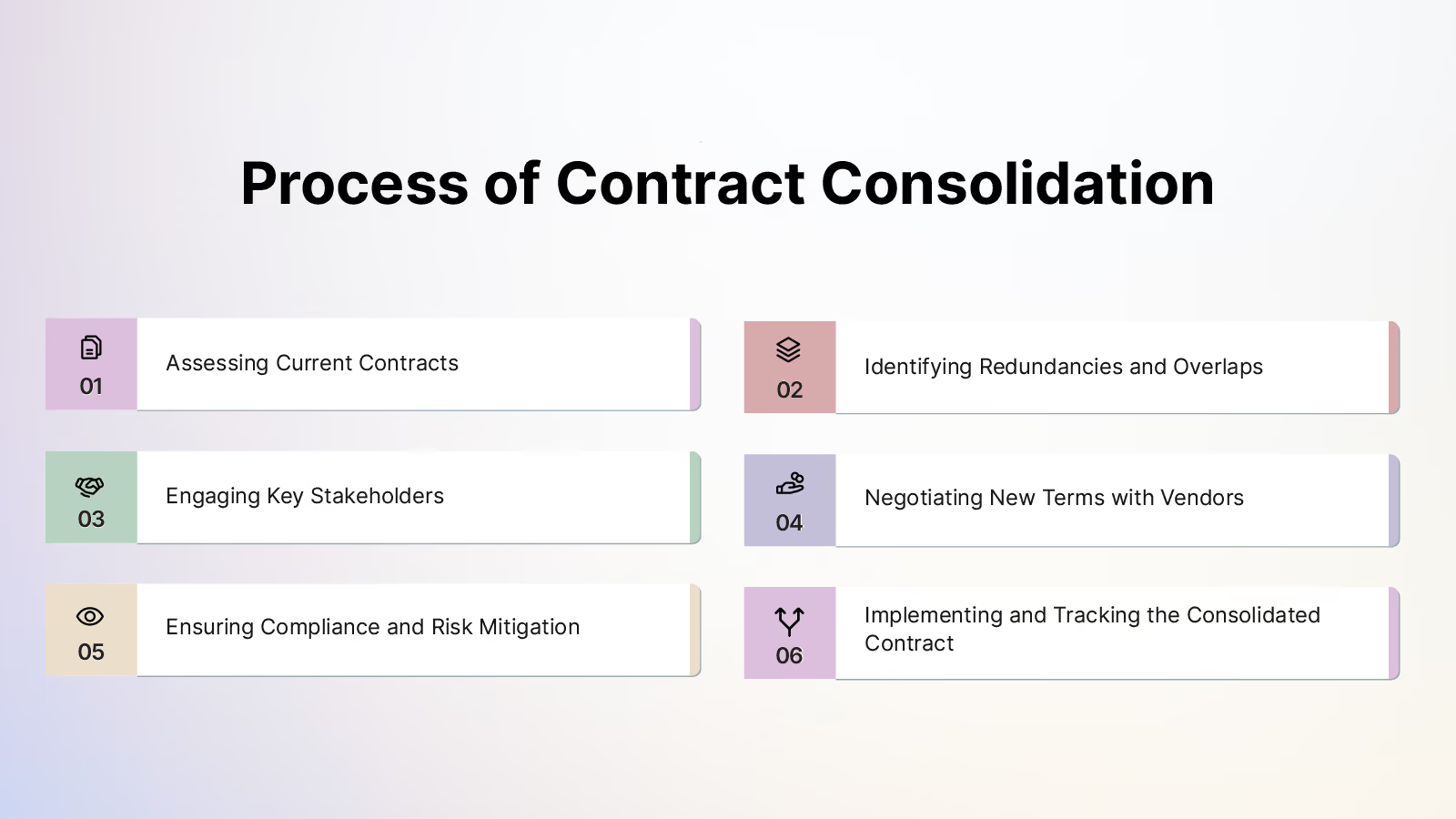
Contract consolidation simplifies the chaos of managing multiple agreements. It starts with auditing your existing contracts, centralizing the data, and spotting redundancies. From there, you negotiate better terms with vendors and implement unified agreements for smoother operations.
Here’s how you can tackle it step by step:
1. Assessing Current Contracts
Centralizing each contract file ensures nothing slips through the cracks, making management more efficient. Take a closer look at the agreements you already have - every subscriptions, service, and vendor contracts. Are they still relevant? Are you paying for tools no one uses? By auditing your contracts, you’ll uncover what’s working and what’s wasting your resources.
Remember, a solid audit is the foundation for smarter consolidation and meaningful savings.
2. Identifying Redundancies and Overlaps
Now that your contracts are centralized, it’s easier to spot what’s not adding value. Look for duplicate services, overlapping functionalities, or contracts no one is actively using. Eliminating these redundancies can free up significant resources.
Spotting duplicates simplifies your stack and keeps more cash in your pocket.
3. Engaging Key Stakeholders
Consolidating contracts isn’t a one-person job. Loop in members from the finance team, procurement team, and legal team to ensure alignment on priorities and expectations. Involving sales teams ensures customer-facing contracts align with consolidation goals. Engaging stakeholders from each business unit ensures smoother implementation. Clear communication with stakeholders lays the groundwork for successful execution. Leadership roles, like the Chief Acquisition Officer, can provide strategic oversight during the consolidation process.
Team alignment bridges gaps and ensures seamless execution.
4. Negotiating New Terms with Vendors
Armed with insights from your audit, approach vendors to renegotiate terms. Effective contract negotiations can secure better pricing and long-term value. Aim for better pricing, consolidated contracts, and value-added services. Vendors often appreciate transparency and a long-term partnership mindset.
Better deals mean savings and stronger partnerships.
5. Ensuring Compliance and Risk Mitigation
Before finalizing, review your consolidated contracts to ensure compliance with regulations and internal policies. This step reduces potential legal risks and strengthens risk management practices to enhance operational resilience. This also helps identify and mitigate potential risks tied to legal and regulatory requirements.
Proactive checks protect you from legal and regulatory troubles.
6. Implementing and Tracking the Consolidated Contract
With your new agreements in place, implement them across teams and set up tools to monitor performance. This ensures every consolidated requirement is accounted for and managed effectively. Regular tracking ensures you get the full value and can proactively address future needs.
Smart follow-through ensures consolidation works for the long haul.
After consolidating contracts, renewal management becomes easier with the right tools - here’s a guide to the best Contract Renewal Management Software.
Benefits of Contract Consolidation
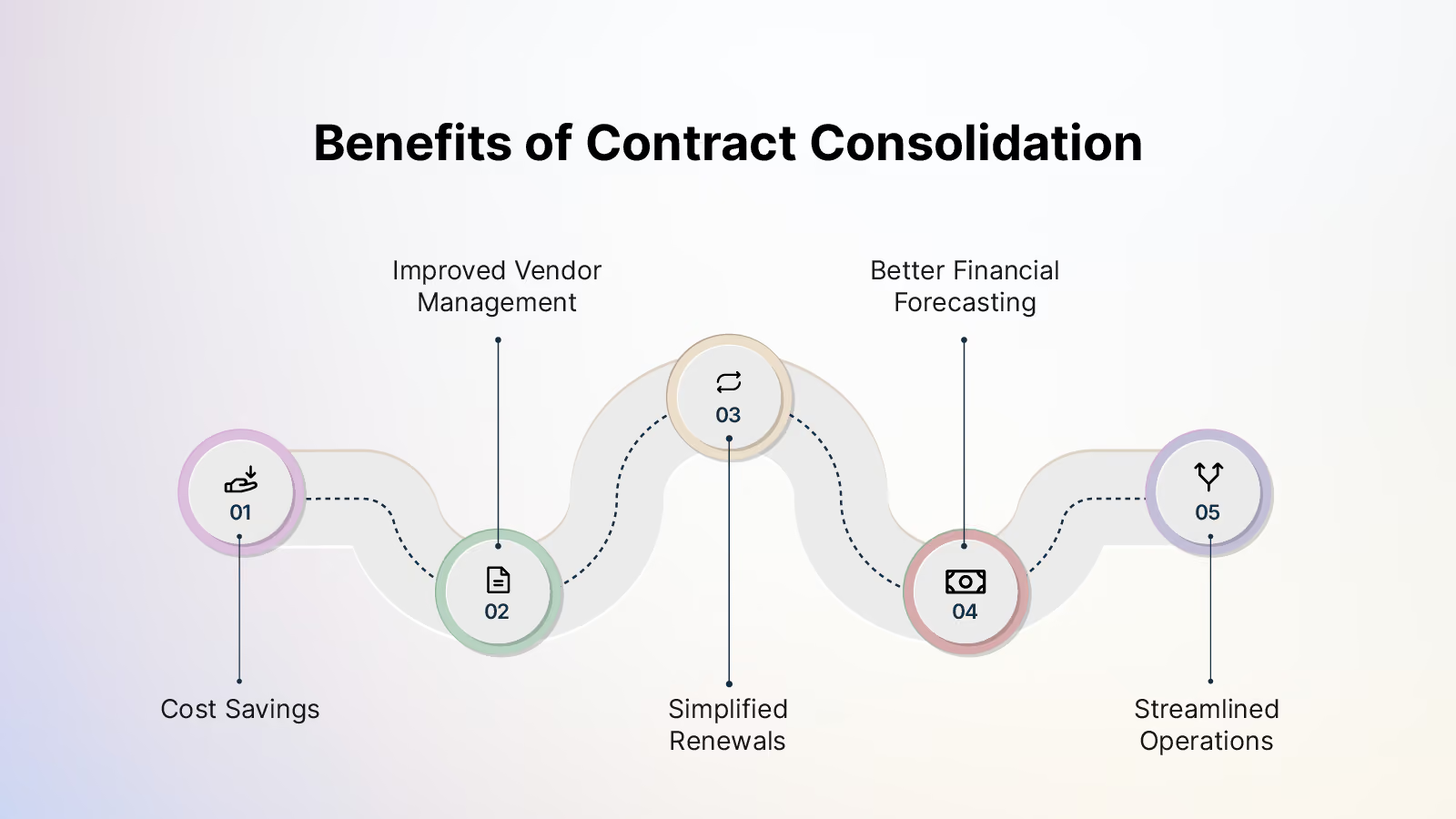
Consolidating contracts isn’t just about cleaning up paperwork, it’s a strategic move that delivers measurable business outcomes and long-term advantages. From reducing costs to streamlining operations, the benefits can transform how your business manages its SaaS stack. Managing SaaS tools can get overwhelming fast. Learn how to overcome SaaS Sprawl and take control of your SaaS stack.
Here’s a closer look at why contract consolidation is worth the effort:
Cost Savings
By eliminating duplicate contracts and negotiating better terms with vendors, businesses can drastically cut down on unnecessary expenses. These financial benefits free up resources for other priorities. Consolidation also helps leverage bulk pricing and reduces administrative overhead.
Smart savings free up resources for other business priorities.
Improved Vendor Management
Centralizing contracts simplifies vendor oversight by offering clear visibility into agreements and performance. This makes it easier to maintain consistent communication and build stronger, more productive partnerships.
Stronger partnerships lead to better outcomes and smoother operations.
Simplified Renewals
With a single view of contract timelines, managing renewals becomes less stressful and more predictable. You’ll avoid missed deadlines and take advantage of early negotiation opportunities.
Less hassle means more time to focus on growth.
Enhanced Compliance
Consolidated contracts make it easier to ensure legal adherence and internal policies. This reduces the risk of penalties and simplifies audits and reporting processes.
Proactive oversight protects your business from costly legal issues.
Better Financial Forecasting
A unified view of all contracts provides clarity on future expenses and obligations. This makes budgeting more accurate and allows for smarter financial planning. Improved forecasting directly impacts cash flow management.
Clear insights lead to better decision-making and resource allocation.
Streamlined Operations
Consolidation reduces administrative complexity, freeing up your team to focus on strategic initiatives. With fewer contracts to manage, workflows become faster and more efficient. Streamlined processes improve overall business operations and productivity.
Smoother processes translate to better productivity and outcomes.
All these benefits add up to a more efficient, cost-effective, and organized approach to contract management - helping your business focus on what truly matters.
Tools for Contract Consolidation
The right tools can make contract consolidation faster, more efficient, and far less stressful. From streamlining workflows, to improving decision-making, these tools are essential for achieving long-term success. They cater to a broad range of needs, from tracking compliance to managing renewals. Specialized contract tools address unique challenges, from compliance audits to bulk renewals. Discover how Spendflo has helped companies achieve significant savings in our blog How Spendflo's Vendor Trust Helps You Accelerate Security Reviews.
Here are some must-have tools for effective contract consolidation:
Contract Management Software
These platforms centralize all your contracts, providing easy access to terms, dates, and other critical details. Using a single platform ensures streamlined access and better collaboration across teams. Modern contract management systems also offer automation for renewals and compliance tracking.
Centralization done right simplifies oversight and streamlines operations.
Automation Features
Automation not only reduces the manual effort involved in contract consolidation. It helps identify duplicates, tracks compliance, saves time, and minimizes the risk of errors during the process.
Efficiency boosters that free your team to focus on strategic tasks.
Analytics and Reporting
Advanced analytics provide insights into spending trends, vendor performance, and potential savings. Some tools even leverage advanced machine learning for predictive insights. Reporting tools offer clear data visualizations, making it easier to make informed decisions. Tracking contract lifecycles ensures timely renewals and compliance. Tracking contract status ensures timely action on renewals or terminations.
Data-driven decisions lead to smarter contract strategies.
Vendor Management Systems
These systems help track vendor performance, monitor relationships, and streamline communication. They make it easier to negotiate terms and ensure accountability.
Stronger vendor relationships result in better long-term outcomes.
e-Signature Tools
e-Signature tools simplify contract execution, allowing agreements to be signed and finalized digitally. This speeds up the process and eliminates unnecessary paperwork. A faster finish for a smoother consolidation process.
Spend Management Platforms
Spend management tools like Spendflo provide real-time visibility into your SaaS stack, track spending, and help optimize budget by identifying unnecessary expenses. Smarter spending ensures every dollar delivers value. Want to cut SaaS costs without sacrificing efficiency? Check out our Tips to Slash SaaS Wastage and unlock smarter spending strategies.With the right tools at your disposal, contract consolidation becomes less of a challenge and more of a strategic advantage for your business.
Challenges in Contract Consolidation and How to Overcome Them
Contract consolidation offers numerous benefits, but the process comes with its own set of challenges. From internal resistance to legal hurdles, these obstacles can slow the progress if not addressed. Effective consolidation can also mitigate risks related to supply chain disruptions.
Here’s a closer look at common challenges and how to tackle them:
Lack of Visibility into Existing Contracts
Without a clear view of all contracts, businesses risk missing critical details or overlooking redundancies. This often happens when contracts are scattered across departments or stored in different systems.
The fix: Use a contract management tool to centralize data and gain full visibility into your agreements.
Resistance from Internal Teams
Team members may be reluctant to change processes or fear of losing control over their department’s contracts. Miscommunication can also lead to pushback.
The fix: Communicate the benefits of consolidation early and involve stakeholders in the decision-making process to build alignment.
Vendor Pushback
Vendors may resist renegotiating terms, especially if consolidation reduces their revenue. They might also delay responses or create additional hurdles.
The fix: Approach negotiations with transparency and emphasize the long-term value of a stronger partnership.
Data Accuracy and Accessibility Issues
Errors in contract data or incomplete information can create bottlenecks during consolidation. Missing details may also complicate compliance checks.
The fix: Conduct a thorough audit and clean up contract data before beginning the consolidation process.
Compliance with Legal and Regulatory Requirements
Consolidating contracts can expose gaps in compliance with industry standards or legal regulations. This can lead to penalties or legal risks. This makes addressing compliance a top business concern.
The fix: Involve legal experts to review contracts and ensure all agreements meet regulatory requirements.
Balancing Consolidation with Flexibility
Over-consolidation can limit the ability to adapt to changing business needs. Businesses must strike the right balance to avoid becoming overly dependent on a single vendor.
The fix: Consolidate strategically, leaving room for adjustments and ensuring vendor diversity where needed.
By addressing these challenges proactively, businesses can unlock the full potential of contract consolidation and reap the rewards of a streamlined approach.
Examples of Successful Contract Consolidation
Real-world success stories highlight the transformative impact of contract consolidation. These examples demonstrate how businesses can achieve significant cost savings, operational efficiency, and better vendor relationships by adopting a streamlined approach.
Here are two examples of contract consolidation in action:
Streamlined Procurement for ChurnZero
ChurnZero managed over 60 SaaS contracts with no centralized system, leading to inefficiencies and missed savings. Spendflo streamlined their procurement, consolidated contracts and renegotiated terms with key vendors like Zoominfo.
Result: $110K saved in one year, surpassing their savings goal by 135%, with a 1.3x ROI.
Cost Optimization for Sand Technologies
Sand Technologies faced a $6M SaaS expense after a merger due to Zoom Webinar licenses. Spendflo identified an enterprise solution, securing 575 free licenses and consolidating other agreements.
Result: $4.5M saved in just one day, turning a major expense into a massive win.
These stories show how strategic contract consolidation can lead to measurable savings and improved operational efficiency, no matter the size or industry of the business.
Conclusion
Contract consolidation is more than just a cost-cutting exercise - it’s a strategic approach to simplify operations, enhance vendor relationships, and ensure compliance. By auditing your contracts, eliminating redundancies, and leveraging the right tools, you can transform a complex process into a streamlined strategy that drives measurable results.
Whether you’re a small business or an enterprise, the benefits of consolidation - cost savings, better renewals, and operational efficiency - speak for themselves. And with real-life success stories proving its impact, there’s no better time to take charge of your contracts and unlock their full potential. Ready to optimize your SaaS contracts and save more? Discover how Spendflo's Vendor Trust Helps You Accelerate Security Reviews.
Frequently Asked Questions on Contract Consolidation
What is the main goal of contract consolidation?
The main goal of contract consolidation is to streamline contract management by centralizing multiple agreements into unified contracts. This reduces redundancies, improves oversight, and creates opportunities for cost savings and efficiency.
How can contract consolidation save money?
Consolidation helps identify duplicate contracts, eliminate unnecessary agreements, and negotiate better pricing with vendors. By leveraging bulk discounts and reducing administrative costs, businesses can achieve significant savings.
Are there specific industries that benefit most from contract consolidation?
While all industries can benefit, businesses with high SaaS usage, such as technology, e-commerce, and healthcare, often see the most impact. These industries typically have numerous contracts to manage, making consolidation a game-changer.
How do I choose the right tool for contract consolidation?
Look for tools that offer features like centralized data management, automation for renewals, analytics for insights, and seamless collaboration across teams. Tools like Spendflo simplify the process by providing visibility and optimization for your SaaS stack.
Can small businesses benefit from contract consolidation?
Absolutely! Small businesses often operate on tight budgets and consolidating contracts can free up resources, reduce overhead, and improve vendor relationships. It’s an effective way to stretch every dollar further.


-compressed.avif)














.avif)
.avif)